• Trade
  • Markets
  • Copy
  • Contests
  • News
  • 24/7
  • Calendar
  • Q&A
  • Chats
Trending
Screeners
SYMBOL
LAST
BID
ASK
HIGH
LOW
NET CHG.
%CHG.
SPREAD
SPX
S&P 500 Index
6814.29
6814.29
6814.29
6861.30
6801.50
-13.12
-0.19%
--
DJI
Dow Jones Industrial Average
48366.49
48366.49
48366.49
48679.14
48285.67
-91.55
-0.19%
--
IXIC
NASDAQ Composite Index
23088.37
23088.37
23088.37
23345.56
23012.00
-106.79
-0.46%
--
USDX
US Dollar Index
97.970
98.050
97.970
98.070
97.740
+0.020
+ 0.02%
--
EURUSD
Euro / US Dollar
1.17430
1.17438
1.17430
1.17686
1.17262
+0.00036
+ 0.03%
--
GBPUSD
Pound Sterling / US Dollar
1.33662
1.33672
1.33662
1.34014
1.33546
-0.00045
-0.03%
--
XAUUSD
Gold / US Dollar
4303.34
4303.77
4303.34
4350.16
4285.08
+3.95
+ 0.09%
--
WTI
Light Sweet Crude Oil
56.376
56.406
56.376
57.601
56.233
-0.857
-1.50%
--

Community Accounts

Signal Accounts
--
Profit Accounts
--
Loss Accounts
--
View More

Become a signal provider

Sell trading signals to earn additional income

View More

Guide to Copy Trading

Get started with ease and confidence

View More

Signal Accounts for Members

All Signal Accounts

Best Return
  • Best Return
  • Best P/L
  • Best MDD
Past 1W
  • Past 1W
  • Past 1M
  • Past 1Y

All Contests

  • All
  • Trump Updates
  • Recommend
  • Stocks
  • Cryptocurrencies
  • Central Banks
  • Featured News
Top News Only
Share

New York Fed Accepts $2.601 Billion Of $2.601 Billion Submitted To Reverse Repo Facility On Dec 15

Share

Turkey: Shoots Down A Drone In The Black Sea Using F-16 Fighter Jets

Share

Goldman Sachs Says They Believe That The Copper Price Is Vulnerable To An Ai-Linked Price Correction

Share

Goldman Sachs Upgrades 2026 Copper Price Forecast To $11400 From $10,650

Share

Attempts By Ukrainian Troops To Advance From The South-West To Outskirts Of Kupiansk Are Being Thwarted

Share

Russian Troops Control All Of Kupiansk - IFX Cites Russian Military

Share

On Monday (December 15), The South Korean Won Ultimately Rose 0.60% Against The US Dollar, Closing At 1468.91 Won. The Won Was On An Upward Trend Throughout The Day, Rising Significantly At 17:00 Beijing Time And Reaching A Daily High Of 1463.04 Won At 17:36

Share

Health Ministry: Israeli Forces Kill Palestinian Teen In West Bank

Share

New York Federal Reserve President Williams: Over Time, The Size Of Reserves Could Grow From $2.9 Trillion

Share

New York Fed President Williams: AI Valuations Are High, But There Is A Real Driving Factor

Share

New York Federal Reserve President Williams: The Job Market Is In Very Good Shape

Share

New York Fed President Williams: 'Very Supportive' Of USA Central Bank's Decision To Cut Interest Rates Last Week

Share

New York Fed President Williams: 'Too Early To Say' What Central Bank Should Do At January Meeting

Share

New York Fed President Williams: Strong Markets Part Of Reason Why Economy Will Grow Robustly In 2026

Share

New York Fed President Williams: What Constitutes Ample Reserves Will Change Over Time

Share

New York Fed President Williams: Market Valuations 'Elevated,' But There Are Reasons For Pricing

Share

New York Fed President Williams: Ample Reserves System Working Very Well

Share

New York Fed President Williams: Some Signs That Parts Of Underlying Economy Not As Strong As GDP Data Suggests

Share

New York Fed President Williams: Expects Coming Job Data Will Show Gradual Cooling

Share

Ukraine President Zelenskiy: Monitoring Of Ceasefire Should Be Part Of Security Guarantees

TIME
ACT
FCST
PREV
Japan Tankan Small Manufacturing Outlook Index (Q4)

A:--

F: --

P: --

Japan Tankan Large Non-Manufacturing Outlook Index (Q4)

A:--

F: --

P: --

Japan Tankan Large Manufacturing Outlook Index (Q4)

A:--

F: --

P: --

Japan Tankan Small Manufacturing Diffusion Index (Q4)

A:--

F: --

P: --

Japan Tankan Large-Enterprise Capital Expenditure YoY (Q4)

A:--

F: --

P: --

U.K. Rightmove House Price Index YoY (Dec)

A:--

F: --

P: --

China, Mainland Industrial Output YoY (YTD) (Nov)

A:--

F: --

P: --

China, Mainland Urban Area Unemployment Rate (Nov)

A:--

F: --

P: --

Saudi Arabia CPI YoY (Nov)

A:--

F: --

P: --

Euro Zone Industrial Output YoY (Oct)

A:--

F: --

P: --

Euro Zone Industrial Output MoM (Oct)

A:--

F: --

P: --

Canada Existing Home Sales MoM (Nov)

A:--

F: --

P: --

Canada National Economic Confidence Index

A:--

F: --

P: --

Canada New Housing Starts (Nov)

A:--

F: --

P: --
U.S. NY Fed Manufacturing Employment Index (Dec)

A:--

F: --

P: --

U.S. NY Fed Manufacturing Index (Dec)

A:--

F: --

P: --

Canada Core CPI YoY (Nov)

A:--

F: --

P: --

Canada Manufacturing Unfilled Orders MoM (Oct)

A:--

F: --

P: --

U.S. NY Fed Manufacturing Prices Received Index (Dec)

A:--

F: --

P: --

U.S. NY Fed Manufacturing New Orders Index (Dec)

A:--

F: --

P: --

Canada Manufacturing New Orders MoM (Oct)

A:--

F: --

P: --

Canada Core CPI MoM (Nov)

A:--

F: --

P: --

Canada Trimmed CPI YoY (SA) (Nov)

A:--

F: --

P: --

Canada Manufacturing Inventory MoM (Oct)

A:--

F: --

P: --

Canada CPI YoY (Nov)

A:--

F: --

P: --

Canada CPI MoM (Nov)

A:--

F: --

P: --

Canada CPI YoY (SA) (Nov)

A:--

F: --

P: --

Canada Core CPI MoM (SA) (Nov)

A:--

F: --

P: --

Canada CPI MoM (SA) (Nov)

A:--

F: --

P: --

Federal Reserve Board Governor Milan delivered a speech
U.S. NAHB Housing Market Index (Dec)

A:--

F: --

P: --

Australia Composite PMI Prelim (Dec)

--

F: --

P: --

Australia Services PMI Prelim (Dec)

--

F: --

P: --

Australia Manufacturing PMI Prelim (Dec)

--

F: --

P: --

Japan Manufacturing PMI Prelim (SA) (Dec)

--

F: --

P: --

U.K. 3-Month ILO Employment Change (Oct)

--

F: --

P: --

U.K. Unemployment Claimant Count (Nov)

--

F: --

P: --

U.K. Unemployment Rate (Nov)

--

F: --

P: --

U.K. 3-Month ILO Unemployment Rate (Oct)

--

F: --

P: --

U.K. Average Weekly Earnings (3-Month Average, Including Bonuses) YoY (Oct)

--

F: --

P: --

U.K. Average Weekly Earnings (3-Month Average, Excluding Bonuses) YoY (Oct)

--

F: --

P: --

France Services PMI Prelim (Dec)

--

F: --

P: --

France Composite PMI Prelim (SA) (Dec)

--

F: --

P: --

France Manufacturing PMI Prelim (Dec)

--

F: --

P: --

Germany Services PMI Prelim (SA) (Dec)

--

F: --

P: --

Germany Manufacturing PMI Prelim (SA) (Dec)

--

F: --

P: --

Germany Composite PMI Prelim (SA) (Dec)

--

F: --

P: --

Euro Zone Composite PMI Prelim (SA) (Dec)

--

F: --

P: --

Euro Zone Services PMI Prelim (SA) (Dec)

--

F: --

P: --

Euro Zone Manufacturing PMI Prelim (SA) (Dec)

--

F: --

P: --

U.K. Services PMI Prelim (Dec)

--

F: --

P: --

U.K. Manufacturing PMI Prelim (Dec)

--

F: --

P: --

U.K. Composite PMI Prelim (Dec)

--

F: --

P: --

Euro Zone ZEW Economic Sentiment Index (Dec)

--

F: --

P: --

Germany ZEW Current Conditions Index (Dec)

--

F: --

P: --

Germany ZEW Economic Sentiment Index (Dec)

--

F: --

P: --

Euro Zone Trade Balance (Not SA) (Oct)

--

F: --

P: --

Euro Zone ZEW Current Conditions Index (Dec)

--

F: --

P: --

Euro Zone Trade Balance (SA) (Oct)

--

F: --

P: --

Euro Zone Total Reserve Assets (Nov)

--

F: --

P: --

U.K. Inflation Rate Expectations

--

F: --

P: --

Q&A with Experts
    • All
    • Chatrooms
    • Groups
    • Friends
    Connecting
    .
    .
    .
    Type here...
    Add Symbol or Code

      No matching data

      All
      Trump Updates
      Recommend
      Stocks
      Cryptocurrencies
      Central Banks
      Featured News
      • All
      • Russia-Ukraine Conflict
      • Middle East Flashpoint
      • All
      • Russia-Ukraine Conflict
      • Middle East Flashpoint
      Search
      Products

      Charts Free Forever

      Chats Q&A with Experts
      Screeners Economic Calendar Data Tools
      Membership Features
      Data Warehouse Market Trends Institutional Data Policy Rates Macro

      Market Trends

      Market Sentiment Order Book Forex Correlations

      Top Indicators

      Charts Free Forever
      Markets

      News

      News Analysis 24/7 Columns Education
      From Institutions From Analysts
      Topics Columnists

      Latest Views

      Latest Views

      Trending Topics

      Top Columnists

      Latest Update

      Signals

      Copy Rankings Latest Signals Become a signal provider AI Rating
      Contests
      Brokers

      Overview Brokers Assessment Rankings Regulators News Claims
      Broker listing Forex Brokers Comparison Tool Live Spread Comparison Scam
      Q&A Complaint Scam Alert Videos Tips to Detect Scam
      More

      Business
      Events
      Careers About Us Advertising Help Center

      White Label

      Data API

      Web Plug-ins

      Affiliate Program

      Awards Institution Evaluation IB Seminar Salon Event Exhibition
      Vietnam Thailand Singapore Dubai
      Fans Party Investment Sharing Session
      FastBull Summit BrokersView Expo
      Recent Searches
        Top Searches
          Markets
          News
          Analysis
          User
          24/7
          Economic Calendar
          Education
          Data
          • Names
          • Latest
          • Prev

          View All

          No data

          Scan to Download

          Faster Charts, Chat Faster!

          Download App
          English
          • English
          • Español
          • العربية
          • Bahasa Indonesia
          • Bahasa Melayu
          • Tiếng Việt
          • ภาษาไทย
          • Français
          • Italiano
          • Türkçe
          • Русский язык
          • 简中
          • 繁中
          Open Account
          Search
          Products
          Charts Free Forever
          Markets
          News
          Signals

          Copy Rankings Latest Signals Become a signal provider AI Rating
          Contests
          Brokers

          Overview Brokers Assessment Rankings Regulators News Claims
          Broker listing Forex Brokers Comparison Tool Live Spread Comparison Scam
          Q&A Complaint Scam Alert Videos Tips to Detect Scam
          More

          Business
          Events
          Careers About Us Advertising Help Center

          White Label

          Data API

          Web Plug-ins

          Affiliate Program

          Awards Institution Evaluation IB Seminar Salon Event Exhibition
          Vietnam Thailand Singapore Dubai
          Fans Party Investment Sharing Session
          FastBull Summit BrokersView Expo

          Russia Tries To Make Sudden Advance In Ukraine Before Trump-Putin Summit

          Daniel Carter

          Political

          Summary:

          Russian forces have made a sudden thrust into eastern Ukraine near the coal mining town of Dobropillia, a move that may be an attempt to increase the pressure on Kyiv to give up land as the U.S. and Russian presidents prepare to meet.

          Ukraine's authoritative DeepState war map showed on Tuesday that Russian forces had advanced by at least 10 km (six miles) north in two prongs in recent days, part of their drive to take full control of Ukraine's Donetsk region.
          The advance is one of the most dramatic in the last year, although military analysts said the Russians were using small groups of soldiers to try to establish footholds and that it was uncertain if they could maintain their positions in the face of a Ukrainian push back.
          DeepState said the Russians had surged forward near three villages on a section of the frontline associated with the Ukrainian towns of Kostyantynivka and Pokrovsk, which Moscow is trying to encircle by exploiting Kyiv's lack of manpower.
          "The situation is quite chaotic, as the enemy, having found gaps in the defence, is infiltrating deeper, trying to quickly consolidate and accumulate forces for further advancement," DeepState said on its Telegram channel.
          U.S. President Donald Trump and Russian President Vladimir Putin are expected to discuss a possible deal to end the war in Ukraine when they meet in Alaska on Friday. Unconfirmed media reports say Putin has told Trump he wants Ukraine to hand over the part of the Donetsk region that Russia does not control.
          The Russian Defence Ministry said units of its army grouping "Centre" had improved their positions on the edge of the frontline. Ukraine's military said it was engaged in "difficult" combat near the cities of Pokrovsk and Dobropillia and had sent in reserves to block advances by small groups of Russian troops.
          It said some of the groups attempting to bypass Ukraine's defensive lines in the area had already been destroyed, and that others were being engaged by Ukrainian forces.
          Pasi Paroinen, a military analyst with the Finland-based Black Bird Group, said the situation had escalated rapidly, with Russian forces infiltrating past Ukrainian lines to a depth of roughly 17 km (10 miles) in the past three days.
          "Forwardmost Russian units have reportedly reached the Dobropillia – Kramatorsk road T0514 and Russian infiltration groups have also been reported near Dobropillia proper," he wrote on X.
          Pro-Ukrainian open source military analysts were divided on how significant the development was, with some saying that Russia's tactic of sending small groups to quickly seize but not necessarily hold territory for long had made mapping the war much harder.
          Konrad Muzyka, director of Rochan Consulting, said the Russian thrust, although it appeared sudden, was the culmination of more than a week of infiltration and positional gains.
          A former Ukrainian army officer whose Frontelligence Insight analysis tracks the conflict, posted: In both 2014 and 2015, Russia launched major offensives ahead of negotiations to gain leverage. The current situation is serious, but far from the collapse some suggest.
          Sergei Markov, a former Kremlin adviser, said the Russians had been able to advance amid "a partial collapse in the front" due to Ukraine's shortage of soldiers.
          "This breakthrough is like a gift to Putin and Trump during the negotiations," Markov said, suggesting that, if sustained, it could increase pressure on Kyiv to cede some land to prevent the Russian army eventually taking the rest of Donetsk by force.
          To do that, though, Russian forces would first need to take control of Sloviansk, Kramatorsk, Druzhkivka and Kostyantynivka - which Russian military analysts call "fortress cities".
          Ukrainian President Volodymyr Zelenskiy has publicly pushed back against the idea of ceding territory to Russia, saying any peace deal must be a just one.
          Bohdan Krotevych, former chief of staff of Ukraine's Azov brigade and a National Guard lieutenant colonel, took to X late on Monday to warn Zelenskiy of the threat, saying the frontline in the area was "a complete mess".
          "The line of combat engagement as a fixed line does not actually exist," he said.

          Source: Reuters

          Risk Warnings and Disclaimers
          You understand and acknowledge that there is a high degree of risk involved in trading. Following any strategies or investment methods may lead to potential losses. The content on the site is provided by our contributors and analysts for information purposes only. You are solely responsible for determining whether any trading assets, securities, strategy, or any other product is suitable for investing based on your own investment objectives and financial situation.
          Add to Favorites
          Share

          A 50 BPS Rate Cut Is Not Out of the Question

          Adam

          Economic

          As we share below, the Fed Funds futures market is 86.5% confident the Fed will cut rates by 25 bps in September. However, they assign a zero percent chance that the Fed cuts by 50 bps. Powell’s trepidation to cut rates leaves traders unwilling to consider that anything more than 25bps is possible. We argue that despite the odds, a 50-bps rate cut is possible if today’s CPI report is weak.
          CPI is expected to increase by 0.2% on a headline and core basis. A 0.2% increase would bring the year-over-year CPI rate to 2.7%, decently above the Fed’s 2.0% target. Even if CPI were to surprise with a 0% change, the year-over-year change would sit above the Fed’s target. Such is the market’s logic for not considering 50 bps. We think that a student shift lower in inflation, especially as tariffs are having a significant impact, coupled with the recent sharp negative revisions in employment data and new highs in continuing jobless claims, could be enough for the Fed to debate 50 bps.
          Moreover, Stephen Miran may likely join the Fed by the September meeting, giving them at least three votes for a cut. Consider also that the two Fed members who voted for a rate cut at the last meeting may think they are already 25 bps behind the curve and want to vote for 50 bps to catch up. The political pressure is on Powell.
          While he may not cave and vote for 50 bps in September, we think the market is underestimating the odds that a majority of members will. With zero odds, the market is vulnerable (up or down) for a sudden shift in the Fed’s rate projections.
          pple And Technology Lead The Market Higher; Everything Else Lags
          On a relative basis, the technology sector is the clear leader. As shown below, it is moderately overbought versus the market on a relative basis. Importantly, every other sector is near fair value or oversold versus the market. Apple, rising by over 12% last week versus the 2% for the S&P 500, helped push the technology sector up and to the right, indicating overbought conditions on a relative and absolute basis. As the graph shows, there is a clump of sectors at fair value, and another that are getting very oversold. Of the very oversold, healthcare weakened by sharp declines in Unitedhealth Group and Eli Lilly are now grossly oversold versus the market. The analysis argues that any shift in market tenor could see healthcare outperform and technology underperform.

          Source: investing

          To stay updated on all economic events of today, please check out our Economic calendar
          Risk Warnings and Disclaimers
          You understand and acknowledge that there is a high degree of risk involved in trading. Following any strategies or investment methods may lead to potential losses. The content on the site is provided by our contributors and analysts for information purposes only. You are solely responsible for determining whether any trading assets, securities, strategy, or any other product is suitable for investing based on your own investment objectives and financial situation.
          Add to Favorites
          Share

          Trump Urges Fed Rate Cut Following Inflation Report

          Thomas

          Economic

          Following a recent inflation report, former President Donald Trump has called for Federal Reserve Chair Jerome Powell to lower rates, hinting at a potential September rate cut.

          Trump Advocates for Rate Cut

          President Donald Trump has publicly called for the Federal Reserve to lower interest rates, urging Chair Jerome Powell to act following the latest inflation data. Trump emphasized:

          Despite Trump's statements, the Federal Reserve maintains a data-dependent approach with no official decision on a rate cut communicated yet. Chair Jerome Powell has stated rate policies are determined in context of inflation and employment data.

          Market Speculations

          The call for a rate cut by Trump has stirred discussions among market participants. A rate reduction typically stimulates economic activity, offering relief in funding costs. Crypto markets might see volatility around such announcements due to shifts in financial conditions.

          Financial implications of a potential rate cut include lower borrowing costs, which could impact Treasury issuance costs and enhance liquidity. Crypto assets like BTC and ETH, might benefit, matching historical trends observed during prior rate adjustments. For more insights on Trump’s discussions related to the Federal Reserve and Jerome Powell's leadership, see this .

          Awaiting Fed Decisions

          Market analysts are closely monitoring potential Federal Reserve statements to confirm any September decision on rates. Jerome Powell’s comments highlight a cautious approach, with an emphasis on observed economic data.

          Historical precedents suggest that rate cuts could stimulate crypto appreciation, though outcomes depend on multiple factors. While no official signals have suggested market shifts, on-chain data provides valuable insights into crypto sentiment.

          Source: CryptoSlate

          To stay updated on all economic events of today, please check out our Economic calendar
          Risk Warnings and Disclaimers
          You understand and acknowledge that there is a high degree of risk involved in trading. Following any strategies or investment methods may lead to potential losses. The content on the site is provided by our contributors and analysts for information purposes only. You are solely responsible for determining whether any trading assets, securities, strategy, or any other product is suitable for investing based on your own investment objectives and financial situation.
          Add to Favorites
          Share

          What Are Circuit Breakers In The Stock Market?

          FXOpen

          Stocks

          Economic

          Forex

          The stock market can experience sudden and extreme price movements due to various factors, including economic events, geopolitical tensions, and investor sentiment. To prevent excessive volatility and maintain market stability, regulatory bodies have implemented mechanisms known as circuit breakers. These measures temporarily halt trading when prices move beyond predetermined thresholds, giving investors time to reassess their decisions and preventing panic-driven sell-offs. In this article, we explore the meaning of circuit breakers, their mechanism, and how they could affect your trading.

          What Is a Circuit Breaker in the Share Market?

          Circuit breakers are regulatory mechanisms designed to temporarily halt trading on an exchange to prevent extreme volatility and panic selling. These measures were introduced following the 1987 stock market crash, also known as "Black Monday," to protect market stability and allow investors to reassess their positions during periods of excessive price fluctuations.

          Circuit breakers apply to both individual stocks and entire stock indices, such as the S&P 500. They are triggered when prices move beyond predefined percentage thresholds within a given timeframe, pausing trading for a specified duration to provide a cooling-off period. This pause allows market participants to digest information, reassess their positions, and reduce the likelihood of impulsive or panic-driven trades.Circuit breakers are implemented in many stock exchanges; therefore, they can have different names and be based on different conditions.

          In the US, for example, stock exchanges implement market-wide circuit breakers (MWCB), which are triggered based on percentage declines in the S&P 500 index, compared to the previous day's closing price. A decline to and below the specific threshold causes cross-market halts.

          ● Level 1: A 7% drop in the S&P 500 results in a 15-minute trading halt if it happens before 3:25 p.m. ET. However, if the decline occurs at or after 3:25 p.m. ET, trading continues without interruption.
          ● Level 2: A 13% decline triggers another 15-minute halt if it takes place before 3:25 p.m. ET. If the drop happens at or after 3:25 p.m. ET, market-wide trading remains unaffected.
          ● Level 3: A 20% decline results in the suspension of trading for the remainder of the day regardless of the time when the decline occurs.

          There is another mechanism called the Limit Up-Limit Down (LULD). It is designed to prevent individual stocks from experiencing extreme price swings in short periods. This system sets price bands based on the average stock price over the preceding five minutes, limiting how much a stock can rise or fall. If a stock's price moves outside the established range and doesn’t recover within 15 seconds, trading is paused for five minutes to stabilize price movements and prevent excessive volatility.

          How Circuit Breaker Rules Are Determined

          Stock exchanges set circuit breakers based on a stock’s volatility, liquidity, and past trading behaviour. More volatile or thinly traded shares usually have tighter limits, while highly liquid, large-caps may have wider bands. Exchanges periodically review and adjust these limits based on recent price movements and trading activity.

          Some stocks have dynamic price bands, where circuit limits expand if a stock consistently trades near its upper or lower band. This prevents artificial price freezes and allows for better price discovery. Moreover, not all stocks have limits. Certain highly liquid derivatives and index-heavy shares may have no intraday price restrictions, as their deep order books naturally absorb volatility.Traders monitor circuit limits closely since stocks hitting these thresholds often indicate strong momentum or panic-driven moves.

          The Mechanism of Stock Market Circuit Breakers

          When a stock touches circuit breakers, trading doesn't continue as usual.

          If a stock reaches its upper band, buy orders often flood in, but sellers become scarce—most holders aren’t keen to part with their shares when prices spike suddenly. This creates an imbalance with lots of demand but very little supply. The exchange then temporarily halts trading or moves into a brief cooling-off period. During this pause, traders can reassess their positions, and new orders might line up, helping the exchange determine the appropriate price once trading resumes.

          Conversely, when a stock hits its lower band, panic selling typically dominates, causing a sharp price drop. Buyers vanish as traders hold back, wary of further declines. Just like in the previous scenario, trading usually stops temporarily. Without buyers stepping in, traders can find themselves stuck with shares they're keen to offload but can't because of the halt.

          Trading halts triggered by circuit hits can last from a few minutes to several hours, depending on exchange rules and how severe the price swings are. Sometimes, exchanges extend these halts repeatedly if imbalances persist, causing prolonged trading freezes. In some cases, limits are relaxed progressively, allowing trading to restart gradually and prices to stabilise through natural market forces.

          How Circuit Breakers May Impact Traders and CFD Positions

          Circuit breakers play a crucial role in shaping market conditions, affecting both stock investors and those trading derivatives, e.g. Contracts for Difference (CFDs). These price bands influence liquidity, risk exposure, and sentiment, making them key considerations for anyone dealing with price movements, whether in the underlying stock or through leveraged instruments like CFDs.

          Liquidity Constraints and Order Execution

          When a stock hits its upper band, sellers may disappear, leaving buy orders unfilled. Conversely, at a lower band, buyers vanish, creating a backlog of sell orders. For stock traders, this means difficulty executing trades at desired prices. For CFD traders, liquidity issues can be even more pronounced—since CFDs track the underlying stock, brokers may restrict trading or widen spreads when circuit limits are hit. If trading is paused, CFD positions can become temporarily untradeable, increasing exposure to further market swings.

          Gaps, Slippage, and Trade Execution Risks

          Since CFDs often involve leverage, even small price differences can have outsized effects. If a stock is locked at a circuit limit for an extended period, the next available price when trading resumes can be significantly different from where it halted. This creates gaps, causing slippage—where orders execute at a worse price than expected. In extreme cases, stop-loss orders might not trigger until after a major price movement, leading to larger-than-anticipated losses.

          Volatility and Risk Management Challenges

          Circuit limits help prevent excessive volatility, but they don’t remove risk. A stock that repeatedly hits its limit can leave traders unable to exit, leading to prolonged exposure. CFD traders face additional challenges, as margin calls can occur when positions move against them, potentially triggering forced liquidations once trading reopens.

          Stocks consistently hitting circuit breakers often indicate extreme sentiment—either speculative interest or panic-driven selling. Traders analyse whether price moves are supported by high volume or driven by short-term speculation. If a stock is reaching its limits on low liquidity, the move may be unsustainable. Understanding these dynamics may help traders assess whether momentum is genuine or artificially fuelled.

          Real-World Examples of Stock Market Circuit Breakers

          Circuit breakers aren’t just theoretical—they’ve been triggered during some of the most dramatic market moves in history.

          The 2020 Market Crash

          In March 2020, as COVID-19 fears sent global markets into freefall, the S&P 500 hit its Level 1 circuit breaker (7% drop) multiple times, triggering 15-minute trading halts. On 9th, 12th, 16th, and 18th March, panic selling caused these automatic pauses as investors rushed to offload assets amid uncertainty. Despite these measures, the market continued declining, proving that circuit breakers can slow momentum but don’t necessarily reverse sentiment.

          GameStop (GME) and the 2021 Short Squeeze

          During the GameStop short squeeze in early 2021, GME hit the limit up multiple times as retail traders fuelled an unprecedented rally. Trading halts were repeatedly triggered as GME soared from $20 to over $400 in weeks. However, when momentum reversed, limits down kicked in, with the stock plunging over 60% in a single session. This showed how circuit breakers can amplify volatility, trapping traders on both sides of extreme moves.

          2009 Indian General Elections

          On 18th May 2009, the Sensex surged by 17.24% and the Nifty 50 jumped 17.33%, triggering the upper circuit twice in a single day. Trading was halted for two hours at 9:55 AM, and when the market reopened at 11:55 AM, another surge led to a second halt for the rest of the day. The surge occurred the day after the results of the 2009 Indian general elections, where the UPA (United Progressive Alliance) secured a decisive victory.

          Risks of Circuit Breakers

          While circuit limits may help regulate extreme price swings, they also introduce risks that traders need to consider. These restrictions can affect liquidity, execution, and market behaviour, sometimes leading to unintended consequences.

          ● Liquidity Traps: When a stock hits a limit up, buyers may struggle to enter as sellers disappear. At the lower band, traders trying to exit may be stuck with unfilled sell orders, leading to prolonged exposure.
          ● Price Distortions: Circuit limits can temporarily freeze a stock’s price, delaying price discovery. When trading resumes, sharp adjustments can occur, making it difficult to gauge fair value.
          ● Forced Liquidations: For CFD traders using leverage, limits can trigger margin calls. If a position moves against them while trading is paused, forced liquidations may happen at unfavourable prices.
          ● Speculative Extremes: Stocks frequently hitting limits can attract speculative trading, leading to inflated prices or panic-driven collapses unrelated to fundamentals.

          FAQ

          What Is a Circuit Breaker in Trading?

          A circuit breaker in trading is a regulatory mechanism that temporarily halts trading in a stock or an entire market when prices move beyond a predefined percentage in a short period. This is designed to prevent panic selling or excessive speculation, allowing traders to reassess market conditions. Circuit breakers can apply at the index level (e.g., Nifty 50, S&P 500) or individual stocks.

          What Is the Difference Between a Circuit Breaker and a Trading Halt?

          A circuit breaker is a rule-based mechanism that automatically halts trading when the market or a stock moves significantly in a short time. It can trigger at different levels (e.g., 5%, 10%, 20%).A trading halt is a temporary suspension of trading imposed by exchanges or regulators due to specific events such as major announcements, news affecting a company, or regulatory concerns.Circuit breakers are predefined and automatic, while trading halts can be discretionary and event-driven.


          Source: FXOpen

          To stay updated on all economic events of today, please check out our Economic calendar
          Risk Warnings and Disclaimers
          You understand and acknowledge that there is a high degree of risk involved in trading. Following any strategies or investment methods may lead to potential losses. The content on the site is provided by our contributors and analysts for information purposes only. You are solely responsible for determining whether any trading assets, securities, strategy, or any other product is suitable for investing based on your own investment objectives and financial situation.
          Add to Favorites
          Share

          Bitcoin’s $95K Target in Sight as ‘Ugly’ Price Candle Halts Breakout Momentum

          Warren Takunda

          Cryptocurrency

          Key points:
          Bitcoin price momentum weakness is leading to lower targets, with Wyckoff analysis warning that $100,000 support may fail.
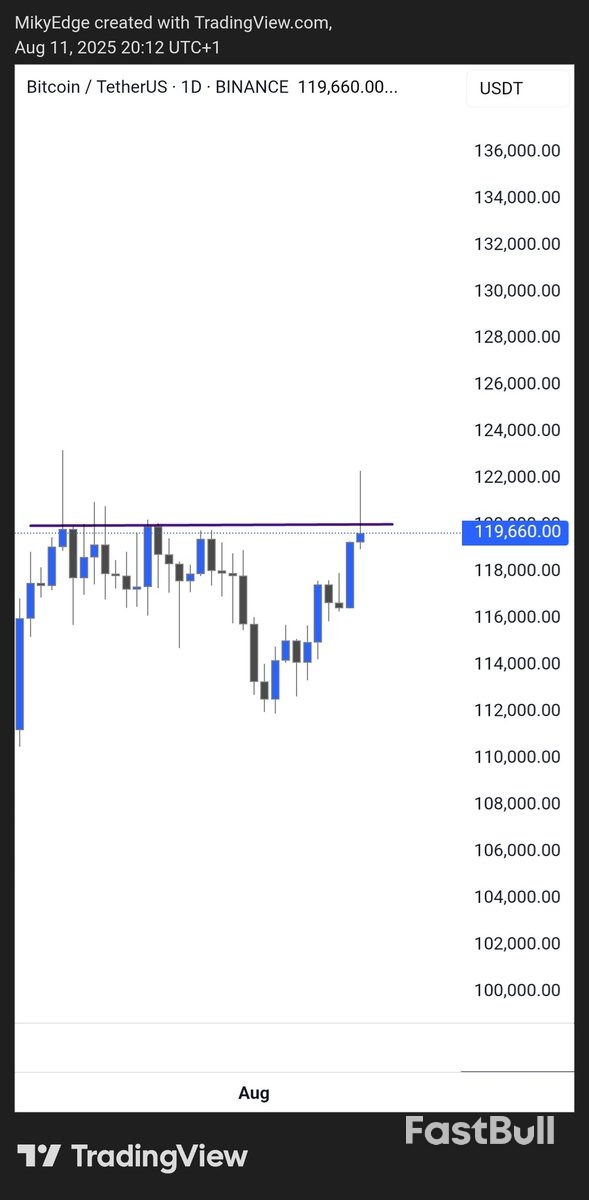
          The push to $122,000 currently looks “ugly” thanks to a rejection on daily time frames.
          Attention continues to focus on the CME gap near $117,500.
          Bitcoin risks breaking its bull run early as a sub-$100,000 BTC price target emerges.
          The latest market analysis from traders, including ZAYK Charts, published on Tuesday, warns of an ongoing “distribution phase” for Bitcoin.

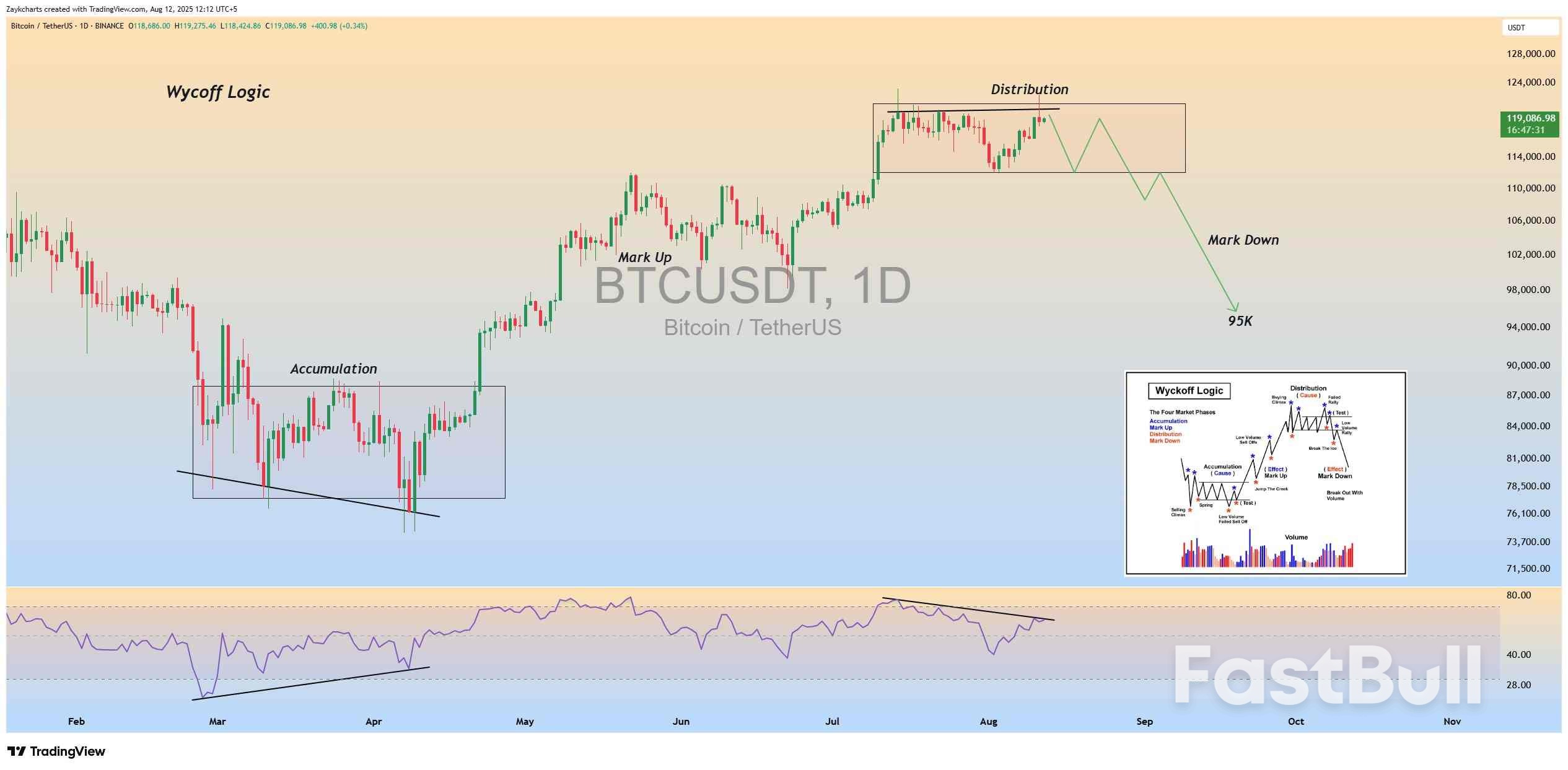
          BTC price Wyckoff schematic eyes “$95,000 zone”

          Bitcoin is not immune to losing $100,000 support, with the price struggling to hold ground above old all-time highs from earlier in 2025.
          ZAYK Charts said that the door is open to $95,000, a level not seen since early May.
          Using the Wyckoff method, ZAYK Charts argued that BTC/USDT has already enjoyed the classic “mark up” rebound phase from long-term lows, and has now entered “distribution,” the area where an uptrend traditionally reverses.
          “After a strong Accumulation Phase in March–April confirmed by bullish RSI divergence, BTC entered a powerful Mark-Up phase, reaching new highs,” an X post said.
          “Currently, price action is showing signs of a Distribution Phase — sideways movement with weakening momentum, supported by bearish RSI divergence. If distribution confirms, the next phase could be a Mark-Down, with a potential drop toward the 95K zone.”Bitcoin’s $95K Target in Sight as ‘Ugly’ Price Candle Halts Breakout Momentum_1

          BTC/USDT with Wyckoff analysis. Source: ZAYK Charts/X

          The area between $92,000 and $95,000 has featured prominently in BTC price action since last November, acting as both support and resistance as the market experienced significant swings.
          Continuing, fellow trader Mikybull Crypto described this week’s push beyond $122,000, which ended in rejection, as “ugly.”
          BTC/USD, he told X followers, had reentered its previous range, with the main beneficiaries being altcoins.Bitcoin’s $95K Target in Sight as ‘Ugly’ Price Candle Halts Breakout Momentum_2

          CME gap looms ahead of US CPI report

          Other market takes were less categorical, with trader Daan Crypto Trades among those focusing on the nearby gap in CME Group’s Bitcoin futures.
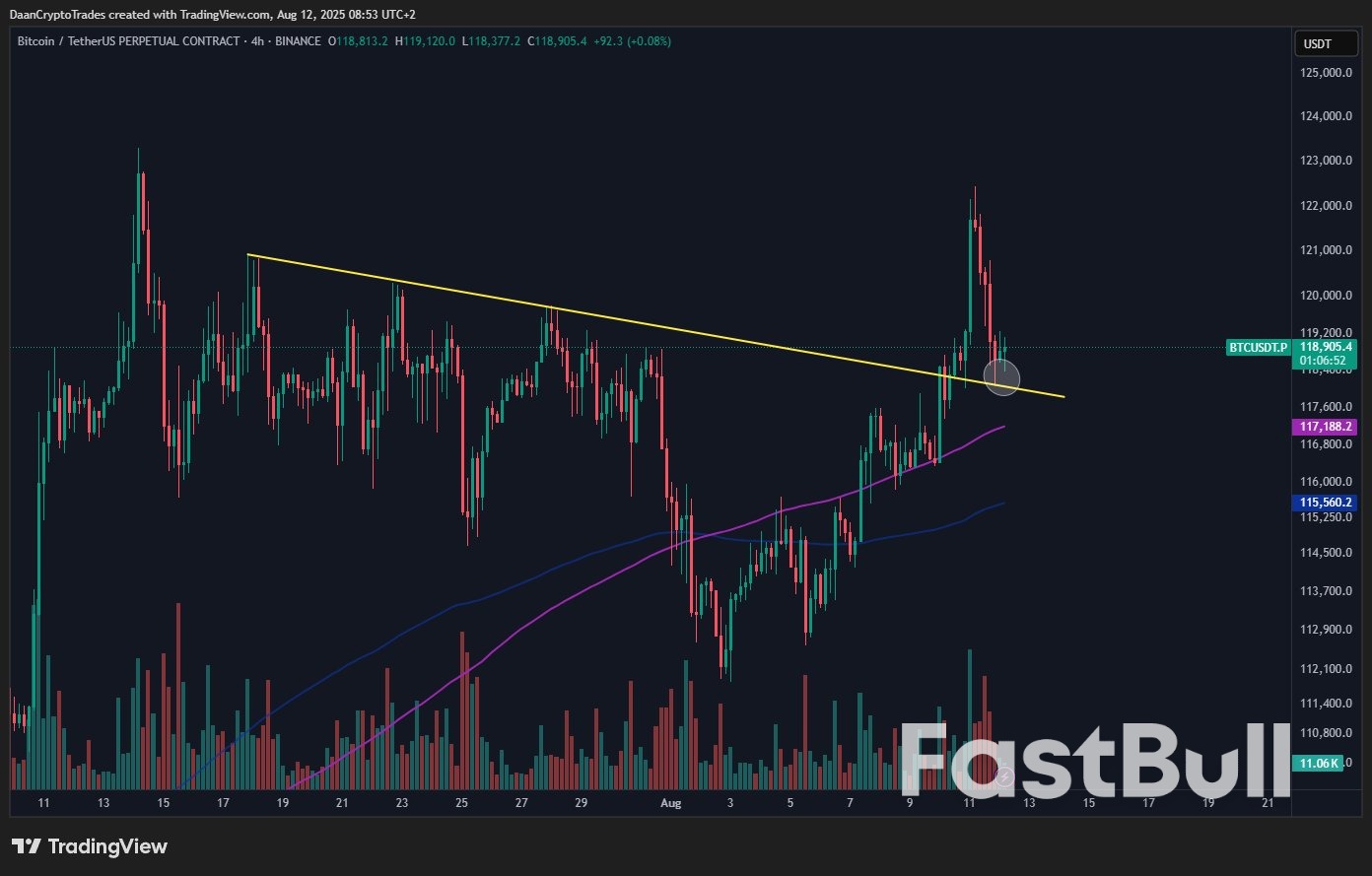
          “$BTC Retesting the trend line it broke out of before. The 4H 200MA/EMA are coming in right below,” he wrote on X Tuesday, referring to the 200-period simple and exponential moving averages on four-hour time frames.
          “But keep in mind that we do still have the CME gap which sits at around $117K. This would have some decent confluence with the 4H 200MA (Purple) and a wick into that region would make me look more closely for fresh longs on strong alts.”Bitcoin’s $95K Target in Sight as ‘Ugly’ Price Candle Halts Breakout Momentum_3

          BTC/USDT perpetual swaps four-hour chart. Source: Daan Crypto Trades/X

          Expectations for volatility were already high ahead of key US macroeconomic data, with the Consumer Price Index (CPI) print for July due on the day.
          As Cointelegraph reported, market participants see any outlying result as having an immediate impact on crypto and risk assets.

          Source: Cointelegraph

          Risk Warnings and Disclaimers
          You understand and acknowledge that there is a high degree of risk involved in trading. Following any strategies or investment methods may lead to potential losses. The content on the site is provided by our contributors and analysts for information purposes only. You are solely responsible for determining whether any trading assets, securities, strategy, or any other product is suitable for investing based on your own investment objectives and financial situation.
          Add to Favorites
          Share

          Oil News: WTI Straddles 200-Day MA as U.S.–China Tariff Truce Lifts Mood

          Adam

          Commodity

          WTI Inches Higher but Still Boxed In by Key Levels

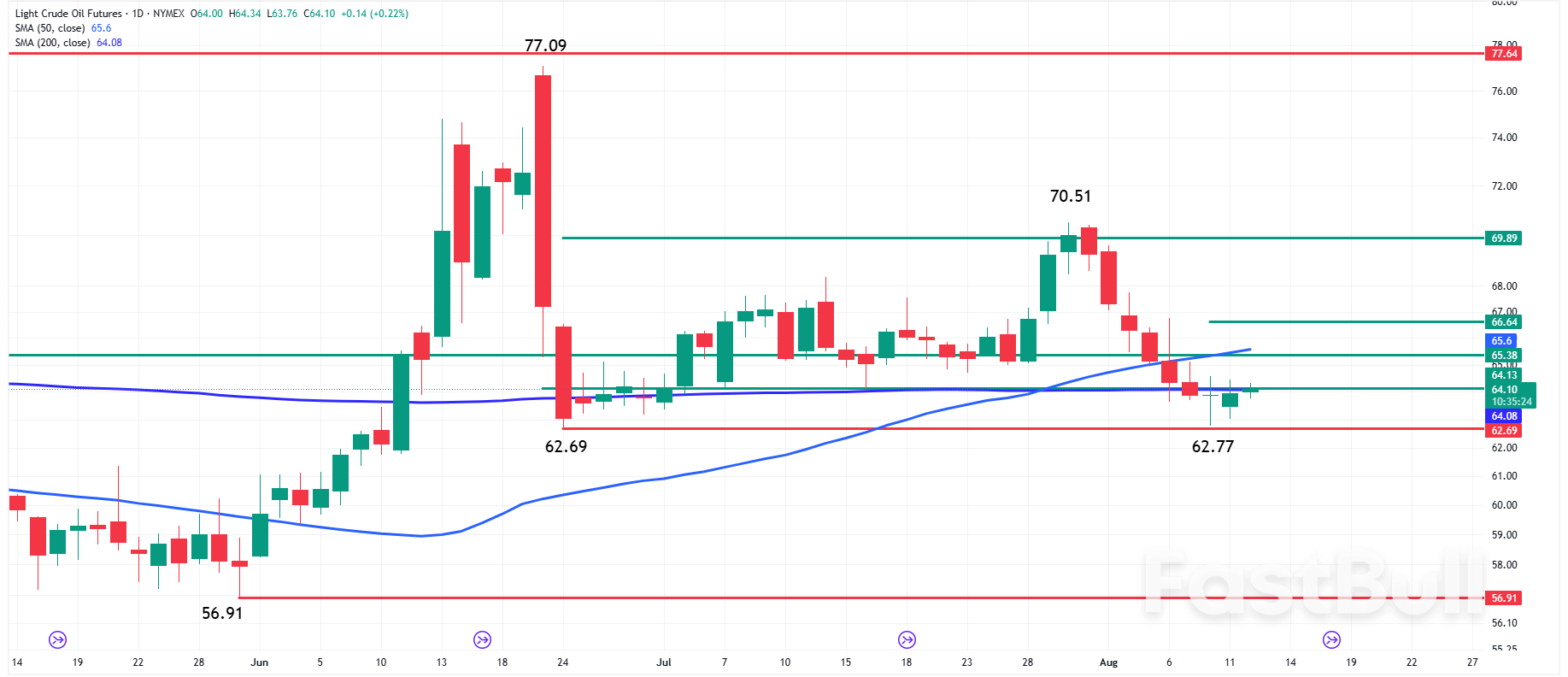
          Oil News: WTI Straddles 200-Day MA as U.S.–China Tariff Truce Lifts Mood_1Daily Light Crude Oil Futures

          Light crude oil futures are nudging higher this morning, but let’s be honest — we’re still in the same holding pattern we’ve been in for days. Prices are camped just above last week’s $62.77 low and that June 24 bottom at $62.69, while straddling the 200-day moving average at $64.08. That line has been calling the shots for the longer-term trend, and I think most traders are watching it closely.
          At 10:48 GMT, Light Crude Oil futures are trading $64.01, up $0.05 or +0.08%.
          On the topside, there’s a bit of a gauntlet to run — the long-term 50% retracement at $65.38 and the 50-day moving average at $65.60. And if we’re talking short-term charts, the $66.64 pivot from the $70.51–$62.77 range is the real swing point. Take that out with conviction, and it doesn’t take much imagination to see this market pop a couple of bucks in a hurry.

          Tariff Truce Gives Oil a Breather

          Part of the calm here comes from the U.S.–China tariff extension. President Trump’s decision to push the pause button until November 10 took some weight off the market’s shoulders. Triple-digit duties on Chinese goods would have been a body blow to global growth and, by extension, fuel demand. Now traders have a little breathing room — though whether this is a path to an actual agreement or just kicking the can down the road remains to be seen.

          Rate Cut Bets Add Support

          The other quiet boost comes from softer U.S. labor data, which has traders leaning harder toward a September Federal Reserve rate cut. That kind of move tends to pull the dollar lower, lift equities, and, more often than not, perk up oil demand. We’ve also got U.S. inflation data due later today — if it comes in cooler, the rate-cut crowd gets even louder. That being said, I don’t think crude is going to break out on this alone unless the chart levels start to give way.

          Geopolitics Could Flip the Script Fast

          Traders can’t ignore Friday’s planned Alaska sit-down between Trump and Putin. The Ukraine war headline risk is still huge — a peace push could ease sanctions pressure, while a breakdown might mean tougher penalties on Russian oil buyers like China and India. Commerzbank’s already warning that if Friday doesn’t bring progress, secondary sanctions could expand. That’s the sort of thing that can spike or sink prices overnight, no matter what the charts are saying.

          Outlook: More Likely Than Not, We Stay Range-Bound — For Now

          More likely than not, we keep grinding sideways between $62.70 and $66.60 until one of these geopolitical or economic triggers hits. Buyers seem comfortable defending dips toward $63, but the market hasn’t shown it’s got the strength to break $66.64 yet. I’d still look at pullbacks as potential buying opportunities — but we’ll see how that plays out if Friday’s meeting throws a curveball.

          Source: fxempire

          Risk Warnings and Disclaimers
          You understand and acknowledge that there is a high degree of risk involved in trading. Following any strategies or investment methods may lead to potential losses. The content on the site is provided by our contributors and analysts for information purposes only. You are solely responsible for determining whether any trading assets, securities, strategy, or any other product is suitable for investing based on your own investment objectives and financial situation.
          Add to Favorites
          Share

          USD CHF Technical Analysis – All eyes on the US CPI data

          Adam

          Forex

          Fundamental Overview

          The USD has been weak almost across the board since the NFP report as the softer than expected data triggered a quick dovish repricing and a change in stance for many Fed members.
          The market is pricing 57 bps of easing by year-end compared to just 35 bps before the NFP release. It’s highly likely that more benign data will see Fed Chair Powell opening the door for a cut in September at the Jackson Hole Symposium.
          The focus now turned to the US CPI report. We saw some dollar strength yesterday which could have been hedging activity into the risk event. The recent Fedspeak suggests that a rate cut in September might be unavoidable, so we might need very hot inflation data to change their mind (and of course a good NFP report in September).
          On the CHF side, we haven’t got anything new in terms of monetary policy as the SNB is now in a long pause. The latest Swiss CPI showed a slight improvement in inflation although it’s not important as the central bank will not hike rates for a long time. The market doesn’t expect the SNB to cut anymore.
          There’s some focus at the moment on the 39% tariffs that the US slapped on Switzerland. That is likely to be resolved in the near future with the rate being set between 10-20% as we’ve seen for most other countries.

          USDCHF Technical Analysis – Daily Timeframe

          USD CHF Technical Analysis – All eyes on the US CPI data_1USDCHF Daily

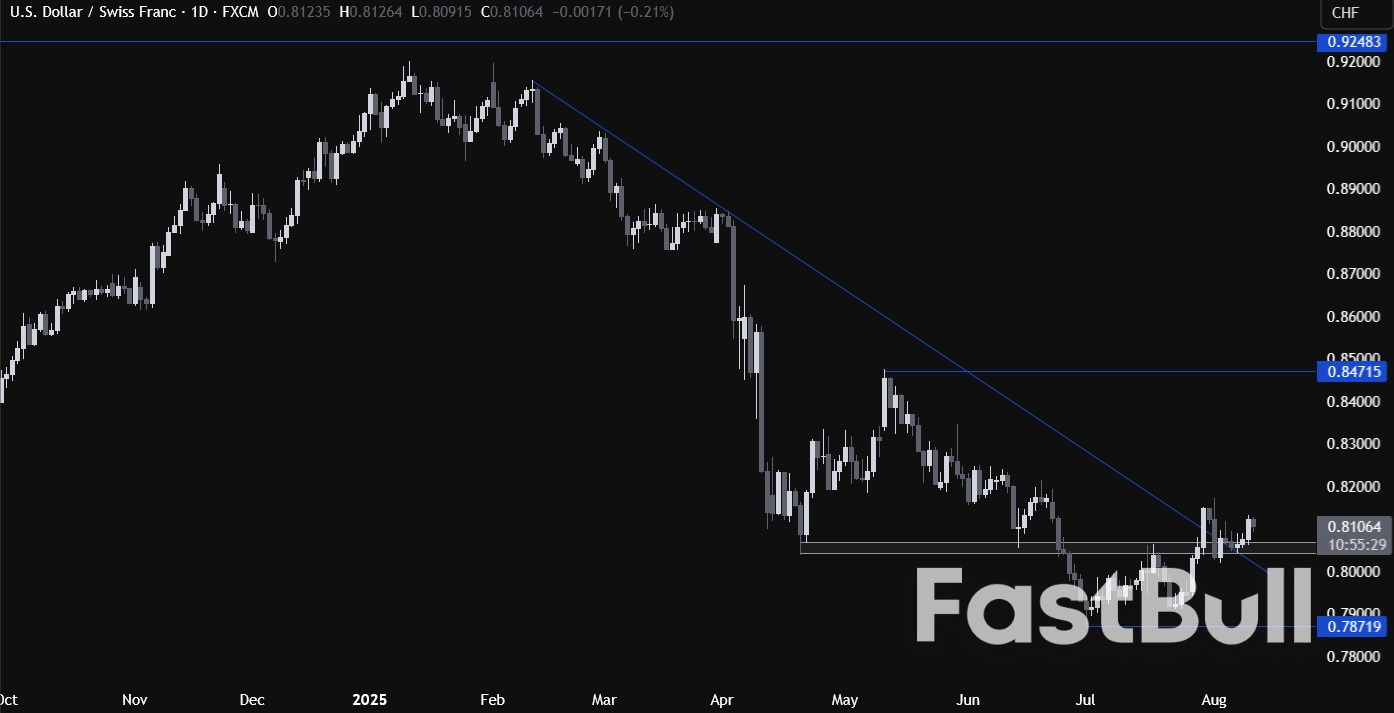
          On the daily chart, we can see that USDCHF is trading above the key support zone around the 0.8050 level and the major trendline. The buyers will likely continue to step in around the support with a defined risk below it to keep targeting the 0.84 handle next. The sellers, on the other hand, will look for a break lower to increase the bearish bets into new cycle lows.
          USDCHF Technical Analysis – 4 hour Timeframe

          USD CHF Technical Analysis – All eyes on the US CPI data_2USDCHF 4 hour

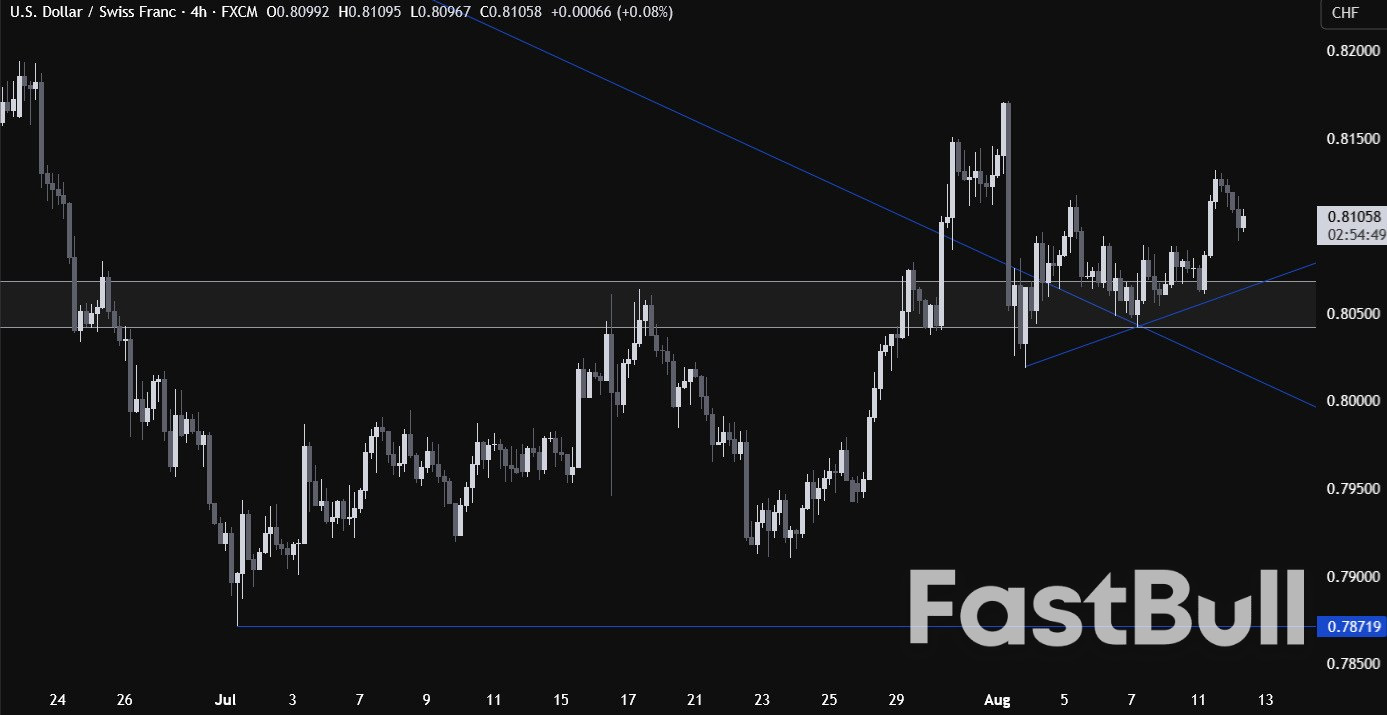
          On the 4 hour chart, we can see that we have a minor upward trendline defining the bullish structure on this timeframe. The trendline is near the support zone, so that area is going to be key for traders. Buyers will look for a bounce, while the sellers will look for a break.
          USDCHF Technical Analysis – 1 hour Timeframe

          USD CHF Technical Analysis – All eyes on the US CPI data_3USDCHF 1 hour

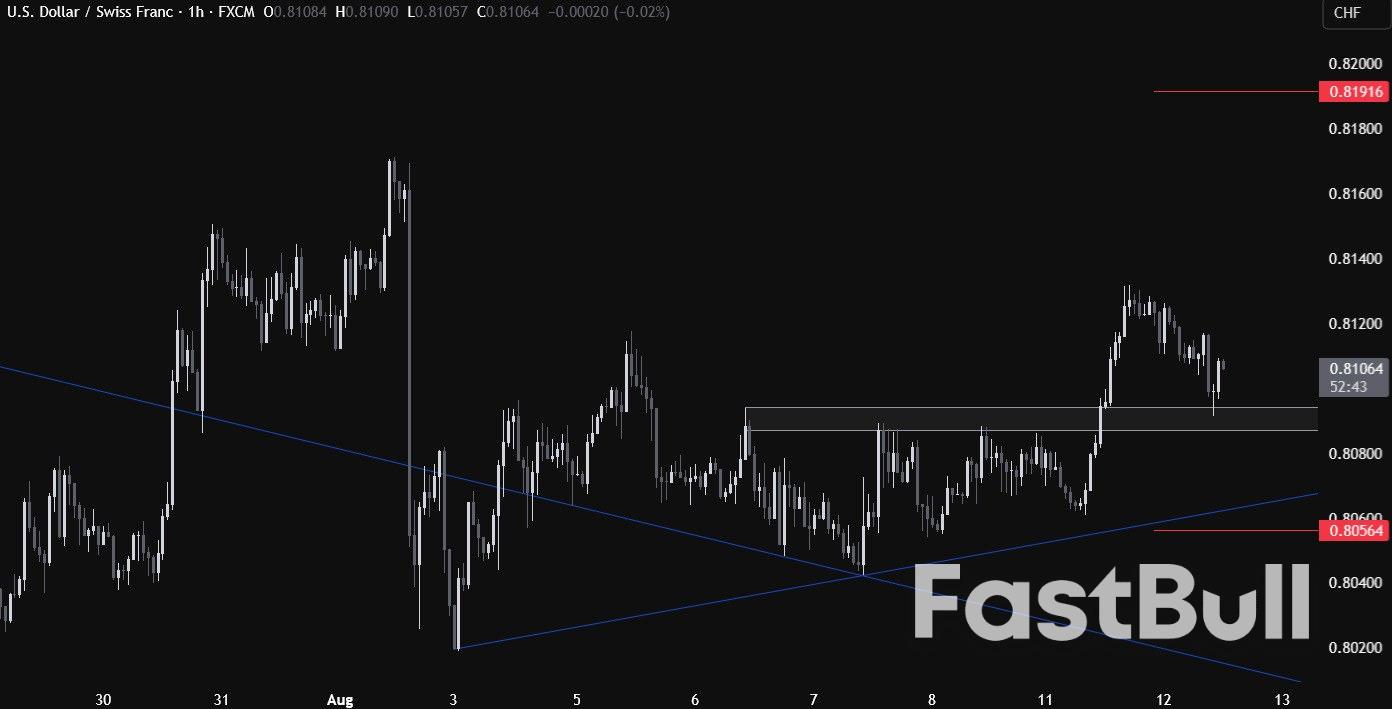
          On the 1 hour chart, we can see that we have a minor support zone around the 0.8090 level. This is where we can expect the buyers to step in with a defined risk below the zone to position for a rally into the 0.84 handle. The sellers, on the other hand, will look for a break lower to extend the pullback into the trendline. The red lines define the average daily range for today.
          It’s worth noting that we have the US CPI report today so the technicals might not mean much and it would be better to trade after the release.

          Upcoming Catalysts

          Today we have the US CPI report. On Thursday, we get the US PPI and the US Jobless Claims figures. On Friday, we conclude the week with the US Retail Sales and the University of Michigan Consumer Sentiment report. Focus also on Fedspeak, especially after the US CPI data.

          Source: investinglive

          Risk Warnings and Disclaimers
          You understand and acknowledge that there is a high degree of risk involved in trading. Following any strategies or investment methods may lead to potential losses. The content on the site is provided by our contributors and analysts for information purposes only. You are solely responsible for determining whether any trading assets, securities, strategy, or any other product is suitable for investing based on your own investment objectives and financial situation.
          Add to Favorites
          Share
          FastBull
          Copyright © 2025 FastBull Ltd

          728 RM B 7/F GEE LOK IND BLDG NO 34 HUNG TO RD KWUN TONG KLN HONG KONG

          TelegramInstagramTwitterfacebooklinkedin
          App Store Google Play Google Play
          Products
          Charts

          Chats

          Q&A with Experts
          Screeners
          Economic Calendar
          Data
          Tools
          Membership
          Features
          Function
          Markets
          Copy Trading
          Latest Signals
          Contests
          News
          Analysis
          24/7
          Columns
          Education
          Company
          Careers
          About Us
          Contact Us
          Advertising
          Help Center
          Feedback
          User Agreement
          Privacy Policy
          Business

          White Label

          Data API

          Web Plug-ins

          Poster Maker

          Affiliate Program

          Risk Disclosure

          The risk of loss in trading financial instruments such as stocks, FX, commodities, futures, bonds, ETFs and crypto can be substantial. You may sustain a total loss of the funds that you deposit with your broker. Therefore, you should carefully consider whether such trading is suitable for you in light of your circumstances and financial resources.

          No decision to invest should be made without thoroughly conducting due diligence by yourself or consulting with your financial advisors. Our web content might not suit you since we don't know your financial conditions and investment needs. Our financial information might have latency or contain inaccuracy, so you should be fully responsible for any of your trading and investment decisions. The company will not be responsible for your capital loss.

          Without getting permission from the website, you are not allowed to copy the website's graphics, texts, or trademarks. Intellectual property rights in the content or data incorporated into this website belong to its providers and exchange merchants.

          Not Logged In

          Log in to access more features

          FastBull Membership

          Not yet

          Purchase

          Become a signal provider
          Help Center
          Customer Service
          Dark Mode
          Price Up/Down Colors

          Log In

          Sign Up

          Position
          Layout
          Fullscreen
          Default to Chart
          The chart page opens by default when you visit fastbull.com