• Trade
  • Markets
  • Copy
  • Contests
  • News
  • 24/7
  • Calendar
  • Q&A
  • Chats
Trending
Screeners
SYMBOL
LAST
BID
ASK
HIGH
LOW
NET CHG.
%CHG.
SPREAD
SPX
S&P 500 Index
6812.45
6812.45
6812.45
6861.30
6801.50
-14.96
-0.22%
--
DJI
Dow Jones Industrial Average
48345.99
48345.99
48345.99
48679.14
48285.67
-112.05
-0.23%
--
IXIC
NASDAQ Composite Index
23078.81
23078.81
23078.81
23345.56
23012.00
-116.35
-0.50%
--
USDX
US Dollar Index
97.960
98.040
97.960
98.070
97.740
+0.010
+ 0.01%
--
EURUSD
Euro / US Dollar
1.17442
1.17451
1.17442
1.17686
1.17262
+0.00048
+ 0.04%
--
GBPUSD
Pound Sterling / US Dollar
1.33667
1.33674
1.33667
1.34014
1.33546
-0.00040
-0.03%
--
XAUUSD
Gold / US Dollar
4303.26
4303.67
4303.26
4350.16
4285.08
+3.87
+ 0.09%
--
WTI
Light Sweet Crude Oil
56.385
56.415
56.385
57.601
56.233
-0.848
-1.48%
--

Community Accounts

Signal Accounts
--
Profit Accounts
--
Loss Accounts
--
View More

Become a signal provider

Sell trading signals to earn additional income

View More

Guide to Copy Trading

Get started with ease and confidence

View More

Signal Accounts for Members

All Signal Accounts

Best Return
  • Best Return
  • Best P/L
  • Best MDD
Past 1W
  • Past 1W
  • Past 1M
  • Past 1Y

All Contests

  • All
  • Trump Updates
  • Recommend
  • Stocks
  • Cryptocurrencies
  • Central Banks
  • Featured News
Top News Only
Share

Attempts By Ukrainian Troops To Advance From The South-West To Outskirts Of Kupiansk Are Being Thwarted

Share

Russian Troops Control All Of Kupiansk - IFX Cites Russian Military

Share

On Monday (December 15), The South Korean Won Ultimately Rose 0.60% Against The US Dollar, Closing At 1468.91 Won. The Won Was On An Upward Trend Throughout The Day, Rising Significantly At 17:00 Beijing Time And Reaching A Daily High Of 1463.04 Won At 17:36

Share

Health Ministry: Israeli Forces Kill Palestinian Teen In West Bank

Share

New York Federal Reserve President Williams: Over Time, The Size Of Reserves Could Grow From $2.9 Trillion

Share

New York Fed President Williams: AI Valuations Are High, But There Is A Real Driving Factor

Share

New York Federal Reserve President Williams: The Job Market Is In Very Good Shape

Share

New York Fed President Williams: 'Very Supportive' Of USA Central Bank's Decision To Cut Interest Rates Last Week

Share

New York Fed President Williams: 'Too Early To Say' What Central Bank Should Do At January Meeting

Share

New York Fed President Williams: Strong Markets Part Of Reason Why Economy Will Grow Robustly In 2026

Share

New York Fed President Williams: What Constitutes Ample Reserves Will Change Over Time

Share

New York Fed President Williams: Market Valuations 'Elevated,' But There Are Reasons For Pricing

Share

New York Fed President Williams: Ample Reserves System Working Very Well

Share

New York Fed President Williams: Some Signs That Parts Of Underlying Economy Not As Strong As GDP Data Suggests

Share

New York Fed President Williams: Expects Coming Job Data Will Show Gradual Cooling

Share

Ukraine President Zelenskiy: Monitoring Of Ceasefire Should Be Part Of Security Guarantees

Share

Ukraine President Zelenskiy: Ukraine Needs Clear Understanding On Security Guarantees Before Taking Any Decisions Regarding Frontlines

Share

U.S. Commerce Secretary Rutnick Praised Korea Zinc Co. Ltd., Stating That The United States Will Have Priority Access To The Company's Products In 2026

Share

Ukraine President Zelenskiy: USA Passed On Russian Demands

Share

Zelenskiy Says: Don't Think USA Was Demanding Anything On Territories

TIME
ACT
FCST
PREV
Japan Tankan Small Manufacturing Outlook Index (Q4)

A:--

F: --

P: --

Japan Tankan Large Non-Manufacturing Outlook Index (Q4)

A:--

F: --

P: --

Japan Tankan Large Manufacturing Outlook Index (Q4)

A:--

F: --

P: --

Japan Tankan Small Manufacturing Diffusion Index (Q4)

A:--

F: --

P: --

Japan Tankan Large-Enterprise Capital Expenditure YoY (Q4)

A:--

F: --

P: --

U.K. Rightmove House Price Index YoY (Dec)

A:--

F: --

P: --

China, Mainland Industrial Output YoY (YTD) (Nov)

A:--

F: --

P: --

China, Mainland Urban Area Unemployment Rate (Nov)

A:--

F: --

P: --

Saudi Arabia CPI YoY (Nov)

A:--

F: --

P: --

Euro Zone Industrial Output YoY (Oct)

A:--

F: --

P: --

Euro Zone Industrial Output MoM (Oct)

A:--

F: --

P: --

Canada Existing Home Sales MoM (Nov)

A:--

F: --

P: --

Canada National Economic Confidence Index

A:--

F: --

P: --

Canada New Housing Starts (Nov)

A:--

F: --

P: --
U.S. NY Fed Manufacturing Employment Index (Dec)

A:--

F: --

P: --

U.S. NY Fed Manufacturing Index (Dec)

A:--

F: --

P: --

Canada Core CPI YoY (Nov)

A:--

F: --

P: --

Canada Manufacturing Unfilled Orders MoM (Oct)

A:--

F: --

P: --

U.S. NY Fed Manufacturing Prices Received Index (Dec)

A:--

F: --

P: --

U.S. NY Fed Manufacturing New Orders Index (Dec)

A:--

F: --

P: --

Canada Manufacturing New Orders MoM (Oct)

A:--

F: --

P: --

Canada Core CPI MoM (Nov)

A:--

F: --

P: --

Canada Trimmed CPI YoY (SA) (Nov)

A:--

F: --

P: --

Canada Manufacturing Inventory MoM (Oct)

A:--

F: --

P: --

Canada CPI YoY (Nov)

A:--

F: --

P: --

Canada CPI MoM (Nov)

A:--

F: --

P: --

Canada CPI YoY (SA) (Nov)

A:--

F: --

P: --

Canada Core CPI MoM (SA) (Nov)

A:--

F: --

P: --

Canada CPI MoM (SA) (Nov)

A:--

F: --

P: --

Federal Reserve Board Governor Milan delivered a speech
U.S. NAHB Housing Market Index (Dec)

A:--

F: --

P: --

Australia Composite PMI Prelim (Dec)

--

F: --

P: --

Australia Services PMI Prelim (Dec)

--

F: --

P: --

Australia Manufacturing PMI Prelim (Dec)

--

F: --

P: --

Japan Manufacturing PMI Prelim (SA) (Dec)

--

F: --

P: --

U.K. 3-Month ILO Employment Change (Oct)

--

F: --

P: --

U.K. Unemployment Claimant Count (Nov)

--

F: --

P: --

U.K. Unemployment Rate (Nov)

--

F: --

P: --

U.K. 3-Month ILO Unemployment Rate (Oct)

--

F: --

P: --

U.K. Average Weekly Earnings (3-Month Average, Including Bonuses) YoY (Oct)

--

F: --

P: --

U.K. Average Weekly Earnings (3-Month Average, Excluding Bonuses) YoY (Oct)

--

F: --

P: --

France Services PMI Prelim (Dec)

--

F: --

P: --

France Composite PMI Prelim (SA) (Dec)

--

F: --

P: --

France Manufacturing PMI Prelim (Dec)

--

F: --

P: --

Germany Services PMI Prelim (SA) (Dec)

--

F: --

P: --

Germany Manufacturing PMI Prelim (SA) (Dec)

--

F: --

P: --

Germany Composite PMI Prelim (SA) (Dec)

--

F: --

P: --

Euro Zone Composite PMI Prelim (SA) (Dec)

--

F: --

P: --

Euro Zone Services PMI Prelim (SA) (Dec)

--

F: --

P: --

Euro Zone Manufacturing PMI Prelim (SA) (Dec)

--

F: --

P: --

U.K. Services PMI Prelim (Dec)

--

F: --

P: --

U.K. Manufacturing PMI Prelim (Dec)

--

F: --

P: --

U.K. Composite PMI Prelim (Dec)

--

F: --

P: --

Euro Zone ZEW Economic Sentiment Index (Dec)

--

F: --

P: --

Germany ZEW Current Conditions Index (Dec)

--

F: --

P: --

Germany ZEW Economic Sentiment Index (Dec)

--

F: --

P: --

Euro Zone Trade Balance (Not SA) (Oct)

--

F: --

P: --

Euro Zone ZEW Current Conditions Index (Dec)

--

F: --

P: --

Euro Zone Trade Balance (SA) (Oct)

--

F: --

P: --

Euro Zone Total Reserve Assets (Nov)

--

F: --

P: --

U.K. Inflation Rate Expectations

--

F: --

P: --

Q&A with Experts
    • All
    • Chatrooms
    • Groups
    • Friends
    Connecting
    .
    .
    .
    Type here...
    Add Symbol or Code

      No matching data

      All
      Trump Updates
      Recommend
      Stocks
      Cryptocurrencies
      Central Banks
      Featured News
      • All
      • Russia-Ukraine Conflict
      • Middle East Flashpoint
      • All
      • Russia-Ukraine Conflict
      • Middle East Flashpoint
      Search
      Products

      Charts Free Forever

      Chats Q&A with Experts
      Screeners Economic Calendar Data Tools
      Membership Features
      Data Warehouse Market Trends Institutional Data Policy Rates Macro

      Market Trends

      Market Sentiment Order Book Forex Correlations

      Top Indicators

      Charts Free Forever
      Markets

      News

      News Analysis 24/7 Columns Education
      From Institutions From Analysts
      Topics Columnists

      Latest Views

      Latest Views

      Trending Topics

      Top Columnists

      Latest Update

      Signals

      Copy Rankings Latest Signals Become a signal provider AI Rating
      Contests
      Brokers

      Overview Brokers Assessment Rankings Regulators News Claims
      Broker listing Forex Brokers Comparison Tool Live Spread Comparison Scam
      Q&A Complaint Scam Alert Videos Tips to Detect Scam
      More

      Business
      Events
      Careers About Us Advertising Help Center

      White Label

      Data API

      Web Plug-ins

      Affiliate Program

      Awards Institution Evaluation IB Seminar Salon Event Exhibition
      Vietnam Thailand Singapore Dubai
      Fans Party Investment Sharing Session
      FastBull Summit BrokersView Expo
      Recent Searches
        Top Searches
          Markets
          News
          Analysis
          User
          24/7
          Economic Calendar
          Education
          Data
          • Names
          • Latest
          • Prev

          View All

          No data

          Scan to Download

          Faster Charts, Chat Faster!

          Download App
          English
          • English
          • Español
          • العربية
          • Bahasa Indonesia
          • Bahasa Melayu
          • Tiếng Việt
          • ภาษาไทย
          • Français
          • Italiano
          • Türkçe
          • Русский язык
          • 简中
          • 繁中
          Open Account
          Search
          Products
          Charts Free Forever
          Markets
          News
          Signals

          Copy Rankings Latest Signals Become a signal provider AI Rating
          Contests
          Brokers

          Overview Brokers Assessment Rankings Regulators News Claims
          Broker listing Forex Brokers Comparison Tool Live Spread Comparison Scam
          Q&A Complaint Scam Alert Videos Tips to Detect Scam
          More

          Business
          Events
          Careers About Us Advertising Help Center

          White Label

          Data API

          Web Plug-ins

          Affiliate Program

          Awards Institution Evaluation IB Seminar Salon Event Exhibition
          Vietnam Thailand Singapore Dubai
          Fans Party Investment Sharing Session
          FastBull Summit BrokersView Expo

          History Shows How A UK Election Can Impact The Country’s Stock Market

          Samantha Luan

          Economic

          Stocks

          Political

          Summary:

          The U.K. is heading for a General Election on July 4, and history may indicate a neutral to positive stock market reaction if the Labour Party ousts the Conservatives, analysts said.

          The U.K. is less than six weeks away from a General Election in which polls suggest the center-left Labour Party could return to power after 14 years — and analysts say stock markets would react positively to that outcome.
          A Labour victory would oust the right-wing Conservative Party led by Prime Minister Rishi Sunak, who announced the July 4 vote last week. Even if Labour does not achieve a parliamentary majority, it could seek a coalition partner with a smaller party to form a government unless the Conservatives deliver a surprise outperformance.
          In a Wednesday note analyzing stock movements from 1979 onward, Citi said that U.K. stocks have historically been “relatively flat to down” in the six months following elections (the research excludes the “volatile financial conditions” of the DotCom crash and Great Financial Crisis).
          The MSCI UK index of large- to mid-cap stocks has been up by circa 6% six months after Labour victories and down circa 5% following Conservative wins, according to Citi.
          The more domestically-oriented FTSE 250 has tended to outperform the FTSE 100 following elections, with stronger outperformance following Labour victories, it said.
          Defensive stocks and financials tend to perform better post-elections, with energy performing well on both sides, the bank also found.
          According to Capital Economics, the U.K. stock market has faltered on five occasions under past Labour governments.
          However, the consultancy's Chief Markets Economist John Higgins said it would be "disingenuous" to attribute those entirely to the party. They occurred during the Great Depression of the 1930s, in the post-war 1940s, the aftermath of the oil market shock in the early 1970s, the DotCom crash in 2000 and during the Great Financial Crisis, he said in a note Thursday.
          Higgins also observed that the relative performance of U.K. stocks has "generally been underwhelming since 2010," when the Conservatives took office.
          "Whatever your view of history, we doubt the Labour Party's return to power would be a big deal for investors this time around," Higgins added.

          Fiscal fight

          Labour's leadership, particularly Shadow Finance Minister Rachel Reeves and party leader Keir Starmer, have repeatedly stressed over the last year that they will focus on fiscal discipline and look to reduce the national debt as a share of gross domestic product.
          Reeves, a former banker, has also sought to woo business leaders and the financial establishment, meeting with executives and attending events such as the World Economic Forum in Davos.
          Barclays CEO C.S. Venkatakrishnan told CNBC in January that political risk in the U.K. was "far less than it's ever been" and that the difference in economic policies between the parties was "fairly minimal."
          Labour figures have made clear that in the current campaign, they will accuse the Conservatives of running up a high public debt and of denting the U.K.'s economic credibility during the so-called "mini-budget crisis" under Sunak's short-serving predecessor Liz Truss.
          In comments last week, Sunak said inflation had gone "back down to normal," the economy was growing and wages were "rising sustainably."

          Sterling outlook

          Capital Economics' John Higgins said that past Labour governments have coincided with five crashes in the British pound over the last 100 years, but that broader factors were again at play.
          Three could be attributed to the "unsustainability of fixed exchange rate regimes" between the 1930s and 1970s, one to the Great Financial Crisis, and the fifth to the 1976 Debt Crisis, he said.
          The lack of fiscal divergence between the parties means the outlook for both sterling and U.K. government bonds, known as gilts, will remain more connected to the interest rate outlook, analysts predict.
          ″[Foreign exchange] market reactions are strongest when there is a large degree of uncertainty around an election. This can’t be applied to the current situation, and if history is a guide, we should expect modest sterling gains over the next few weeks, and almost no reaction to the outcome of the election itself,” Joe Tuckey, head of FX analysis at Argentex Group, said in a Friday note.
          “This was the playbook in the run up to the 1997 New Labour win, where sterling rallied just 2.5% in the few weeks before polling day. In many ways, sterling will refocus around inflation and Bank of England rate policy which is likely to be more determinative of price moves than the election outcome.”

          Source:CNBC

          To stay updated on all economic events of today, please check out our Economic calendar
          Risk Warnings and Disclaimers
          You understand and acknowledge that there is a high degree of risk involved in trading. Following any strategies or investment methods may lead to potential losses. The content on the site is provided by our contributors and analysts for information purposes only. You are solely responsible for determining whether any trading assets, securities, strategy, or any other product is suitable for investing based on your own investment objectives and financial situation.
          Add to Favorites
          Share

          Ether Options Open Interest Now Dominated by Calls, Analysts Say

          Warren Takunda

          Cryptocurrency

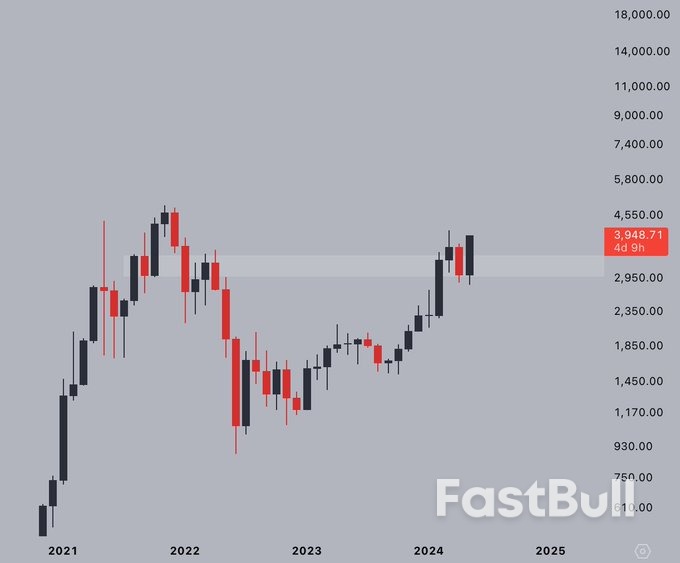
          Call options are dominating ether open interest as investors position themselves for a potential increase in institutional demand from spot ETH exchange-traded funds , analysts noted.
          Ether spot ETFs were approved by the U.S. Securities and Exchange Commission last Thursday — but, unlike bitcoin ETFs, which started trading the day after approval, the ether ETFs may not go live for a few weeks or months.
          In light of the recent approvals, QCP Capital analysts expressed a positive structural outlook for ether — noting that the largest increases in ether options open interest over the past 24 hours were primarily in calls.
          This observation aligns with data from the Deribit derivatives exchange, which shows the ether put-call ratio for all expirations is now at 0.56. A put-call options ratio below one indicates that the call volume exceeds the put volume, signifying bullish sentiment in the market.

          Elevated ether call option implied volatility

          The analysts added that implied volatility for near-term ether calls is higher than that for put options — a situation that indicates the market is anticipating upward price movement or greater demand for call options relative to put options.
          "Ether frontend vols could remain 15-20 vols above bitcoin, and ether skew is likely to remain in favor of calls," QCP Capital analysts added.
          However, the QCP Capital report said that a potential breakout for the ether price will have to wait until there is more clarity on the S-1 approvals.Ether Options Open Interest Now Dominated by Calls, Analysts Say  _1
          The Block's Data Dashboard shows ether IV spiked last week amid the SEC's decision to approve eight spot ether ETFs. Since then, IV has decreased slightly but is still elevated compared to that for bitcoin.
          IV is a measure used in the options market to estimate the market's forecast of a likely movement in an asset's price. Higher IV indicates that the market expects significant price movements (higher uncertainty or risk), while lower IV suggests more stability.
          Options are financial derivatives that give the holder the right, but not the obligation, to buy or sell an asset (in this case, ether or bitcoin) at a predetermined price before a specified date.
          Ether's price increased by a muted 0.5% in the past 24 hours and was changing hands for $3,922 at 6:24 a.m. ET, according to The Block’s Price Page.
          The GM 30 Index, representing a selection of the top 30 cryptocurrencies, increased by 0.43% to 146.98 in the same period.

          Source: TheBlock

          Risk Warnings and Disclaimers
          You understand and acknowledge that there is a high degree of risk involved in trading. Following any strategies or investment methods may lead to potential losses. The content on the site is provided by our contributors and analysts for information purposes only. You are solely responsible for determining whether any trading assets, securities, strategy, or any other product is suitable for investing based on your own investment objectives and financial situation.
          Add to Favorites
          Share

          Will Raisi's Death Lead to Softer Iranian Policy Towards the West?

          Cohen

          Economic

          Political

          The death of Iranian President Ebrahim Raisi in a helicopter crash on Sunday 19 May has reignited optimism among some that Iran’s stance towards the West may soften again into the pragmatic approach of his reforming predecessor, President Hassan Rouhani. For the moment, presidential power has been transferred to Vice President Mohammad Mokhber, but a snap election is due to be held on 28 June to determine the president for the next four-year term. So, will it usher in a new dawn of better relations between Iran and the West of the sort that previously saw the forging of the Joint Comprehensive Plan of Action (JCPOA, or colloquially ‘the nuclear deal’) on 14 July 2015?
          It is true that when he was elected president on 3 August 2013, former President Rouhani was instrumental in allowing more access for Western companies into Iran’s key businesses – including its huge but still relatively underdeveloped oil and gas sectors - in exchange for allowing greater oversight of its nuclear program. From Iran’s side, this would see a huge influx of investment from the West that would swell the coffers of an economy blighted by decades of international sanctions. This in turn would alleviate increasing social discontent from a large proportion of Iran’s young, well-educated, and non-Islamic fundamentalist population. It would also, as far as the country’s Islamic Revolutionary Guards Corps (IRGC) was concerned, provide funding for a stealthy advancement in key elements of its nuclear program and for the plugging of technology gaps elsewhere in its economy, as analyzed in full in my new book on the new global oil market order. After the signing of the JCPOA, commitments for massive investment rolled in from scores of Western firms, and Rouhani won a second term as president. It was at this point, though, that the P5+1 group of nations (the U.S., U.K., France, Russia, and China plus Germany) that had signed the JCPOA deal revealed their own surprise, which was that they essentially wanted to dismantle the power of the IRGC across all key areas of Iran’s political and economic life, as also detailed in the book. It was at that point that the JCPOA began to fall apart, even before the U.S. unilaterally withdrew from the deal on 8 May 2018.
          More than any other factor, the failure of the deal underlined that in reality there is no such thing as a ‘moderate’ Iranian politician in the truest sense of the word. Rouhani had been keen to re-engage with the West based solely on the beneficial economic considerations for Iran and not on some deeper ideological basis that might include embracing anything other than the notion of Iran as a fundamentalist Islamic state. Crucially, he had only been able to do so with the full blessing of Iran’s Supreme Leader, Ali Khamenei, and the ‘Guardians of the Islamic Revolution’, the IRGC in his first presidential term. When the powers of both were threatened by the JCPOA as it evolved past Rouhani’s first four years, the deal was effectively dead from the Iranian side. In this sense, then, there is no meaningful difference between those commonly portrayed in the West as Iranian political ‘moderates’ or ‘hardliners’, with the only variance in politicians being the degree of freedom they have been allowed by the Supreme Leader and the IRGC at any given moment. Moreover, as also analyzed in my new book, the portrayal of Iranian politicians as either moderate or hardliner has been encouraged by the IRGC as a ploy to leverage the West into certain negotiating positions and certain deals by playing up to its fears of ‘further empowering the hardliners’, or ‘undermining the moderates’.
          “At the centre of the guiding principles for all top-level Iranian politics is the concept of Velayat-e-Faqih, which means that all serious political and religious authority is entrusted to the [Shia] clergy, which makes all key decisions for Iran, provided that they have been approved by the Supreme Leader, and this is then enforced by the Guardians of the [1979] Revolution, the IRGC,” a senior source close to Iran’s Petroleum Ministry exclusively told OilPrice.com. “These decisions cover everything of significance for Iran, from foreign policy, through defence policy, economic policy, and intelligence policy, to any domestic policy over and above how many aerials a specific apartment complex in Tehran can have on its roof,” he added. “It should be remembered that [former President, Hassan] Rouhani himself - often cited as a moderate – began his adult life as a cleric, becoming an ardent follower of the leader of the 1979 Revolution, Ayatollah Ruhollah Khomenei,” he said. “This structure is reinforced with the second element in Iran’s power structures that pre-determine the type of president it will have after the next election, which is the Majlis,” he underlined. The Majlis - Iran’s 290-member parliament - is an elected house, but its real powers are confined to determining non-essential matters, although even these decisions can be overturned by the Guardian Council of the Constitution, which approves all legislation. In turn, this 12-member body acts in the manner of a general constitutional overseer, with half of its membership always being Shia theologians directly chosen by the Supreme Leader himself. The other six members are lawyers selected by the head of the judiciary, who in turn is also directly appointed by the Supreme Leader.
          The final element of pre-determination in the upcoming Iranian presidential elections is the pre-selection process for ‘suitable candidates’ for the position by a body over which no one, except the Supreme Leader, has any authority at all – the Expediency Discernment Council of the System. The Expediency Council will vet all candidates and then pass the list to the Guardian Council, which will then publish the official shortlist of shortly before the election date. The Expediency Council was originally created by the Supreme Leader to resolve any differences that arose between the Guardian Council and the Majlis, but it also now functions as a key advisory body to the Supreme Leader. According to the Iran source, Iran’s Supreme National Security Council will also send a ‘foundation document on candidates’ to the Expediency Council that stresses the current security concerns of Iran’s key geopolitical backers – China and Russia. “This document will ensure that all the shortlisted candidates have ideas on politics, economics, and global security that are congruent with those of our Chinese and Russian partners,” the Iran source exclusively told OilPrice.com last week.
          The late President Raisi was what the West terms a hardliner, but even he was given no say in Iran’s backing for Hamas’s 7 October 2023 attacks on Israel or on the 13 April drone and missile attacks directly on Israel, according to the senior Iran source. “He also had no say on Iran’s maneuvering of the Houthis to attack ships in the Red Sea area, or to threaten Saudi Arabian oil facilities or any such matters, and nor will the next president whoever it is,” he said. “All the key decisions will continue to be made by the Supreme Leader in conference with the IRGC,” he added. This said, a far more important appointment for Iran’s future may come from the replacement of Raisi on the Assembly of Experts, which is the group that chooses the new supreme leader when the ailing 85-year-old Khamenei dies. “For a long time, Khamenei has looked to his son, Mojtaba, to replace him as Supreme Leader, and he could well be appointed to the Assembly of Experts,” the Iran source underlined last week. “This would be the genuinely big event following Raisi’s death,” he concluded.

          Source:oilprice

          To stay updated on all economic events of today, please check out our Economic calendar
          Risk Warnings and Disclaimers
          You understand and acknowledge that there is a high degree of risk involved in trading. Following any strategies or investment methods may lead to potential losses. The content on the site is provided by our contributors and analysts for information purposes only. You are solely responsible for determining whether any trading assets, securities, strategy, or any other product is suitable for investing based on your own investment objectives and financial situation.
          Add to Favorites
          Share

          Mester Says Fed Can Better Explain How Economy Affects Decisions

          Owen Li

          Economic

          Central Bank

          Speaking in Tokyo on Tuesday, Mester recommended two key changes: adding more words to the Fed's post-meeting policy statement – to describe how officials assess economic developments and potential risks to the outlook – and more detail to its quarterly summary of policymakers' economic forecasts.
          “Enhancements to communications would make monetary policy more effective in normal times and also improve the effectiveness of nonconventional policy tools, such as forward guidance, in extraordinary times,” she said in prepared remarks at a conference hosted by the Bank of Japan.
          The Cleveland Fed chief, who votes on the Fed's policy-setting committee this year, said she expects officials to consider communications as part of the five-year review of their policy framework set to kick off toward the end of 2024. She did not comment on the outlook for the economy or interest rates.
          Mester said increasingly short policy statements, while often seen as a virtue, can also be problematic as each word takes on added significance. They can also make it harder for the public to see the link between economic developments and policy decisions.
          She said it would be better for policymakers to “take control of the narrative” and use more words to describe how economic developments have affected the outlook, and the potential risks to that outlook.
          Putting more emphasis on risks “would give market participants and the general public a better sense of the contingent, data-dependent nature of policymaking and would raise the central bank's credibility in that a change in policy would be seen less as a breach of promise,” she said.
          Mester also said scenario analysis – or describing how different scenarios would lead to different policy actions – should also be a standard part of Fed communications.
          “This could be particularly useful in periods like today when the underlying structural elements of the economy may have changed,” she said.
          The Fed should also consider publishing an anonymized matrix connecting officials' forecasts for interest rates – often referred to as the “dot plot” — with their projections for growth, unemployment and inflation in their Summary of Economic Projections, Mester said.
          “Currently, the variables in the SEP are not linked across participants, and the median paths provided don't necessarily represent a coherent forecast,” she said.
          Connecting the dots would give the public a better sense of how each individual official would adjust policy based on changing economic conditions, Mester said, echoing an argument Chicago Fed President Austan Goolsbee also made in May.
          Mester will step down from her role as Cleveland Fed president in June when her term expires.

          Balance Sheet

          Speaking on the same panel, Fed Governor Michelle Bowman focused her prepared remarks on the Fed's balance sheet, the reduction of which “has proceeded relatively smoothly,” she said.
          Fed officials will slow the pace at which they're shrinking the balance sheet starting next month, and have said they intend to stop when the level of bank reserves are somewhat above a level they deem ample.
          “In my view, we are not yet at that point,” Bowman said, adding that she would have supported waiting to slow the pace of asset runoff or implementing a more tapered slowing.
          “In my view, it is important to continue to reduce the size of the balance sheet to reach ample reserves as soon as possible and while the economy is still strong,” she said. “Doing so will allow the Federal Reserve to more effectively and credibly use its balance sheet to respond to future economic and financial shocks.”

          Source: Bloomberg

          To stay updated on all economic events of today, please check out our Economic calendar
          Risk Warnings and Disclaimers
          You understand and acknowledge that there is a high degree of risk involved in trading. Following any strategies or investment methods may lead to potential losses. The content on the site is provided by our contributors and analysts for information purposes only. You are solely responsible for determining whether any trading assets, securities, strategy, or any other product is suitable for investing based on your own investment objectives and financial situation.
          Add to Favorites
          Share

          Retail Sales Saw a Revival in May

          Warren Takunda

          Economic

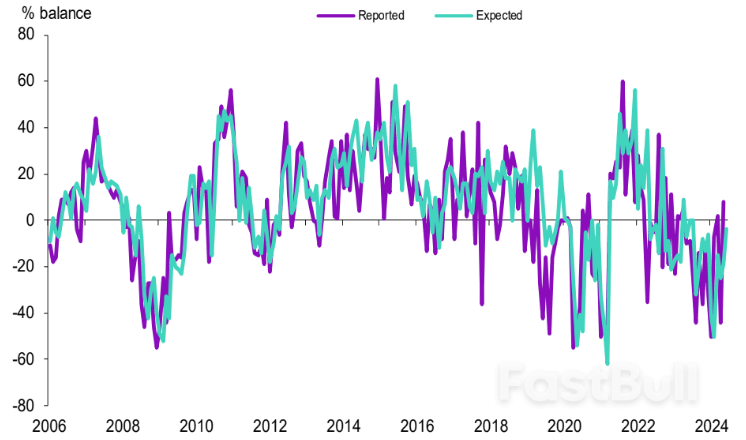
          The data comes just days after official figures for April disappointed against expectations, with a wet April being blamed.
          Some payback appears to be underway, with the weighted balance rising to +8% from -44%, which represents the fastest increase since December 2022.
          "May's increase in retail sales adds to the swathe of data pointing to an improvement in activity over the near-term. Falling inflation, and continuing real wage growth will contribute to a healthier consumer outlook, in turn supporting the retail sector further," says Alpesh Paleja, the CBI's lead economist.
          Retail Sales Saw a Revival in May_1

          Above: Volume of sales compared to a year earlier.

          The latest CBI Distributive Trades Survey also showed selling price inflation in the retail sector eased considerably in May, to its lowest since August 2020. Selling price inflation eased considerably to +20% from +54% in February and has now fallen back below its long-run average.
          The data comes on the same day the British Retail Consortium (BRC) shop price index revealed inflation is back to what the BRC describes as "normal levels" after it eased sharply to a 30-month low at 0.6% y/y in May.
          Economists say fading inflationary pressures can help sustain an improvement in retail sales in the coming months. Indeed, retailers said they expect sales to fall slightly next month but to remain broadly in line with seasonal norms.
          Sales were seen as "average" for the time of year (+2%), which was the firmest outturn in eight months. Sales are expected to remain broadly in line with seasonal norms in June (+1%).
          Orders placed upon suppliers declined moderately in the year to May (-11% from -49%). Retailers expect the cutback in orders to continue next month at a slightly faster rate (-16%).
          However, retail employment continued to decline for the seventh consecutive quarter (-26%). Headcount in retail is expected to continue to contract next month, but at a more moderate pace (-18%).
          "The mixed mood from our survey demonstrates just how nascent the economic recovery is. All parties should use this general election campaign to embrace policies which will embed sustainable growth, foster the investment we need to develop a labour market which delivers higher living standards, and to accelerate our transition to net zero," says Paleja.

          Source: Poundsterlinglive

          To stay updated on all economic events of today, please check out our Economic calendar
          Risk Warnings and Disclaimers
          You understand and acknowledge that there is a high degree of risk involved in trading. Following any strategies or investment methods may lead to potential losses. The content on the site is provided by our contributors and analysts for information purposes only. You are solely responsible for determining whether any trading assets, securities, strategy, or any other product is suitable for investing based on your own investment objectives and financial situation.
          Add to Favorites
          Share

          Reviving Trilateral Ties: China, Japan, and South Korea Reconnect

          Cohen

          Economic

          Political

          Chinese Premier Li Qiang praised what he called a restart in relations with Japan and South Korea as he met their leaders for the first three-way talks in four years on Monday in Seoul, striving to revive trade and security dialogues hampered by global tensions. Li, South Korean President Yoon Suk Yeol, and Japanese Prime Minister Fumio Kishida will adopt a joint statement on six areas including the economy and trade, science and technology, people-to-people exchanges and health and the aging population, Seoul officials said.
          They may also agree to resume three-party free trade agreement negotiations, which have been stalled since 2019, according to Japanese media reports. At the summit, Li called for the comprehensive resumption of trilateral cooperation with an open attitude and transparent measures, China's official Xinhua news agency reported.
          He said relations between the three nations had not changed despite profound global transformations. "Our meeting today, first in more than four years, is both a restart and a new beginning," Li said, according to a post on X by China's foreign ministry.
          China and U.S.-allied South Korea and Japan are trying to manage rising distrust amid the rivalry between Beijing and Washington and tensions over democratically ruled Taiwan, which China claims as its own. Yoon and Kishida have charted a closer course with each other and to Washington, embarking on unprecedented three-way cooperation with the United States on military and other measures.
          Monday's summit comes a day after the leaders met separately for bilateral talks with each other. In those meetings, Li and Yoon agreed to a diplomatic and security dialogue and resume free trade talks, while Kishida and the Chinese premier discussed Taiwan and agreed to hold a new round of bilateral high-level economic dialogue.
          Yoon also asked China to play a constructive role with its partners in North Korea, which is expanding its nuclear weapons and missile arsenal in defiance of United Nations Security Council resolutions. North Korea has notified Japan of its plan to launch a rocket carrying a space satellite between May 27 and June 4, the Japan Coast Guard said on Monday.
          Officials from the United States, Japan, and South Korea held phone talks in response to the notice and demanded that North Korea cancel the launch because it would use ballistic missile technology in violation of the U.N. resolutions, Japan's Foreign Ministry said. TRADE RELATIONS
          The trade relationship between China, South Korea and Japan has evolved over the past decade to become increasingly competitive. Those ties have been further tested by U.S. calls for its allies to shift their supply chains for key products, such as semiconductors, away from China.
          Officials and diplomats from South Korea and Japan have set a low bar for the summit, saying it is uncertain whether there will be major announcements but that just gathering will help the three countries revive and reinvigorate their strained relations. The three leaders are also due to attend a forum with top business executives.
          South Korea, Japan and China held 16 rounds of official negotiations over a three-way FTA after they first kicked off in 2012. At their last negotiation in November 2019, the three countries agreed on liberalisation at a level higher than the Regional Comprehensive Economic partnership (RCEP), of which they are all members, encompassing areas from trade of goods and services to investment, customs, competition and e-commerce.

          Source:Reuters

          To stay updated on all economic events of today, please check out our Economic calendar
          Risk Warnings and Disclaimers
          You understand and acknowledge that there is a high degree of risk involved in trading. Following any strategies or investment methods may lead to potential losses. The content on the site is provided by our contributors and analysts for information purposes only. You are solely responsible for determining whether any trading assets, securities, strategy, or any other product is suitable for investing based on your own investment objectives and financial situation.
          Add to Favorites
          Share

          Bitcoin Misses Key Resistance Flip as BTC Price Falls Below $68K

          Warren Takunda

          Economic

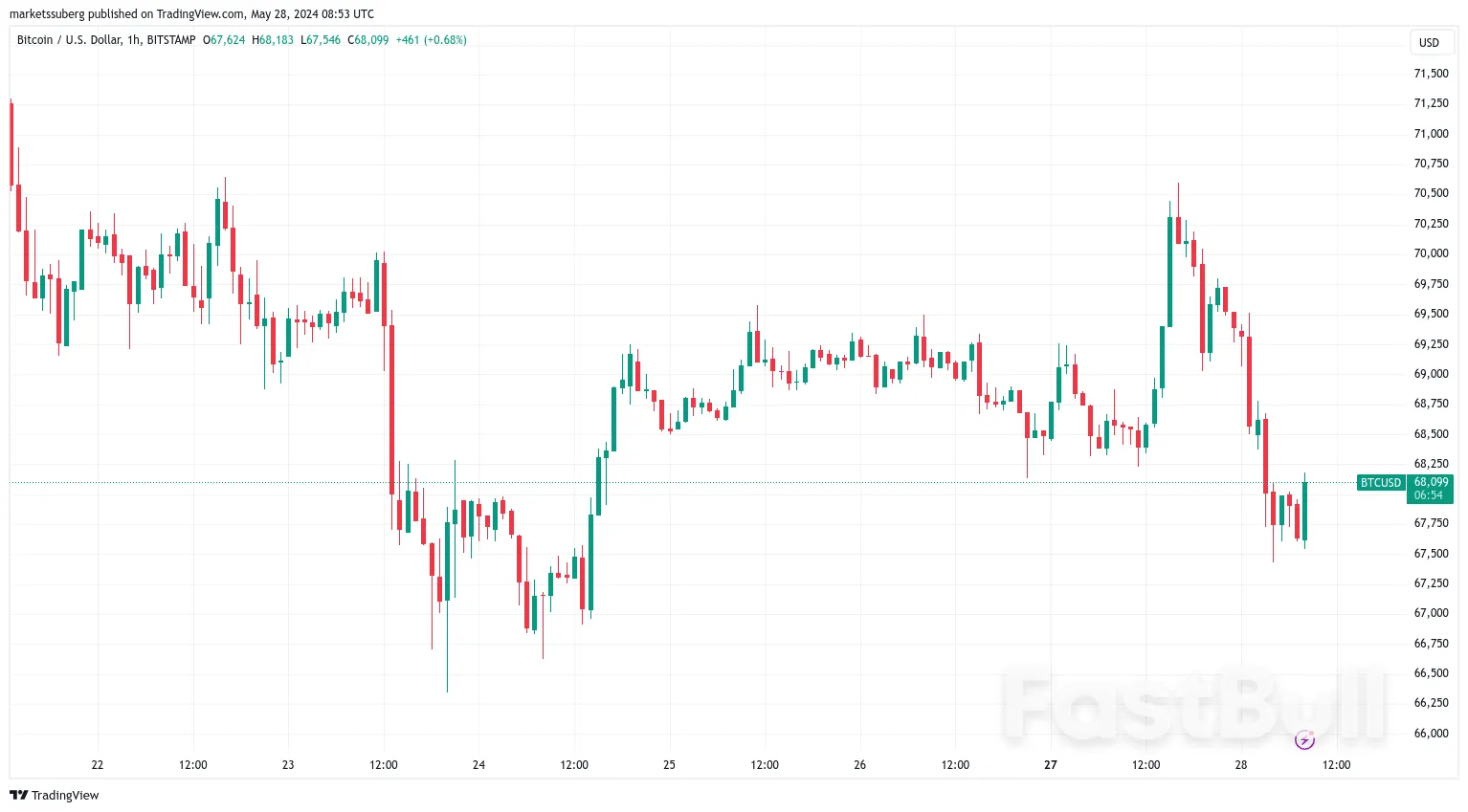
          Bitcoin saw four-day lows into the May 28 Wall Street open after holiday BTC price action deceived bulls.Bitcoin Misses Key Resistance Flip as BTC Price Falls Below $68K _1

          BTC/USD 1-hour chart. Source: TradingView

          Bitcoin wobbles on Mt. Gox fund movements

          Data from Cointelegraph Markets Pro and TradingView showed BTC/USD hovering below $68,000 after spiking to weekly highs.
          The trip to $70,600 during the Memorial Day holiday in the United States came without institutional involvement, for example in the form of demand for the spot Bitcoin exchange-traded funds (ETFs).
          Despite rapidly gaining momentum, Bitcoin’s latest rally failed to endure for long before the market retraced all of its progress.
          The volatility came amid new movement of BTC worth $7 billion from wallets linked to defunct exchange Mt. Gox.
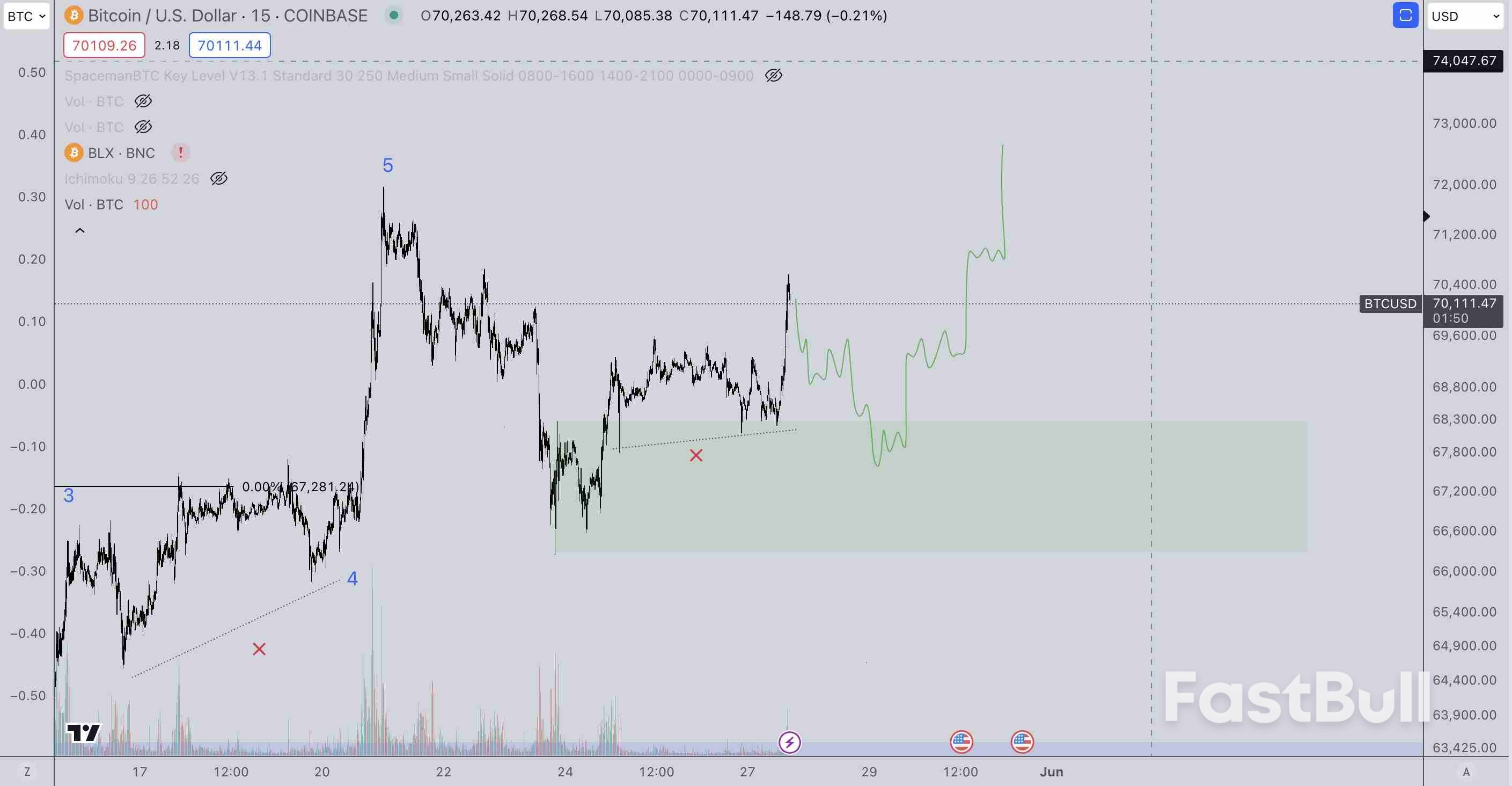
          “And there is a full retrace of that recent pump as expected,” popular trader Credible Crypto wrote in part of his ongoing commentary on X (formerly Twitter).
          “Let’s see what kind of reaction we get here at the lows.”

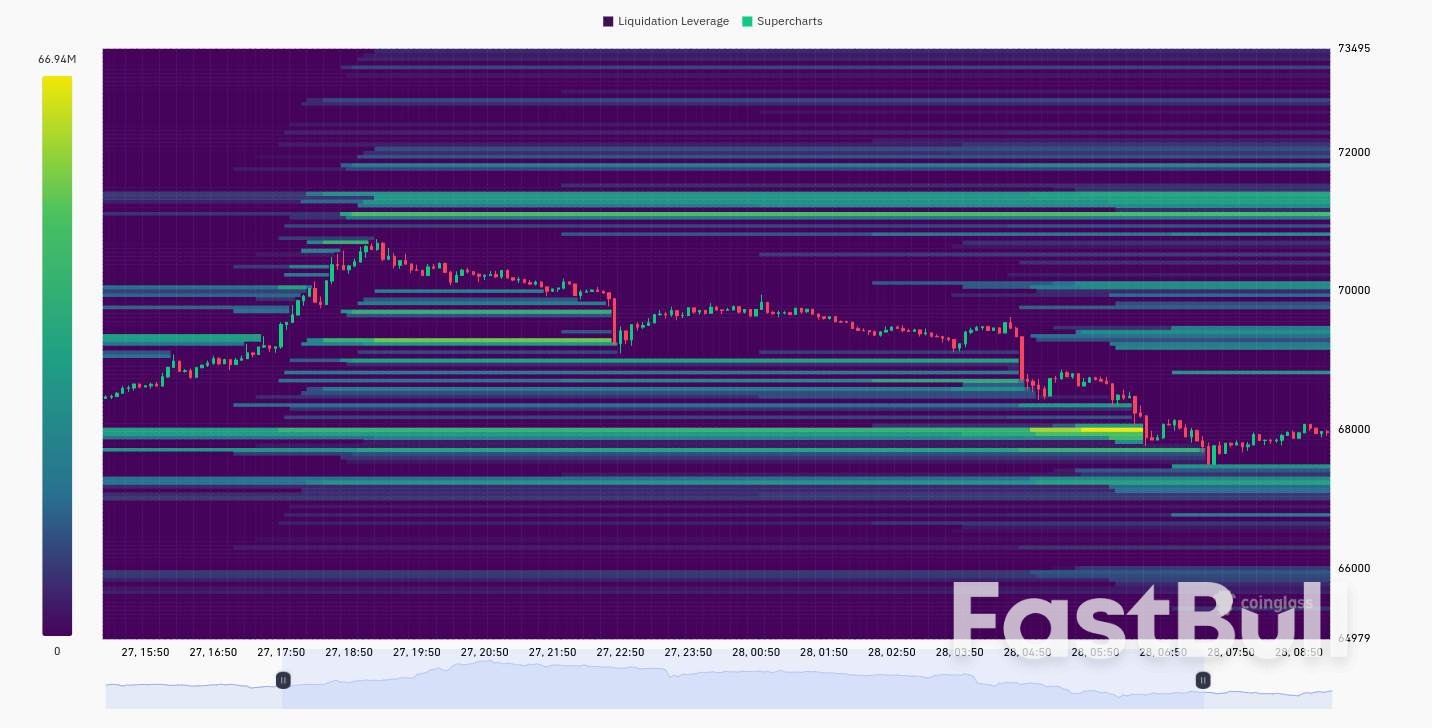
          Bitcoin Misses Key Resistance Flip as BTC Price Falls Below $68K _2BTC liquidation heatmap (screenshot). Source: CoinGlass

          The latest data from monitoring resource CoinGlass highlighted liquidity concentrations around spot price, with the area around $67,000 now the nearest point of interest below.
          Responding to the past 24 hours’ moves, fellow trader Daan Crypto Trades revealed a positive impact on market structure — a removal of leverage.
          “All positions entered during yesterday's move were flushed out and the funding rate is back to neutral,” he wrote on X alongside a chart of open interest data.
          “ETH is a bit stronger still but as long as BTC is within its bigger range we'll keep seeing more of this low timeframe chop.”

          Bitcoin Misses Key Resistance Flip as BTC Price Falls Below $68K _3BTC/USD chart. Source: Credible Crypto/X

          BTC price performance thus continued to hinge on overcoming key resistance and flipping it to support.

          Bullish BTC price visions unfazed

          As Cointelegraph reported, the greatest challenge remains the 2021 all-time highs of $69,000 and the subsequent trip to $73,800 this year.
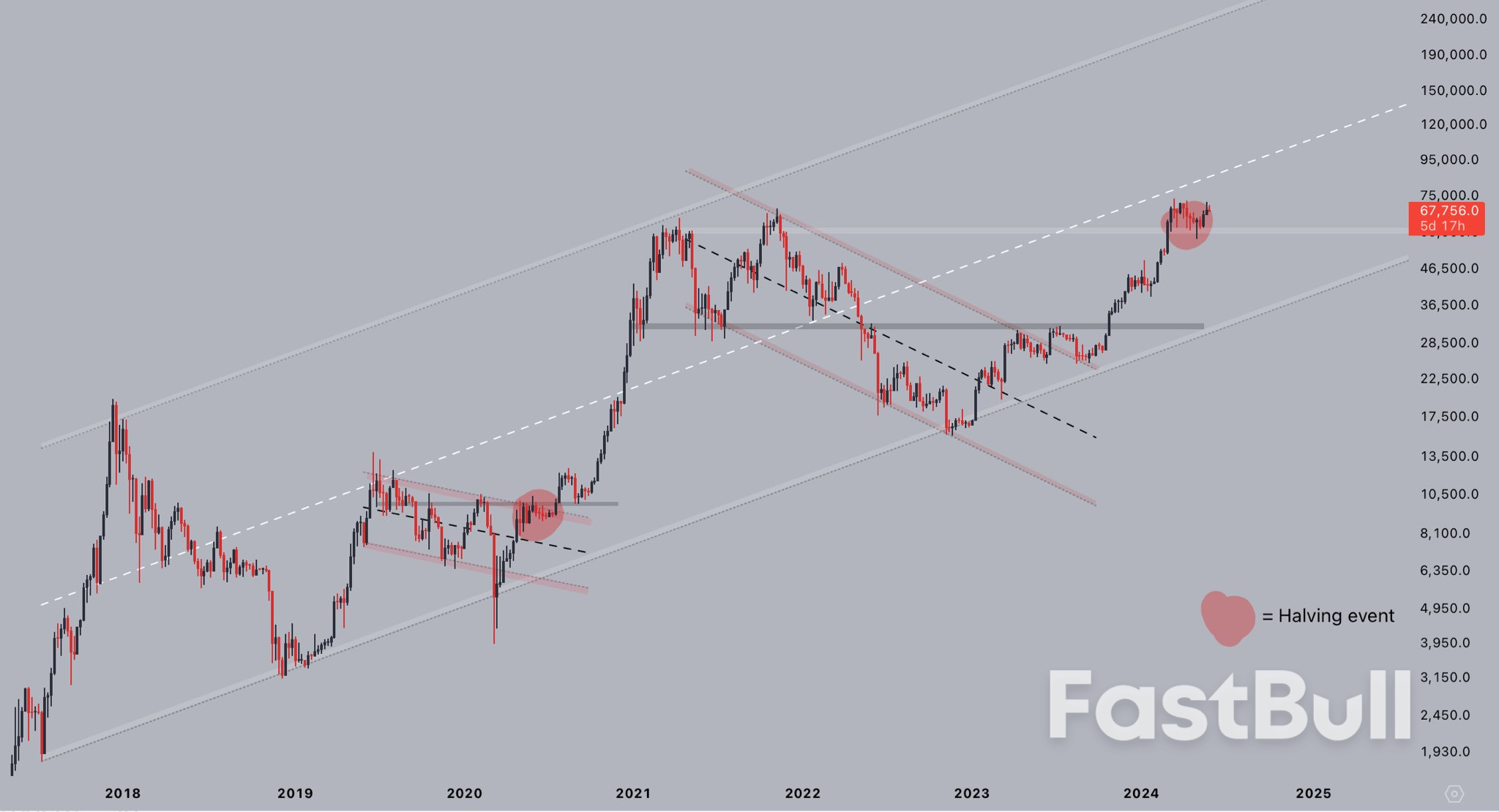
          Zooming out, popular trader Jelle revealed a mere consolidatory structure on monthly timeframes despite the lack of upward momentum since March.Bitcoin Misses Key Resistance Flip as BTC Price Falls Below $68K _4

          Source: Jelle

          In a further post, he considered a broader BTC price range in place all the way since mid-2017 — when BTC/USD hit historical all-time highs of $20,000 two cycles ago.
          “Bitcoin has spent the past 6.5 years inside this rising channel, and I don't expect that to change anytime soon,” he confirmed.
          “If history is any indication, it's time for another trip towards the highs of the channel. 6-figure Bitcoin is coming.”BTC/USD chart.

          Bitcoin Misses Key Resistance Flip as BTC Price Falls Below $68K _5Source: Jelle/X

          Source: Cointelegraph

          To stay updated on all economic events of today, please check out our Economic calendar
          Risk Warnings and Disclaimers
          You understand and acknowledge that there is a high degree of risk involved in trading. Following any strategies or investment methods may lead to potential losses. The content on the site is provided by our contributors and analysts for information purposes only. You are solely responsible for determining whether any trading assets, securities, strategy, or any other product is suitable for investing based on your own investment objectives and financial situation.
          Add to Favorites
          Share
          FastBull
          Copyright © 2025 FastBull Ltd

          728 RM B 7/F GEE LOK IND BLDG NO 34 HUNG TO RD KWUN TONG KLN HONG KONG

          TelegramInstagramTwitterfacebooklinkedin
          App Store Google Play Google Play
          Products
          Charts

          Chats

          Q&A with Experts
          Screeners
          Economic Calendar
          Data
          Tools
          Membership
          Features
          Function
          Markets
          Copy Trading
          Latest Signals
          Contests
          News
          Analysis
          24/7
          Columns
          Education
          Company
          Careers
          About Us
          Contact Us
          Advertising
          Help Center
          Feedback
          User Agreement
          Privacy Policy
          Business

          White Label

          Data API

          Web Plug-ins

          Poster Maker

          Affiliate Program

          Risk Disclosure

          The risk of loss in trading financial instruments such as stocks, FX, commodities, futures, bonds, ETFs and crypto can be substantial. You may sustain a total loss of the funds that you deposit with your broker. Therefore, you should carefully consider whether such trading is suitable for you in light of your circumstances and financial resources.

          No decision to invest should be made without thoroughly conducting due diligence by yourself or consulting with your financial advisors. Our web content might not suit you since we don't know your financial conditions and investment needs. Our financial information might have latency or contain inaccuracy, so you should be fully responsible for any of your trading and investment decisions. The company will not be responsible for your capital loss.

          Without getting permission from the website, you are not allowed to copy the website's graphics, texts, or trademarks. Intellectual property rights in the content or data incorporated into this website belong to its providers and exchange merchants.

          Not Logged In

          Log in to access more features

          FastBull Membership

          Not yet

          Purchase

          Become a signal provider
          Help Center
          Customer Service
          Dark Mode
          Price Up/Down Colors

          Log In

          Sign Up

          Position
          Layout
          Fullscreen
          Default to Chart
          The chart page opens by default when you visit fastbull.com