• Trade
  • Markets
  • Copy
  • Contests
  • News
  • 24/7
  • Calendar
  • Q&A
  • Chats
Trending
Screeners
SYMBOL
LAST
BID
ASK
HIGH
LOW
NET CHG.
%CHG.
SPREAD
SPX
S&P 500 Index
6844.87
6844.87
6844.87
6861.30
6840.77
+17.46
+ 0.26%
--
DJI
Dow Jones Industrial Average
48546.33
48546.33
48546.33
48679.14
48526.74
+88.29
+ 0.18%
--
IXIC
NASDAQ Composite Index
23241.02
23241.02
23241.02
23345.56
23210.04
+45.86
+ 0.20%
--
USDX
US Dollar Index
97.800
97.880
97.800
98.070
97.790
-0.150
-0.15%
--
EURUSD
Euro / US Dollar
1.17588
1.17595
1.17588
1.17596
1.17262
+0.00194
+ 0.17%
--
GBPUSD
Pound Sterling / US Dollar
1.33994
1.34001
1.33994
1.34014
1.33546
+0.00287
+ 0.21%
--
XAUUSD
Gold / US Dollar
4327.03
4327.37
4327.03
4350.16
4294.68
+27.64
+ 0.64%
--
WTI
Light Sweet Crude Oil
56.737
56.767
56.737
57.601
56.688
-0.496
-0.87%
--

Community Accounts

Signal Accounts
--
Profit Accounts
--
Loss Accounts
--
View More

Become a signal provider

Sell trading signals to earn additional income

View More

Guide to Copy Trading

Get started with ease and confidence

View More

Signal Accounts for Members

All Signal Accounts

Best Return
  • Best Return
  • Best P/L
  • Best MDD
Past 1W
  • Past 1W
  • Past 1M
  • Past 1Y

All Contests

  • All
  • Trump Updates
  • Recommend
  • Stocks
  • Cryptocurrencies
  • Central Banks
  • Featured News
Top News Only
Share

Ukraine's Top Negotiator: Talks With USA Have Been Constructive And Productive

Share

The Nasdaq Golden Dragon China Index Fell 0.9% In Early Trading

Share

The S&P 500 Opened 32.78 Points Higher, Or 0.48%, At 6860.19; The Dow Jones Industrial Average Opened 136.31 Points Higher, Or 0.28%, At 48594.36; And The Nasdaq Composite Opened 134.87 Points Higher, Or 0.58%, At 23330.04

Share

Miran: Goods Inflation Could Be Settling In At A Higher Level Than Was Normal Before The Pandemic, But That Will Be More Than Offset By Housing Disinflation

Share

Miran, Who Dissented In Favor Of A Larger Cut At Last Fed Meeting, Repeats Keeping Policy Too Tight Will Lead To Job Losses

Share

Miran: Does Not Think Higher Goods Inflation Is Mostly From Tariffs, But Acknowledges Does Not Have A Full Explanation For It

Share

Toronto Stock Index .GSPTSE Rises 67.16 Points, Or 0.21 Percent, To 31594.55 At Open

Share

Miran: Excluding Housing And Non-Market Based Items, Core Pce Inflation May Be Below 2.3%, “Within Noise” Of The Fed's 2% Target

Share

Polish State Assets Minister Balczun Says Jsw Needs Over USD 830 Million Financing To Keep Liquidity For A Year

Share

Miran: Prices Are “Once Again Stable” And Monetary Policy Should Reflect That

Share

Fed's Miran: Current Excess Inflation Is Not Reflective Of Underlying Supply And Demand In The Economy

Share

Portugal Treasury Puts 2026 Net Financing Needs At 13 Billion Euros, Up From 10.8 Billion In 2025

Share

Portugal Treasury Expects 2026 Net Financing Needs At 29.4 Billion Euros, Up From 25.8 Billion In 2025

Share

Bank Of America Says With Indonesia's Smelter Now Ramping Up, It Expects Aluminium Supply Growth To Accelerate To 2.6% Year On Year In 2026

Share

Bank Of America Expects A Deficit In Aluminium Next Year And Sees Prices Pushing Above $3000/T

Share

Fed Data - USA Effective Federal Funds Rate At 3.64 Percent On 12 December On $102 Billion In Trades Versus 3.64 Percent On $99 Billion On 11 December

Share

Brazil's Petrobras Says No Impact Seen On Oil, Petroleum Products Output As Workers Start Planned Strike

Share

Statement: US Travel Group Warns New Proposed Trump Administration Requirements For Foreign Tourists To Provide Social Media Histories Could Mean Millions Of People Opting Not To Visit

Share

Blackrock: Kerry White Will Become Head Of Citi Investment Management At Citi Wealth

Share

Blackrock: Rob Jasminski, Head Of Citi Investment Management, Has Joined With Team

TIME
ACT
FCST
PREV
Japan Tankan Large Non-Manufacturing Outlook Index (Q4)

A:--

F: --

P: --

Japan Tankan Large Manufacturing Outlook Index (Q4)

A:--

F: --

P: --

Japan Tankan Small Manufacturing Diffusion Index (Q4)

A:--

F: --

P: --

Japan Tankan Large Manufacturing Diffusion Index (Q4)

A:--

F: --

P: --

Japan Tankan Large-Enterprise Capital Expenditure YoY (Q4)

A:--

F: --

P: --

U.K. Rightmove House Price Index YoY (Dec)

A:--

F: --

P: --

China, Mainland Industrial Output YoY (YTD) (Nov)

A:--

F: --

P: --

China, Mainland Urban Area Unemployment Rate (Nov)

A:--

F: --

P: --

Saudi Arabia CPI YoY (Nov)

A:--

F: --

P: --

Euro Zone Industrial Output YoY (Oct)

A:--

F: --

P: --

Euro Zone Industrial Output MoM (Oct)

A:--

F: --

P: --

Canada Existing Home Sales MoM (Nov)

A:--

F: --

P: --

Canada National Economic Confidence Index

A:--

F: --

P: --

Canada New Housing Starts (Nov)

A:--

F: --

P: --
U.S. NY Fed Manufacturing Employment Index (Dec)

A:--

F: --

P: --

U.S. NY Fed Manufacturing Index (Dec)

A:--

F: --

P: --

Canada Core CPI YoY (Nov)

A:--

F: --

P: --

Canada Manufacturing Unfilled Orders MoM (Oct)

A:--

F: --

P: --

U.S. NY Fed Manufacturing Prices Received Index (Dec)

A:--

F: --

P: --

U.S. NY Fed Manufacturing New Orders Index (Dec)

A:--

F: --

P: --

Canada Manufacturing New Orders MoM (Oct)

A:--

F: --

P: --

Canada Core CPI MoM (Nov)

A:--

F: --

P: --

Canada Trimmed CPI YoY (SA) (Nov)

A:--

F: --

P: --

Canada Manufacturing Inventory MoM (Oct)

A:--

F: --

P: --

Canada CPI YoY (Nov)

A:--

F: --

P: --

Canada CPI MoM (Nov)

A:--

F: --

P: --

Canada CPI YoY (SA) (Nov)

A:--

F: --

P: --

Canada Core CPI MoM (SA) (Nov)

A:--

F: --

P: --

Canada CPI MoM (SA) (Nov)

A:--

F: --

P: --

Federal Reserve Board Governor Milan delivered a speech
U.S. NAHB Housing Market Index (Dec)

--

F: --

P: --

Australia Composite PMI Prelim (Dec)

--

F: --

P: --

Australia Services PMI Prelim (Dec)

--

F: --

P: --

Australia Manufacturing PMI Prelim (Dec)

--

F: --

P: --

Japan Manufacturing PMI Prelim (SA) (Dec)

--

F: --

P: --

U.K. 3-Month ILO Employment Change (Oct)

--

F: --

P: --

U.K. Unemployment Claimant Count (Nov)

--

F: --

P: --

U.K. Unemployment Rate (Nov)

--

F: --

P: --

U.K. 3-Month ILO Unemployment Rate (Oct)

--

F: --

P: --

U.K. Average Weekly Earnings (3-Month Average, Including Bonuses) YoY (Oct)

--

F: --

P: --

U.K. Average Weekly Earnings (3-Month Average, Excluding Bonuses) YoY (Oct)

--

F: --

P: --

France Services PMI Prelim (Dec)

--

F: --

P: --

France Composite PMI Prelim (SA) (Dec)

--

F: --

P: --

France Manufacturing PMI Prelim (Dec)

--

F: --

P: --

Germany Services PMI Prelim (SA) (Dec)

--

F: --

P: --

Germany Manufacturing PMI Prelim (SA) (Dec)

--

F: --

P: --

Germany Composite PMI Prelim (SA) (Dec)

--

F: --

P: --

Euro Zone Composite PMI Prelim (SA) (Dec)

--

F: --

P: --

Euro Zone Services PMI Prelim (SA) (Dec)

--

F: --

P: --

Euro Zone Manufacturing PMI Prelim (SA) (Dec)

--

F: --

P: --

U.K. Services PMI Prelim (Dec)

--

F: --

P: --

U.K. Manufacturing PMI Prelim (Dec)

--

F: --

P: --

U.K. Composite PMI Prelim (Dec)

--

F: --

P: --

Euro Zone ZEW Economic Sentiment Index (Dec)

--

F: --

P: --

Germany ZEW Current Conditions Index (Dec)

--

F: --

P: --

Germany ZEW Economic Sentiment Index (Dec)

--

F: --

P: --

Euro Zone Trade Balance (Not SA) (Oct)

--

F: --

P: --

Euro Zone ZEW Current Conditions Index (Dec)

--

F: --

P: --

Euro Zone Trade Balance (SA) (Oct)

--

F: --

P: --

U.S. Retail Sales MoM (Excl. Automobile) (SA) (Oct)

--

F: --

P: --

Q&A with Experts
    • All
    • Chatrooms
    • Groups
    • Friends
    Connecting
    .
    .
    .
    Type here...
    Add Symbol or Code

      No matching data

      All
      Trump Updates
      Recommend
      Stocks
      Cryptocurrencies
      Central Banks
      Featured News
      • All
      • Russia-Ukraine Conflict
      • Middle East Flashpoint
      • All
      • Russia-Ukraine Conflict
      • Middle East Flashpoint
      Search
      Products

      Charts Free Forever

      Chats Q&A with Experts
      Screeners Economic Calendar Data Tools
      Membership Features
      Data Warehouse Market Trends Institutional Data Policy Rates Macro

      Market Trends

      Market Sentiment Order Book Forex Correlations

      Top Indicators

      Charts Free Forever
      Markets

      News

      News Analysis 24/7 Columns Education
      From Institutions From Analysts
      Topics Columnists

      Latest Views

      Latest Views

      Trending Topics

      Top Columnists

      Latest Update

      Signals

      Copy Rankings Latest Signals Become a signal provider AI Rating
      Contests
      Brokers

      Overview Brokers Assessment Rankings Regulators News Claims
      Broker listing Forex Brokers Comparison Tool Live Spread Comparison Scam
      Q&A Complaint Scam Alert Videos Tips to Detect Scam
      More

      Business
      Events
      Careers About Us Advertising Help Center

      White Label

      Data API

      Web Plug-ins

      Affiliate Program

      Awards Institution Evaluation IB Seminar Salon Event Exhibition
      Vietnam Thailand Singapore Dubai
      Fans Party Investment Sharing Session
      FastBull Summit BrokersView Expo
      Recent Searches
        Top Searches
          Markets
          News
          Analysis
          User
          24/7
          Economic Calendar
          Education
          Data
          • Names
          • Latest
          • Prev

          View All

          No data

          Scan to Download

          Faster Charts, Chat Faster!

          Download App
          English
          • English
          • Español
          • العربية
          • Bahasa Indonesia
          • Bahasa Melayu
          • Tiếng Việt
          • ภาษาไทย
          • Français
          • Italiano
          • Türkçe
          • Русский язык
          • 简中
          • 繁中
          Open Account
          Search
          Products
          Charts Free Forever
          Markets
          News
          Signals

          Copy Rankings Latest Signals Become a signal provider AI Rating
          Contests
          Brokers

          Overview Brokers Assessment Rankings Regulators News Claims
          Broker listing Forex Brokers Comparison Tool Live Spread Comparison Scam
          Q&A Complaint Scam Alert Videos Tips to Detect Scam
          More

          Business
          Events
          Careers About Us Advertising Help Center

          White Label

          Data API

          Web Plug-ins

          Affiliate Program

          Awards Institution Evaluation IB Seminar Salon Event Exhibition
          Vietnam Thailand Singapore Dubai
          Fans Party Investment Sharing Session
          FastBull Summit BrokersView Expo

          Oil Slides Amid Continued Uncertainty in Demand Outlook

          Ukadike Micheal

          Economic

          Commodity

          Summary:

          Oil prices dropped amid global demand uncertainty, despite the Israel-Hamas conflict adding a risk premium. Israel plans an assault on Rafah, and Houthi attacks in the Red Sea continue, impacting the oil market.
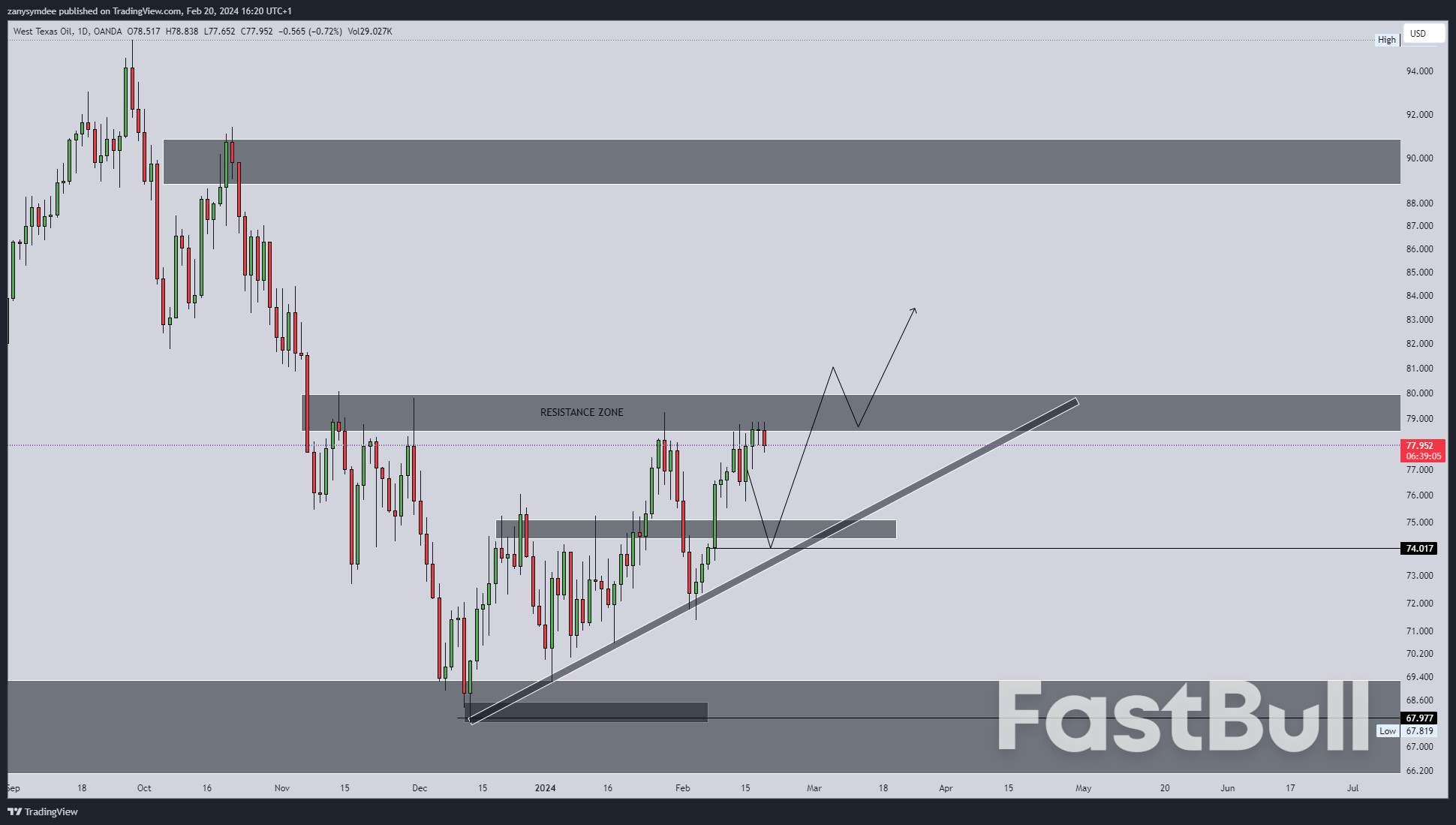
          Global oil prices experienced a decline on Tuesday due to uncertainties surrounding the outlook for global demand, despite some risk premium stemming from the Israel-Hamas conflict. Brent futures dropped to $83.34 a barrel, while U.S. West Texas Intermediate (WTI) crude for April delivery fell to $78.20 a barrel. The market reflected a cautious sentiment as concerns about demand overshadowed geopolitical tensions in the Middle East.
          The six-month spread for Brent reached its highest level since October, indicating a tighter market. However, the overall sentiment remained subdued, with crude markets experiencing marginal losses amid quiet trading during the Presidents' Day holiday in the U.S. The ongoing conflict between Israel and Hamas in Gaza added a layer of uncertainty, with the potential for escalating tensions to disrupt shipping lanes in the region.
          Despite the geopolitical risks, investors were primarily focused on the bearish outlook for global oil demand. The International Energy Agency (IEA) recently revised its 2024 oil demand growth forecast downward, projecting a lower increase compared to OPEC's outlook. While the IEA anticipated a growth of 1.22 million barrels per day (bpd) this year, OPEC's forecast stood at 2.25 million bpd.
          The conflicting views between the IEA and OPEC regarding the future of oil demand highlighted the ongoing transition towards renewable and cleaner energy sources. The IEA suggested that oil demand could peak by 2030, while OPEC anticipated a continued rise in oil consumption over the next two decades. This divergence in perspectives underscored the broader shift towards sustainable energy practices and the challenges facing traditional oil producers in adapting to changing market dynamics.
          From a technical standpoint, the fluctuations in oil prices and market sentiment underscore the complex interplay between geopolitical events, supply dynamics, and evolving demand patterns. The uncertainty surrounding global economic recovery post-pandemic, coupled with the transition towards cleaner energy sources, has introduced additional volatility into energy markets. Investors and industry stakeholders are closely monitoring developments in key oil-producing regions and assessing the implications for supply chains and pricing mechanisms.Oil Slides Amid Continued Uncertainty in Demand Outlook_1
          The current landscape of the oil market reflects a delicate balance between geopolitical tensions, demand uncertainties, and the broader transition towards sustainable energy solutions. As stakeholders navigate these challenges, the need for strategic planning, innovation, and collaboration becomes increasingly paramount in ensuring a resilient and adaptive energy sector for the future.

          Source: Reuters

          To stay updated on all economic events of today, please check out our Economic calendar
          Risk Warnings and Disclaimers
          You understand and acknowledge that there is a high degree of risk involved in trading. Following any strategies or investment methods may lead to potential losses. The content on the site is provided by our contributors and analysts for information purposes only. You are solely responsible for determining whether any trading assets, securities, strategy, or any other product is suitable for investing based on your own investment objectives and financial situation.
          Comments
          Add to Favorites
          Share

          How Does A UK Recession Affect The Pound's Fate?

          Samantha Luan
          Despite dropping its tightening bias at its February gathering, the Bank of England (BoE) maintained a more hawkish stance than the Fed and the ECB, pushing back against interest rate cuts. At the press conference following the latest decision, Governor Bailey said they are not yet at a point where they can lower borrowing costs, adding that policy needs to stay sufficiently restrictive for sufficiently long.
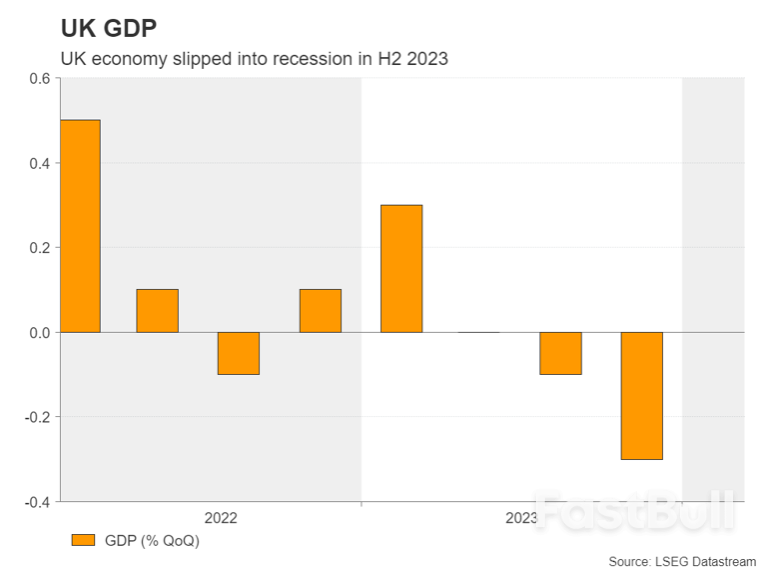
          However, this was before last week's barrage of economic data, with the highlight being the preliminary GDP numbers for Q4, which revealed that the economy contracted by more than anticipated, officially entering a technical recession. This weighed on the British pound, which had already been hurt the day before, after the CPI figures suggested that inflation held steady in January, confounding expectations of a small acceleration.
          How Does A UK Recession Affect The Pound's Fate?_1
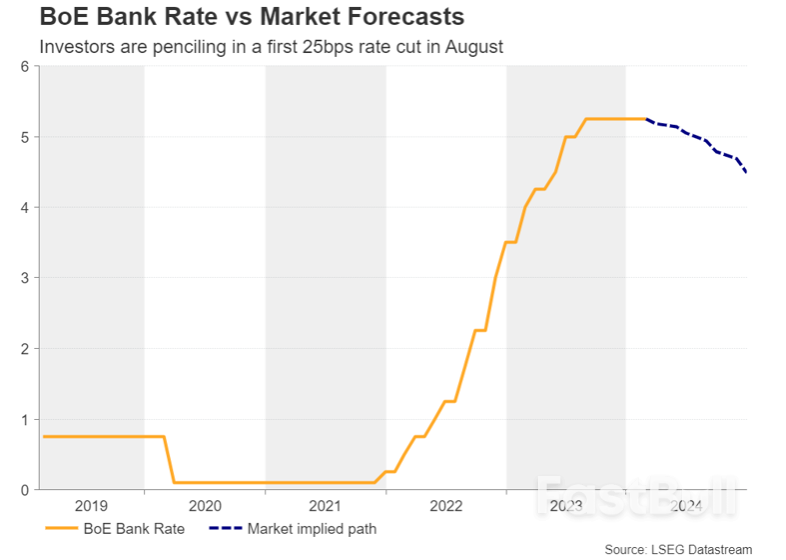
          However, the market's BoE implied path was not lowered. In other words, investors did not bring forward their rate cut bets. Currently, they are pricing in around 70bps worth of reductions by the end of the year, with the first quarter-point cut penciled in for August. Even after the notable upward adjustment to its interest rate projections regarding the Fed, the market still holds a more hawkish – or less dovish – view about the BoE. How Does A UK Recession Affect The Pound's Fate?_2

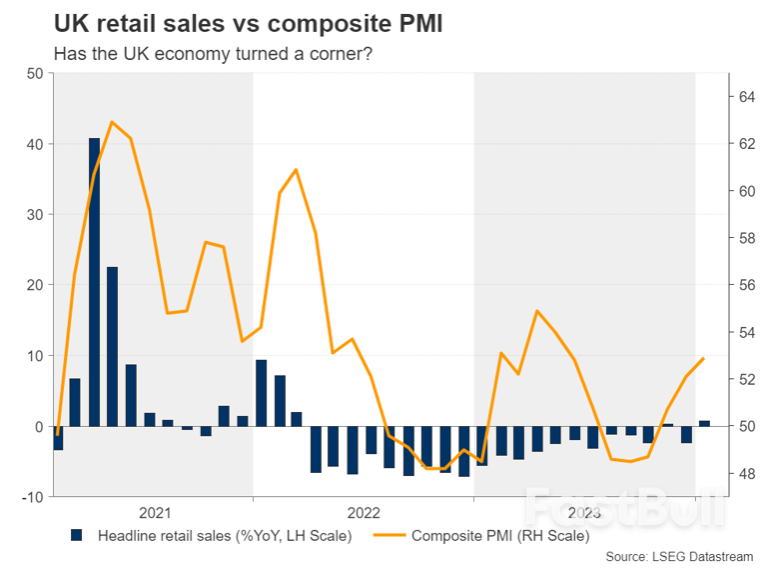
          Has the UK economy turned a corner in 2024?

          But why is that? One reason may be that, despite the latest slowdown, inflation in the UK remains stickier than other major economies, with the core rate at 5.1%, more than 2.5 times the BoE's objective of 2%. On top of that , wages have slowed by less than expected, with the rate of average weekly earnings excluding bonuses coming in at 6.2% y/y in December, well above the CPI rates. This still presents some upside risks to the inflation outlook for the months to come . Last but not least, retail sales for January accelerated to their fastest pace in nearly three years, which combined with the improvement in the PMIs for the month, adds to hopes that the economy may have started turning the corner.
          How Does A UK Recession Affect The Pound's Fate?_3
          The confirmation of a recession in the second half of last year seems to be having more political than economic importance, as it's a heavy blow to Rishi Sunak's popularity ahead of an expected general election later this year. Voters appear to have not been convinced that his The plan of cutting taxes is working, shifting their trust of the economy to the Labor Party, according to opinion polls.
          Just after the GDP data, finance minister Jeremy Hunt said that there were signs the economy is turning a corner and that they must stick to their plan. This means that at least until the election, the fiscal mentality of the government may continue to work against the BoE's efforts to tackle elevated inflation, thereby prompting the central bank to keep interest rates higher for longer, as officials have been already communicating. Just last Wednesday, BoE Governor Bailey said that he still wanted more evidence that inflation pressures were abating, corroborating the notion that the Bank's focus remains on price data.

          Heading into elections, what's next for the pound?

          With all that in mind, should upcoming data confirm the narrative that the UK economy is growing again, investors are likely to further push back their rate cut bets, which could prove supportive for the pound. Considering also that due to the UK's twin deficit, the currency has developed a correlation with risk-sentiment, further advances in the equity world could offer an extra help. The opposite may be true if the economy continues to struggle, even with the government abiding by its tax-cut plan.
          Having said all that, closer to the elections, which need to be held before January, the uncertainty about the change in fiscal attitude may have a negative impact on sterling. The leading Labor party has been portraying itself as the party of fiscal responsibility and thus , scrapping the Conservative's agenda may prompt the BoE to start loosening monetary policy sooner.
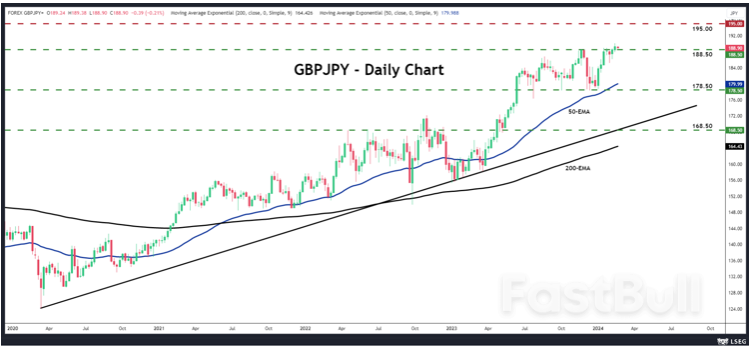
          From a technical standpoint, pound/yen has been trading in a steep uptrend since March 2020. Last week, the pair confirmed a higher high, entering territories last tested back in the summer of 2015, suggesting that the bulls may be willing to continue marching north. How Does A UK Recession Affect The Pound's Fate?_4
          The pair may correct lower should the Japanese authorities step in to support the yen, but the retreat may remain limited and short-lived if the BoJ keeps pushing against speculation of a rate hike soon and if data continues to suggest that the UK economy has turned the corner. The next area to consider as a potential resistance may be at around 195.00, near the highs of July and August 2015. For the outlook of this pair to change, a dive all the way below 178.50 may be needed.
          Risk Warnings and Disclaimers
          You understand and acknowledge that there is a high degree of risk involved in trading. Following any strategies or investment methods may lead to potential losses. The content on the site is provided by our contributors and analysts for information purposes only. You are solely responsible for determining whether any trading assets, securities, strategy, or any other product is suitable for investing based on your own investment objectives and financial situation.
          Comments
          Add to Favorites
          Share

          Canada Inflation Rate Cools More Than Forecast

          Zi Cheng

          Traders' Opinions

          Economic

          Forex

          At the onset of the year, Canadian consumer prices experienced a moderation, indicating progress in alleviating underlying pressures. This development is likely to grant the Bank of Canada increased flexibility to consider potential rate cuts in the near future.
          According to Statistics Canada's report in Ottawa on Tuesday, the consumer price index climbed by 2.9% in January compared to the previous year, a deceleration from the 3.4% rise registered in the preceding month. This figure fell below the median estimate of 3.3% projected by economists in a Bloomberg survey and marks the first instance since June that the headline rate has fallen within the central bank's target range.
          Canada Inflation Rate Cools More Than Forecast_1
          On a monthly basis, the index remained unchanged, contrary to expectations of a 0.4% increase, following a 0.3% decline in December.
          Both of the Bank of Canada's preferred core inflation measures exhibited a slowdown, averaging 3.35% compared to a downwardly revised 3.6% in the previous month, also lower than the 3.6% pace anticipated by economists. Bloomberg calculations indicate that a three-month moving average of these rates dropped to an annualized pace of 3.22% from 3.63% in December.
          The January inflation data reflects further progress in disinflation following a stagnation at the end of the previous year. As the Bank of Canada evaluates the necessity of maintaining its policy rate at restrictive levels, this report is expected to alleviate concerns regarding the persistence of underlying inflation and the sluggish progression towards the 2% inflation target.
          During their January discussions, Governor Tiff Macklem and other officials deemed the current monetary policy stance as adequately restrictive to attain the target, emphasizing the need for more time to restore price stability. They anticipate inflation to hover around 3% in the first half of the year before gradually subsiding and aligning with the target by the following year.
          This report serves as the sole inflation update preceding the next rate decision scheduled for March 6. Economists widely anticipate officials to maintain policy rates at 5% for a fifth consecutive meeting, with the easing cycle projected to commence around mid-2024.
          In January, the primary contributor to the deceleration in headline inflation was the decline in year-over-year gasoline prices by 4%. Excluding gasoline, the index moderated to 3.2% from the previous year, down from 3.5% in December.
          The slowdown in grocery inflation, along with reduced airfare and travel tour prices, also contributed to the overall deceleration.
          Among the components of the CPI basket, namely food, shelter, health and personal care, alcoholic beverages and tobacco, and cannabis products, four experienced growth rates above 3%, collectively constituting approximately 55% of the basket weights.
          Inflation excluding food increased by 2.7%, while excluding food and energy, it rose by 3.1%.
          Mortgage interest costs and rent remained the primary drivers of year-over-year price increases, with mortgage interest costs surging by 27.4% and rent rising by 7.9%.
          To stay updated on all economic events of today, please check out our Economic calendar
          Risk Warnings and Disclaimers
          You understand and acknowledge that there is a high degree of risk involved in trading. Following any strategies or investment methods may lead to potential losses. The content on the site is provided by our contributors and analysts for information purposes only. You are solely responsible for determining whether any trading assets, securities, strategy, or any other product is suitable for investing based on your own investment objectives and financial situation.
          Comments
          Add to Favorites
          Share

          Consumer Price Trends: An In-Depth Analysis of January 2024 Data Reveals Varied Influences on Inflation

          Ukadike Micheal

          Forex

          Economic

          In January, the Consumer Price Index (CPI) inched up by 2.9% on a year-over-year basis, marking a deceleration from the 3.4% gain observed in December. The primary contributor to this slowdown was the decrease in year-over-year gasoline prices in January (-4.0%), in contrast to the rise recorded in December (+1.4%). Excluding gasoline, the headline CPI moderated to 3.2% year over year in January, down from the 3.5% growth in December.Consumer Price Trends: An In-Depth Analysis of January 2024 Data Reveals Varied Influences on Inflation_1
          The decline in the year-over-year price growth for food purchased from stores in January (+3.4%) compared to December's figure (+4.7%) exerted downward pressure on the overall CPI. Additionally, lower prices for airfares and travel tours played a role in the headline deceleration.
          On a monthly basis, the CPI remained unchanged in January, following a 0.3% decline in December. However, on a seasonally adjusted monthly basis, the CPI fell 0.1% in January, marking the first decline since May 2020. Gasoline prices experienced a notable 4.0% decrease in January compared to a 1.4% increase in December, primarily due to a base-year effect. This contrast was influenced by refinery closures in the southwestern United States following Winter Storm Elliott in January 2023.
          Monthly gasoline prices continued to decrease in January 2024 (-0.9%) for the fifth consecutive month, with lower gas prices in Manitoba (-14.1%) contributing to the national decline after a temporary suspension of the provincial gas tax. While grocery prices remained elevated, their year-over-year growth slowed in January (+3.4%) compared to December's pace (+4.7%).
          The deceleration in grocery prices was widespread, with various products such as meat (+2.8%), other food preparations (+4.2%), dairy products (+1.5%), bakery products (+4.0%), and fresh fruit (+1.9%) contributing to the slower year-over-year price growth in January. Conversely, certain food items, including soup (-2.1%), bacon (-8.4%), and shrimps and prawns (-3.4%), experienced year-over-year price declines in January.
          Prices for airfares also witnessed a decline in January (-14.3%) compared with December's figure (-9.7%) on a year-over-year basis, typically reflecting the post-holiday season. On a monthly basis, prices fell in January (-23.7%) compared with December's increase (+31.1%).
          Moreover, cellular services prices fell by 16.4% in January on a year-over-year basis, following a 26.8% decline in December. Monthly prices rose by 6.7% in January compared with December, as prices returned to earlier levels following promotions offered in November and December. Year over year, prices rose at a slower pace in January compared with December in nine provinces, with Alberta being the only province experiencing faster price growth due in part to higher electricity prices.Consumer Price Trends: An In-Depth Analysis of January 2024 Data Reveals Varied Influences on Inflation_2
          In Saskatchewan, the cessation of the carbon levy collection in January 2024 contributed to the province's year-over-year price decline of natural gas (-26.6%).
          From a technical viewpoint, the data indicates mixed trends in consumer prices, with certain categories experiencing declines, especially in the context of seasonal patterns and base-year effects. The fluctuations in prices for goods and services highlight the dynamic nature of inflation and its sensitivity to various economic factors. Policymakers and analysts will closely monitor these trends to gauge the potential impact on overall economic conditions and formulate appropriate strategies.

          Source: Statistics Canada

          To stay updated on all economic events of today, please check out our Economic calendar
          Risk Warnings and Disclaimers
          You understand and acknowledge that there is a high degree of risk involved in trading. Following any strategies or investment methods may lead to potential losses. The content on the site is provided by our contributors and analysts for information purposes only. You are solely responsible for determining whether any trading assets, securities, strategy, or any other product is suitable for investing based on your own investment objectives and financial situation.
          Comments
          Add to Favorites
          Share

          Global Wheat Crisis: War, Weather, And Pandemic's Toll On Food Security

          Alex

          Commodity

          Global Wheat Crisis: War, Weather, And Pandemic's Toll On Food Security_1As dawn breaks over the golden fields stretching from Oklahoma to Texas, the amber waves of wheat tell a story far beyond their tranquil appearance. This narrative, unfolding amidst the chaos of the Russia-Ukraine conflict, a global pandemic, and extreme weather events, speaks of a commodity essential to our survival: wheat. The repercussions of these crises have sent shockwaves through global food prices, leading to a precarious situation that threatens food security worldwide, particularly in regions like Nigeria, where the stakes are even higher.

          The Tumultuous Journey of Wheat Prices

          In the wake of COVID-19, wheat prices saw an unprecedented surge, climbing from a modest $4 to a staggering $8, as nations grappled with the pandemic's immediate impacts. The situation intensified with Russia's invasion of Ukraine, propelling prices to soar over $13, reflecting the critical role these two nations play in the global wheat supply. However, recent developments hint at a stabilization, with the 2024 wheat harvest forward contract price in Oklahoma and Texas currently pegged at $5.50. This figure, while below the tumultuous highs, remains significantly above pre-pandemic levels, illustrating the lingering effects of the past years' events on wheat markets.

          Global Wheat Dynamics: A Delicate Balance

          The conflict between Russia and Ukraine has not only disrupted supply chains but also altered the landscape of global wheat production and exports. Russia has managed to increase its wheat production and exports, while Ukraine struggles with the loss of croplands and shortages of crucial inputs. Despite these challenges, global and U.S. wheat stocks-to-use ratios have remained stable, a testament to the resilience of agricultural systems. Yet, this balance is precarious. The aggressive export strategies adopted by Russia and Ukraine are impacting global prices, contributing to the current state of flux in wheat markets. Coupled with spikes in production input costs, including a notable rise in fertilizer and diesel prices, the agricultural community faces a daunting task.

          Implications for Food Security: A Closer Look at Nigeria

          The volatility of global wheat prices has far-reaching implications, particularly for countries like Nigeria, where the ripple effects exacerbate existing challenges. Rising inflation, the removal of fuel subsidies, and an increase in agricultural input prices post-COVID and post-conflict have compounded food insecurity. Nigeria, reliant on wheat imports, stands at the frontline of this crisis, grappling with the dual challenge of ensuring affordability and availability of food for its population. The scenario unfolding in Nigeria is a microcosm of the broader trends affecting agricultural communities worldwide, highlighting the interconnectedness of global food systems and the vulnerability of nations to disruptions in commodity markets.
          In conclusion, the journey of wheat prices from the fields of Oklahoma and Texas to the global market encapsulates a complex narrative of resilience, uncertainty, and the relentless pursuit of stability in an ever-changing world. The Russia-Ukraine conflict, compounded by the effects of COVID-19 and extreme weather events, has reshaped the global food landscape, underscoring the importance of sustainable agricultural practices and robust food security policies. As the world navigates these turbulent waters, the lessons learned will undoubtedly shape the future of food production and distribution for generations to come.

          Source:BNN

          Risk Warnings and Disclaimers
          You understand and acknowledge that there is a high degree of risk involved in trading. Following any strategies or investment methods may lead to potential losses. The content on the site is provided by our contributors and analysts for information purposes only. You are solely responsible for determining whether any trading assets, securities, strategy, or any other product is suitable for investing based on your own investment objectives and financial situation.
          Comments
          Add to Favorites
          Share

          European Central Bank Reports Deceleration in Wage Growth Across Euro Zone in Q4

          Ukadike Micheal

          Economic

          Forex

          Negotiated pay in the euro zone increased by 4.5% at the close of 2023, as reported by the European Central Bank (ECB), alleviating concerns of sustained inflation due to rising salaries. Despite remaining elevated, the fourth-quarter pay growth decelerated from the euro-area record of 4.7% in the previous quarter, as revealed by the ECB's negotiated wage indicator.
          This quarterly gauge, analyzing non-harmonized country data, holds particular significance for policymakers in Frankfurt, who are closely monitoring labor costs to determine the opportune time for interest rate cuts. The modest slowing in wage growth at the end of 2023 provides reassurance that the feared wage-price spiral may not unfold in the euro zone, according to Carsten Brzeski, the global head of macro at ING. However, decisions on rate cuts are expected to hinge on the first-quarter wage growth data for 2024, set to be released in May.
          ECB President Christine Lagarde emphasized the significance of salaries as a driving force in inflation dynamics, cautioning against premature policy decisions without assurance of a return to the 2% inflation target. While a forward-looking ECB tracker continues to signal strong wage pressures, agreements in the last quarter of 2023 suggest some leveling off.
          In December, the ECB projected a gradual decline in nominal wage growth over time, expecting it to decrease from 5.3% in 2023 to 3.3% in 2026, measured in terms of compensation per employee. The forecast anticipates limited pay increases as firms pass higher costs to consumers at a slower pace. However, differing perspectives exist, with some officials, like Austria's Robert Holzmann, suggesting that companies may not absorb rising wage bills.
          ECB Executive Board member Isabel Schnabel highlighted weak productivity as a factor exacerbating the effects of strong nominal wage growth on unit labor costs for firms. This raises concerns about firms passing higher pay costs to consumers, potentially delaying the return of inflation to the 2% target.
          For the entirety of 2023, the ECB reported a negotiated wage increase of 4.5%, marking a significant uptick from 2.9% in 2022 and 1.4% in 2021.
          From a technical viewpoint, the deceleration in negotiated wage growth may offer a delicate balance for policymakers, allowing for cautious optimism regarding inflationary pressures. However, the nuanced dynamics of wage growth, coupled with differing views on the extent to which firms can absorb increased labor costs, create complexities for the ECB's monetary policy decisions. As the market awaits further wage data in the coming quarters, the trajectory of negotiated pay will continue to play a pivotal role in shaping the central bank's approach to interest rates and overall economic stability.
          The nuanced picture of negotiated pay growth in the euro zone presents both reassurance and complexities for policymakers, offering insight into the delicate balance between inflation concerns and the need for economic stimulus. The coming quarters will undoubtedly be critical in determining the trajectory of wage dynamics and their implications for the broader economic landscape.

          Source: Bloomberg

          To stay updated on all economic events of today, please check out our Economic calendar
          Risk Warnings and Disclaimers
          You understand and acknowledge that there is a high degree of risk involved in trading. Following any strategies or investment methods may lead to potential losses. The content on the site is provided by our contributors and analysts for information purposes only. You are solely responsible for determining whether any trading assets, securities, strategy, or any other product is suitable for investing based on your own investment objectives and financial situation.
          Comments
          Add to Favorites
          Share

          China Cuts LPR Rate, RBA Sounds Hawkish – Focus On US Retailer Earnings

          Samantha Luan

          Economic

          The Chinese returned from their Lunar New Year holiday having traveled and spent more this year than before the pandemic. The early trading hours were cheery, but enthusiasm left its place to doom and gloom quickly as the Chinese equities found it hard to extend gains on the back of looming Chinese problems, like deflation, aging population, a deepening property crisis and lost investors’ confidence. As such, yesterday’s 1% advance in CSI 300 couldn’t gain momentum today, even though China cut its 5-year LPR rate – which is the reference rate for mortgages – by most on record to prop up demand for its tumbling property market and hoping to stop the downturn. In vain, the equity markets didn’t react much. Nasdaq’s China real estate index continues its race to the bottom.
          Equities in Europe however extended gains to a fresh ytd high, and the Stoxx 600 index continues to trade at a spitting distance from an ATH even though France lowered its growth forecast for 2024 to 1% and Germany announced a 0.3% contraction lately. The energy crisis and higher rates are eating into the old continent and the European Central Bank (ECB) is not sure it would start cutting the rates soon enough, given that inflation risks remain tilted to the upside. Rising shipping costs, upside pressure in oil prices and the softening Federal Reserve (Fed) cut expectations threaten the price stability and some European policymakers think that it’s safer to wait for more evidence that inflation is easing sustainably than acting prematurely and looking foolish.
          This is certainly what keeps the US dollar appetite contained, and the other currencies somehow supported: the fear that a delay in Fed rate cut would translate into a stronger dollar, a stronger dollar would send a fresh wave of high inflation across the globe and the latter would delay other central banks’ rate cut plans as well. But the latter reasoning will be just enough to contain the buying pressure in the dollar, and not to reverse the greenback’s positive trend. The dollar index saw support near its 100-DMA yesterday and the EURUSD failed to clear its own 100-DMA to the upside. The diverging fortunes between the US – where growth remains strong – and the euro area – where growth is nowhere to be found – justifies an earlier ECB cut compared to the Fed, but the ECB will cut only and if only inflation remains on a falling path.
          Anyway, back to the European stocks, the Stoxx 600 performed surprisingly well this year despite the sputtering euro area economies and no guarantee that the ECB will start cutting rates before summer. Some think that the European valuations are just below their long-term average which makes them much cheaper and somehow appetizing. But AI makes the American stocks shine brighter than the European diamonds. Nvidia, for example, is worth more than the entire German DAX index today and the AI premium is justified by massive, concrete AI investments and the tech companies’ high ROI. Therefore, even if the European stock valuations are more reasonable than the tech-heavy US peers, the upside potential that the US tech giants offer is incomparable to the European counterparts.
          Across the Channel, the energy and finance-heavy British FTSE 100 refused to return to last year’s negative trend and rallied 3% since last week, Cable remains under pressure as the Bank of England (BoE) doves stand up against Bailey’s cautious stance regarding premature cuts. The Bank’s former economist said that ‘it’s one thing to have missed inflation on the way up, it’s quite another to then have crushed the economy on the way down’. Premature easing, however, is not a risk that the central bankers are willing to take. The latest Reserve Bank of Australia (RBA) meeting minutes revealed that the policymakers considered to hold rates steady or a case for a 25 bp hike (scary!). And the latest FOMC minutes due Wednesday will give more clarity on if and how the Fed members reacted to last year’s skyrocketing rate cut expectations. From what they publicly say, they think that the expectations went well ahead of themselves. There will hardly be a rate cut announced from a major central bank before June.
          Today, Walmart and Home Depot earnings will serve as amuse-bouche before Nvidia’s much-expected results due after the bell tomorrow.
          In energy, nat gas futures took another dive yesterday while American crude cleared the 100 and 200-DMA offers last week and is testing a major Fibonacci resistance to the upside. Trend and momentum indicators remain supportive of a further rise toward the $80pb level as tensions in the Middle East, the Chinese stimulus, and OPEC’s efforts to restrict supply are supportive factors for the bulls. On the opposite camp, the rising supply from countries outside OPEC, China’s inability to boost growth and slowing demand growth for fossil fuel are arguments that will make the bulls’ life harder above the $80pb mark.

          Source:Action Forex

          To stay updated on all economic events of today, please check out our Economic calendar
          Risk Warnings and Disclaimers
          You understand and acknowledge that there is a high degree of risk involved in trading. Following any strategies or investment methods may lead to potential losses. The content on the site is provided by our contributors and analysts for information purposes only. You are solely responsible for determining whether any trading assets, securities, strategy, or any other product is suitable for investing based on your own investment objectives and financial situation.
          Comments
          Add to Favorites
          Share
          FastBull
          Copyright © 2025 FastBull Ltd

          728 RM B 7/F GEE LOK IND BLDG NO 34 HUNG TO RD KWUN TONG KLN HONG KONG

          TelegramInstagramTwitterfacebooklinkedin
          App Store Google Play Google Play
          Products
          Charts

          Chats

          Q&A with Experts
          Screeners
          Economic Calendar
          Data
          Tools
          Membership
          Features
          Function
          Markets
          Copy Trading
          Latest Signals
          Contests
          News
          Analysis
          24/7
          Columns
          Education
          Company
          Careers
          About Us
          Contact Us
          Advertising
          Help Center
          Feedback
          User Agreement
          Privacy Policy
          Business

          White Label

          Data API

          Web Plug-ins

          Poster Maker

          Affiliate Program

          Risk Disclosure

          The risk of loss in trading financial instruments such as stocks, FX, commodities, futures, bonds, ETFs and crypto can be substantial. You may sustain a total loss of the funds that you deposit with your broker. Therefore, you should carefully consider whether such trading is suitable for you in light of your circumstances and financial resources.

          No decision to invest should be made without thoroughly conducting due diligence by yourself or consulting with your financial advisors. Our web content might not suit you since we don't know your financial conditions and investment needs. Our financial information might have latency or contain inaccuracy, so you should be fully responsible for any of your trading and investment decisions. The company will not be responsible for your capital loss.

          Without getting permission from the website, you are not allowed to copy the website's graphics, texts, or trademarks. Intellectual property rights in the content or data incorporated into this website belong to its providers and exchange merchants.

          Not Logged In

          Log in to access more features

          FastBull Membership

          Not yet

          Purchase

          Become a signal provider
          Help Center
          Customer Service
          Dark Mode
          Price Up/Down Colors

          Log In

          Sign Up

          Position
          Layout
          Fullscreen
          Default to Chart
          The chart page opens by default when you visit fastbull.com