• Trade
  • Markets
  • Copy
  • Contests
  • News
  • 24/7
  • Calendar
  • Q&A
  • Chats
Trending
Screeners
SYMBOL
LAST
BID
ASK
HIGH
LOW
NET CHG.
%CHG.
SPREAD
SPX
S&P 500 Index
6853.14
6853.14
6853.14
6878.28
6852.62
-17.26
-0.25%
--
DJI
Dow Jones Industrial Average
47814.45
47814.45
47814.45
47971.51
47771.72
-140.53
-0.29%
--
IXIC
NASDAQ Composite Index
23547.06
23547.06
23547.06
23698.93
23543.39
-31.06
-0.13%
--
USDX
US Dollar Index
99.060
99.140
99.060
99.110
98.730
+0.110
+ 0.11%
--
EURUSD
Euro / US Dollar
1.16292
1.16299
1.16292
1.16717
1.16245
-0.00134
-0.12%
--
GBPUSD
Pound Sterling / US Dollar
1.33182
1.33191
1.33182
1.33462
1.33087
-0.00130
-0.10%
--
XAUUSD
Gold / US Dollar
4190.56
4190.90
4190.56
4218.85
4175.92
-7.35
-0.18%
--
WTI
Light Sweet Crude Oil
58.991
59.021
58.991
60.084
58.892
-0.818
-1.37%
--

Community Accounts

Signal Accounts
--
Profit Accounts
--
Loss Accounts
--
View More

Become a signal provider

Sell trading signals to earn additional income

View More

Guide to Copy Trading

Get started with ease and confidence

View More

Signal Accounts for Members

All Signal Accounts

Best Return
  • Best Return
  • Best P/L
  • Best MDD
Past 1W
  • Past 1W
  • Past 1M
  • Past 1Y

All Contests

  • All
  • Trump Updates
  • Recommend
  • Stocks
  • Cryptocurrencies
  • Central Banks
  • Featured News
Top News Only
Share

German Spy Chief: No Need To 'Break' With US Over Security Policy

Share

United Arab Emirates Official To Reuters: The United Arab Emirates Asserts That The Governance And Territorial Integrity Of Yemen Must Be Determined By Yemenis

Share

United Arab Emirates Official To Reuters: The United Arab Emirates's Position On The Yemen Crisis Is In Line With Saudi Arabia In Supporting A Political Process Based On An Initiative Backed By Gulf States

Share

French Presidential Residence Elysee: Work Will Be Intensified To Provide Ukraine With Robust Security Guarantees And To Plan Measures For The Reconstruction Of Ukraine

Share

French Presidential Residence Elysee: Meeting Of Leaders In The E3 Format And President Zelensky Allowed For The Continuation Of Joint Work On The US Plan

Share

US Dollar Extends Gains Versus Yen After Japan Earthquake, Last Up 0.2% At 155.64 Yen

Share

US Natural Gas Futures Drop 6% On Less Cold Forecasts, Near-Record Output

Share

Russian Central Bank: Sets Official Rouble Rate For December 9 At 77.2733 Roubles Per USA Dollar (Previous Rate - 76.0937)

Share

Russian Deputy Prime Minister Novak: Russia Will Restrict Gold Exports Starting In 2026

Share

US Dollar Touches Session High Versus Yen On Earthquake News, Last Up 0.5% At 155.81%

Share

NHK: A 40-centimeter-high Tsunami Has Reached Mutsuki Port In Aomori, Japan

Share

ICE Cotton Stocks Totalled To 13971 - December 08, 2025

Share

Japan Prime Minister Takaichi: Trying To Gather Information After Quake

Share

UK Trade Minister To Visit US This Week For Talks On Tariffs

Share

Head Of Yemen's Anti-Houthi Presidential Council Says Actions Of Southern Transitional Council Across South Yemen Undermines Legitimacy Of Internationally-Recognised Government

Share

Carvana Rose 9.1% And Crh Rose 6.8% As Both Companies Were Added To The S&P 500 Index

Share

Japanese Regulators Say No Problems Have Been Found At The Onagawa Nuclear Power Plant

Share

KYODO News: Some Tohoku Shinkansen Services Have Been Suspended Following The Earthquake In Japan

Share

The Japan Meteorological Agency Has Issued Tsunami Warnings For The Central Pacific Coast Of Hokkaido, The Pacific Coast Of Aomori Prefecture, And Iwate Prefecture

Share

Euro Hits Session High Versus Yen Following Strong Japan Quake, Last Up 0.3% At 181.36 Yen

TIME
ACT
FCST
PREV
France Trade Balance (SA) (Oct)

A:--

F: --

P: --
Euro Zone Employment YoY (SA) (Q3)

A:--

F: --

P: --
Canada Part-Time Employment (SA) (Nov)

A:--

F: --

P: --

Canada Unemployment Rate (SA) (Nov)

A:--

F: --

P: --

Canada Full-time Employment (SA) (Nov)

A:--

F: --

P: --

Canada Labor Force Participation Rate (SA) (Nov)

A:--

F: --

P: --

Canada Employment (SA) (Nov)

A:--

F: --

P: --

U.S. PCE Price Index MoM (Sept)

A:--

F: --

P: --

U.S. Personal Income MoM (Sept)

A:--

F: --

P: --

U.S. Core PCE Price Index MoM (Sept)

A:--

F: --

P: --

U.S. PCE Price Index YoY (SA) (Sept)

A:--

F: --

P: --

U.S. Core PCE Price Index YoY (Sept)

A:--

F: --

P: --

U.S. Personal Outlays MoM (SA) (Sept)

A:--

F: --

P: --
U.S. 5-10 Year-Ahead Inflation Expectations (Dec)

A:--

F: --

P: --

U.S. Real Personal Consumption Expenditures MoM (Sept)

A:--

F: --

P: --
U.S. Weekly Total Rig Count

A:--

F: --

P: --

U.S. Weekly Total Oil Rig Count

A:--

F: --

P: --

U.S. Consumer Credit (SA) (Oct)

A:--

F: --

P: --
China, Mainland Foreign Exchange Reserves (Nov)

A:--

F: --

P: --

Japan Trade Balance (Oct)

A:--

F: --

P: --

Japan Nominal GDP Revised QoQ (Q3)

A:--

F: --

P: --

China, Mainland Imports YoY (CNH) (Nov)

A:--

F: --

P: --

China, Mainland Exports (Nov)

A:--

F: --

P: --

China, Mainland Imports (CNH) (Nov)

A:--

F: --

P: --

China, Mainland Trade Balance (CNH) (Nov)

A:--

F: --

P: --

China, Mainland Exports YoY (USD) (Nov)

A:--

F: --

P: --

China, Mainland Imports YoY (USD) (Nov)

A:--

F: --

P: --

Germany Industrial Output MoM (SA) (Oct)

A:--

F: --

P: --
Euro Zone Sentix Investor Confidence Index (Dec)

A:--

F: --

P: --

Canada National Economic Confidence Index

A:--

F: --

P: --

U.K. BRC Like-For-Like Retail Sales YoY (Nov)

--

F: --

P: --

U.K. BRC Overall Retail Sales YoY (Nov)

--

F: --

P: --

Australia Overnight (Borrowing) Key Rate

--

F: --

P: --

RBA Rate Statement
RBA Press Conference
Germany Exports MoM (SA) (Oct)

--

F: --

P: --

U.S. NFIB Small Business Optimism Index (SA) (Nov)

--

F: --

P: --

Mexico 12-Month Inflation (CPI) (Nov)

--

F: --

P: --

Mexico Core CPI YoY (Nov)

--

F: --

P: --

Mexico PPI YoY (Nov)

--

F: --

P: --

U.S. Weekly Redbook Index YoY

--

F: --

P: --

U.S. JOLTS Job Openings (SA) (Oct)

--

F: --

P: --

China, Mainland M1 Money Supply YoY (Nov)

--

F: --

P: --

China, Mainland M0 Money Supply YoY (Nov)

--

F: --

P: --

China, Mainland M2 Money Supply YoY (Nov)

--

F: --

P: --

U.S. EIA Short-Term Crude Production Forecast For The Year (Dec)

--

F: --

P: --

U.S. EIA Natural Gas Production Forecast For The Next Year (Dec)

--

F: --

P: --

U.S. EIA Short-Term Crude Production Forecast For The Next Year (Dec)

--

F: --

P: --

EIA Monthly Short-Term Energy Outlook
U.S. API Weekly Gasoline Stocks

--

F: --

P: --

U.S. API Weekly Cushing Crude Oil Stocks

--

F: --

P: --

U.S. API Weekly Crude Oil Stocks

--

F: --

P: --

U.S. API Weekly Refined Oil Stocks

--

F: --

P: --

South Korea Unemployment Rate (SA) (Nov)

--

F: --

P: --

Japan Reuters Tankan Non-Manufacturers Index (Dec)

--

F: --

P: --

Japan Reuters Tankan Manufacturers Index (Dec)

--

F: --

P: --

Japan Domestic Enterprise Commodity Price Index MoM (Nov)

--

F: --

P: --

Japan Domestic Enterprise Commodity Price Index YoY (Nov)

--

F: --

P: --

China, Mainland PPI YoY (Nov)

--

F: --

P: --

China, Mainland CPI MoM (Nov)

--

F: --

P: --

Q&A with Experts
    • All
    • Chatrooms
    • Groups
    • Friends
    Connecting
    .
    .
    .
    Type here...
    Add Symbol or Code

      No matching data

      All
      Trump Updates
      Recommend
      Stocks
      Cryptocurrencies
      Central Banks
      Featured News
      • All
      • Russia-Ukraine Conflict
      • Middle East Flashpoint
      • All
      • Russia-Ukraine Conflict
      • Middle East Flashpoint
      Search
      Products

      Charts Free Forever

      Chats Q&A with Experts
      Screeners Economic Calendar Data Tools
      Membership Features
      Data Warehouse Market Trends Institutional Data Policy Rates Macro

      Market Trends

      Market Sentiment Order Book Forex Correlations

      Top Indicators

      Charts Free Forever
      Markets

      News

      News Analysis 24/7 Columns Education
      From Institutions From Analysts
      Topics Columnists

      Latest Views

      Latest Views

      Trending Topics

      Top Columnists

      Latest Update

      Signals

      Copy Rankings Latest Signals Become a signal provider AI Rating
      Contests
      Brokers

      Overview Brokers Assessment Rankings Regulators News Claims
      Broker listing Forex Brokers Comparison Tool Live Spread Comparison Scam
      Q&A Complaint Scam Alert Videos Tips to Detect Scam
      More

      Business
      Events
      Careers About Us Advertising Help Center

      White Label

      Data API

      Web Plug-ins

      Affiliate Program

      Awards Institution Evaluation IB Seminar Salon Event Exhibition
      Vietnam Thailand Singapore Dubai
      Fans Party Investment Sharing Session
      FastBull Summit BrokersView Expo
      Recent Searches
        Top Searches
          Markets
          News
          Analysis
          User
          24/7
          Economic Calendar
          Education
          Data
          • Names
          • Latest
          • Prev

          View All

          No data

          Scan to Download

          Faster Charts, Chat Faster!

          Download App
          English
          • English
          • Español
          • العربية
          • Bahasa Indonesia
          • Bahasa Melayu
          • Tiếng Việt
          • ภาษาไทย
          • Français
          • Italiano
          • Türkçe
          • Русский язык
          • 简中
          • 繁中
          Open Account
          Search
          Products
          Charts Free Forever
          Markets
          News
          Signals

          Copy Rankings Latest Signals Become a signal provider AI Rating
          Contests
          Brokers

          Overview Brokers Assessment Rankings Regulators News Claims
          Broker listing Forex Brokers Comparison Tool Live Spread Comparison Scam
          Q&A Complaint Scam Alert Videos Tips to Detect Scam
          More

          Business
          Events
          Careers About Us Advertising Help Center

          White Label

          Data API

          Web Plug-ins

          Affiliate Program

          Awards Institution Evaluation IB Seminar Salon Event Exhibition
          Vietnam Thailand Singapore Dubai
          Fans Party Investment Sharing Session
          FastBull Summit BrokersView Expo

          P2P Crypto Trading in Nigeria Deals Blow to Naira

          Damon
          Summary:

          Nigeria's Naira slumps as more citizens flock to crypto as a hedge against a weakening fiat currency.

          Nigeria's Naira slumps as more citizens flock to crypto as a hedge against a weakening fiat currency.P2P Crypto Trading in Nigeria Deals Blow to Naira_1
          According to a bureau de change that tracks data in Lagos, the nation's commercial hub, the country that operates multiple exchange rates has seen the naira drop to 670 per U.S. dollar.
          The Nigerian Central Bank tightly regulates the official exchange rate, which dominates the others. The Nafex, an exporters and importers window regarded as the de facto market for foreign exchange in Nigeria, also sets an exchange rate between the naira and the dollar. The Nafex, which acts as a spot rate, was created in 2017 to encourage foreign investment inflows after Nigeria's 2016 economic crisis. The naira-dollar exchange rate is 424.34 per dollar at 9:22 am local time on the spot market.
          However, a black market rate hinging on the forces of supply and demand does exist, making it more salient in determining the naira's actual value. Another rate has emerged, the crypto exchange rate, due to naira scarcity and two successive naira devaluations caused by the Covid-19 pandemic. A lack of confidence in the naira has turned many toward crypto.

          Crypto exchange rate threaten naira

          Despite the central bank banning banks from participating in cryptocurrency transactions in Feb. 2021, Nigerians have used peer-to-peer services like Paxful and LocalBitcoins to trade crypto using dollars. On Wednesday, July 27, 2022, 687.6 naira would buy a dollar on peer-to-peer platforms, according to data from Binance Holdings Ltd, suggesting that the naira could fall further in unauthorized markets.
          In the 24 hours ending at 10:36 am on July 27, Nigerians had transacted $103691 in virtual currencies. In the first three months of 2022, they had racked up $185 million in bitcoin transactions, according to P2P exchange Paxful.
          Dollar scarcity fueled a black market for the greenback in early July when 615 naira was exchanged for a dollar, creating a more than 30% spread with the rate set by the central bank. The dollar is the global reserve currency, meaning every central bank must hold reserves.

          Nigeria's central banks' actions called 'unconstitutional'

          Nigeria's central bank launched its state-backed digital currency, or CBDC, on Oct. 25, 2021, hoping to boost GDP by $29 billion in the following ten years. Slammed by a Nigerian journalist for its draconian measures, the central bank issued an internal memo advising bank employees to note potential red flags indicating crypto-related transactions and to close such accounts, which some called unconstitutional.

          Source: cryptonews

          Risk Warnings and Disclaimers
          You understand and acknowledge that there is a high degree of risk involved in trading. Following any strategies or investment methods may lead to potential losses. The content on the site is provided by our contributors and analysts for information purposes only. You are solely responsible for determining whether any trading assets, securities, strategy, or any other product is suitable for investing based on your own investment objectives and financial situation.
          Comments
          Add to Favorites
          Share

          The Dollar's "Pivot" Hasn't Arrived Yet

          Devin

          USD: Soft dollar momentum shouldn't last long

          Similar to what had happened in the aftermath of six of the previous eight FOMC announcements, a "sell-the-fact" reaction and long-squeeze in the dollar was triggered yesterday. In particular, markets seemed to cling on to the notion that the Fed will slow down tightening from now, which resulted in equities rally as well as some re-pricing lower in rate expectations for the remainder of the year. The OIS curve currently embeds 100bp of extra tightening at the September, November and December meetings combined.
          As discussed in our FOMC review, we do expect the Fed to switch to 50bp in September, but vague forward guidance and the migration to a fully data-dependent approach mean that a lot can change from now until the next meeting. We also think that – in a similar fashion to what the ECB did to the euro early this month – the dollar will now become more data-dependent, as markets will be searching for any evidence on the inflation and growth side that could warrant a dovish shift by the Fed.
          Speaking of recession, while Chair Jerome Powell seemed to retain a rather optimistic approach on the matter, today's GDP numbers will be a first test of the dollar's reaction function to incoming data. Consensus is centred around a 0.5% quarter-on-quarter annualised growth rate in 2Q, and our economist's baseline scenario is a 0.4% reading, even though we highlight some downside risks (even a second consecutive negative quarterly reading) given the swings in inventories and trade figures.
          Looking at the coming weeks, our view is that the post-FOMC dollar weakness may start to fade quite soon. The road to recovery for global risk assets is still long and quite bumpy, as the magnitude of a global slowdown remains high. Geopolitical risks also remain elevated, making the outlook for commodity prices uncertain. In addition, our suspicion is that markets should retain most dollar longs until the Fed is giving clearer signals that it is pivoting to a less hawkish stance. Our baseline scenario is that the dollar will consolidate around these levels and may re-strengthen from now until the September FOMC meeting. Expect a heightened sensitivity to data to keep volatility high.

          EUR: German CPI slowing down again?

          EUR/USD received a bump after the FOMC and is back at the 1.0200 gravity line, but – as discussed above – we don't expect the dollar's soft momentum to linger for much longer. This means that downside risks over the coming weeks for EUR/USD remain material, and obviously quite tied to further developments on the Russian gas story.
          Today, however, the focus will be on data releases both in the US and the eurozone. German CPI figures will be watched very closely ahead of tomorrow's eurozone-wide figures and could have a quite tangible impact on the euro. Should there be evidence of some further deceleration – albeit likely quite marginal – from the 7.6% July headline reading, the euro could come under some pressure. However, uninspiring GDP figures out of the US might have a similar impact on the dollar and that could keep EUR/USD attached to the 1.0200 mark today.
          On the ECB side, we'll hear from Bank of Italy's Governor Ignazio Visco today. Expect a larger market reaction to any comment about the central bank's Transmission Protection Instrument. The 10Y BTP-Bund spread touched the 240bp mark yesterday - very close to the 242bp June high - as markets seem to retain some doubts about the scope of TPI intervention under a politically-motivated widening in sovereign spreads.

          GBP: Still no domestic drivers

          With the exception of some headlines about campaign pledges by Liz Truss and Rishi Sunak, there simply isn't much that markets are looking at in terms of domestic drivers for GBP. The data calendar is set to be very quiet into next Thursday's Bank of England rate announcement, ahead of which markets are pricing in around 45bp of tightening.
          Expect cable to keep being driven by the dollar and EUR/GBP to be driven by the euro. We think GBP/USD is still at risk of a return to or below 1.2000 in the coming weeks, while EUR/GBP may stay around 0.8400 but is facing downside risks due to uncertainty over Russian gas supply.

          CEE: Get up and back to work

          The region survived another day and the FOMC outcome had no significant implications for it either way, in our view. However, the market already took precautionary measures yesterday, sending CEE currencies into the Fed meeting at the weakest levels in two weeks. Nevertheless, the end of the world did not take place and the region is waking up to the fight to regain its previous position.
          Just as we saw the Polish zloty as the most vulnerable, we believe it can now go for the biggest gains below the 4.75 level. However, tomorrow we will see Polish inflation for July, which may give the National Bank of Poland ammunition for some dovish rhetoric and give the market a reason to erase the last vestiges of its expectations for a more significant rate hike. We see the Hungarian forint back closer to its favoured 400 level, which should give the National Bank of Hungry confidence that it has the situation under control and deliver "only" a 75bp deposit rate hike today, as promised on Tuesday.
          The koruna will get a dose of relief and a chance to get below 24.60, which has proven to be the level where the Czech National Bank has drawn a line for its FX intervention over the past two days. In addition, the drop in pressure on a weaker koruna also gives comfort to the new board, which we believe is planning rate stability for next week's meeting, the first time since last May. On the other hand, we must not forget that the world is not all about the Fed, and the CEE region remains sensitive to events in Europe, led by the gas story.

          Source: ING

          Risk Warnings and Disclaimers
          You understand and acknowledge that there is a high degree of risk involved in trading. Following any strategies or investment methods may lead to potential losses. The content on the site is provided by our contributors and analysts for information purposes only. You are solely responsible for determining whether any trading assets, securities, strategy, or any other product is suitable for investing based on your own investment objectives and financial situation.
          Comments
          Add to Favorites
          Share

          3 Reasons US Coal Power is Disappearing – and a Supreme Court Ruling Won't Save It

          Damon
          The U.S. coal industry chalked up a couple of rare wins this summer. First the Supreme Court issued a ruling limiting the government's ability to regulate greenhouse gas emissions from power plants. Then President Joe Biden's climate plan stalled in Congress again.
          But while some specific threats to the industry have subsided, that doesn't mean coal-fired power plants will make a comeback.
          As an economist, I analyze the coal industry, including power plant construction and retirement plans. I see three main reasons U.S. coal plants will continue to close down.
          A detail related to the Supreme Court case helps tell the story. The case, West Virginia v. EPA, involved the Clean Power Plan, a set of Obama-era regulations proposed in 2015 that would have required power plants to make deep cuts in greenhouse gas emissions. For those powered by coal – historically the dominant source of carbon dioxide emissions in the U.S. electricity sector – that likely would have meant shifting away from coal altogether.
          Yet even though the Clean Power Plan never went into effect, coal use has declined so much that the U.S. power sector has already met the plan's 2030 target.
          Why the power sector is moving away from coal
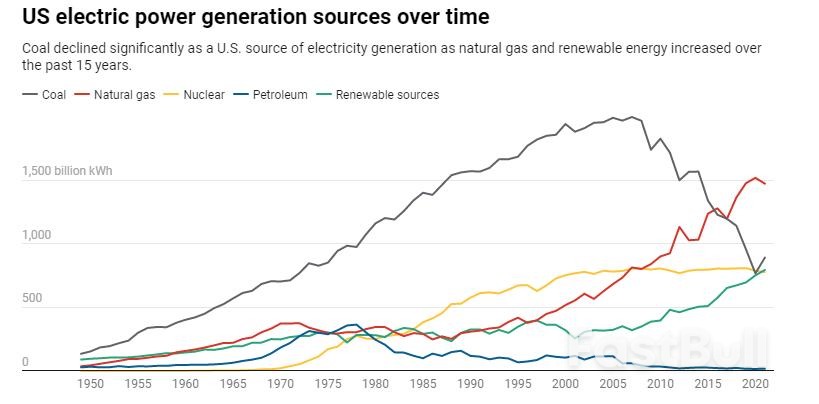
          At its peak in 2007, coal was responsible for almost 2 trillion kilowatt-hours of electricity generation in the U.S., equivalent to powering over 186 million homes for the year.
          By 2021, that total had dropped by 55%.
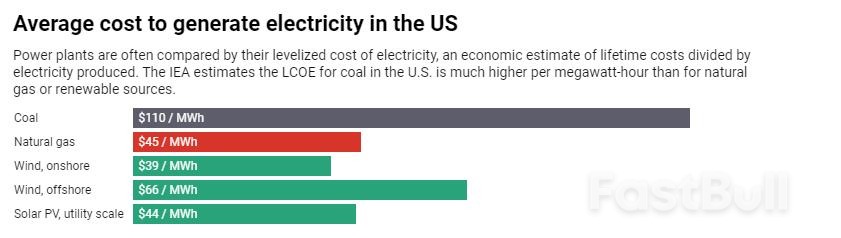
          The drop was due in large part to an industrywide shift in electricity generation, away from coal-fired units toward natural gas and renewable energy. That shift is happening for three main reasons.3 Reasons US Coal Power is Disappearing – and a Supreme Court Ruling Won't Save It_1

          Natural gas prices

          Natural gas prices have decreased significantly – over 60% between 2003 and 2019 – mainly because of improvements in hydraulic fracturing and horizontal drilling, which allow drillers to extract more gas from shale.
          The influx of natural gas led to substantial increases in additions of natural gas-fired electricity generators. These natural gas power plants are newer, have similar and sometimes lower fuel costs, and are more efficient at generating electricity than the existing coal-fired generators.
          They also are able to come online at full power within one to 12 hours, while a coal-fired generator can take up to 24 hours to be fully ready to produce power. Because of this necessary lead time, it is difficult to rely on coal-fired generators when demand rises and the power grid needs more electricity quickly.
          For example, the electric system faces the highest demand for electricity generation between 7 a.m. and 11 p.m. on weekdays. If demand spikes, a coal-fired generator will miss the window when electricity is needed. Natural gas generators can meet the demand much faster, often making them more profitable for utilities.3 Reasons US Coal Power is Disappearing – and a Supreme Court Ruling Won't Save It_2

          The rise of renewable energy

          Solar and wind energy are now cost competitive with fossil-fueled generators, primarily because of technological advancements.
          Many states and the federal government also offer incentives for renewable energy production, which lowers the cost to install them. And, once built, renewable energy sources have no fuel costs and relatively low operational costs compared with coal-fired generators.
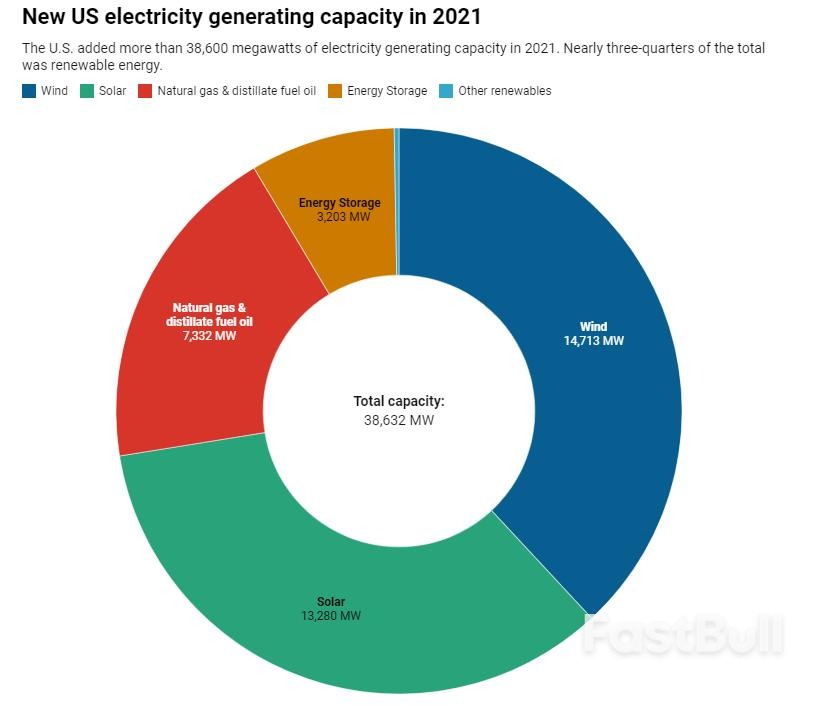
          A record 17.1 gigawatts of wind capacity came online in the U.S. in 2021 after a tax incentive was extended, and 7.6 gigawatts are planned this year.
          Solar energy accounts for 46% of all new electricity generating capacity expected to join the grid in 2022, about 21.5 gigawatts.3 Reasons US Coal Power is Disappearing – and a Supreme Court Ruling Won't Save It_3

          Environmental regulation

          The government has instituted several environmental regulations over the past few decades aiming to reduce sulfur dioxide, nitrogen oxides, particulate matter, mercury and other hazardous air pollutants emitted by the electric power sector.
          These hazardous emissions are linked to health problems including respiratory illnesses and neurological and developmental damage, as well as smog, acid rain and climate change. According to the U.S. Government Accountability Office, coal-fired generators are by far the largest electricity-sector sources.
          To comply with the regulations, coal power plant operators have installed scrubbers to remove the pollutants from their emissions, switched coal types to lower-sulfur coal, and invested in other methods to reduce sulfur and other impurities. As a result, costs have increased for the coal-fired fleet.
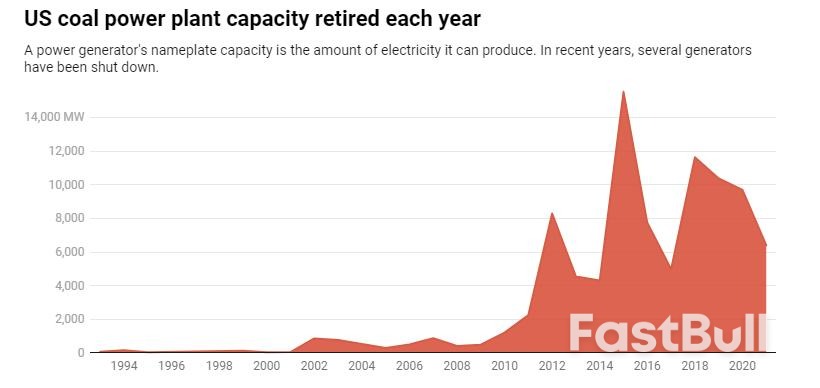
          These higher environmental mitigation costs, coupled with lower wholesale electricity prices over recent years, have meant coal plant operators have had a tougher time recovering the cost of the capital investments to maintain their older coal-fired generators. Instead, many have chosen to retire those units.3 Reasons US Coal Power is Disappearing – and a Supreme Court Ruling Won't Save It_4

          Coal power's future: More early retirements

          So what does this mean for the future of U.S. coal power?
          The U.S. Energy Information Administration reports that coal generators account for 85% of the electric generating capacity being retired this year nationwide.
          This trend is expected to continue, with substantial coal generator retirements occurring by 2030. This is a result of both market factors – cheap natural gas and affordable renewable energy – and regulatory measures.
          Coal is used more widely in other countries, including China, and U.S. coal companies have increased their exports in recent years. However, at the 2021 United Nations climate change conference, over 40 countries committed to completely shift away from coal, and 20 others – including the U.S. – pledged to stop government financing of coal use, unless it includes carbon capture technology. The Biden administration, while unable so far to get its climate policies through a deeply divided Congress, is weighing new regulatory options that could further affect the cost of generating electricity with coal.
          It all adds up to a difficult economic environment for U.S. coal power for the foreseeable future.

          Source: theconversation

          Risk Warnings and Disclaimers
          You understand and acknowledge that there is a high degree of risk involved in trading. Following any strategies or investment methods may lead to potential losses. The content on the site is provided by our contributors and analysts for information purposes only. You are solely responsible for determining whether any trading assets, securities, strategy, or any other product is suitable for investing based on your own investment objectives and financial situation.
          Comments
          Add to Favorites
          Share

          Hint of a Fed Pause Opens Door to Asia's Emerging Markets

          Owen Li
          As the United States pushes ahead with its steepest interest rate hikes in a generation, investors are unusually poised to buy in Asia's emerging markets, betting authorities can tame inflation without triggering the capital-flight chaos of previous cycles.
          While no rally is underway, steadying currency, debt and equity markets suggest investors may have already stopped rushing for the exits.
          Beaten-down currencies such as South Korea's won and the Malaysian ringgit rallied on Thursday, and stock and bond markets in Seoul, Kuala Lumpur, Jakarta and Manila responded positively to the Federal Reserve's latest rate hike.
          The Fed, which met market expectations with a 75 basis point (bp) rise overnight, has now lifted rates by a total of 150 bps in two meetings - the fastest pace since the early 1980s.
          The target window for the benchmark funds' rate is at its mid-2019 level of 2.25% to 2.5%.
          But chair Jerome Powell noted slowing spending and production and foreshadowed an eventual slowdown in hikes. Traders have taken the remarks as confirmation that a peak in U.S. interest rates is near and, with it, a top for the dollar and a trough for despair.
          "These days emerging market currencies, especially Asian currencies, have been - from my point of view - oversold," said Masafumi Yamamoto, chief currency strategist at Mizuho Securities in Tokyo.
          "Looking at the rising U.S. equity market and the less-hawkish communication by Powell, this is supporting Asian currencies and other emerging market (EM) currencies, and the recovery of EM should continue."
          Bellwether markets in South Korea and Indonesia are showing signs that the worst may be over. Rather than collapsing, benchmark 10-year bonds in Indonesia have held up relatively well: the yield premium over Treasuries has actually narrowed this year..
          South Korea's won, which has been battered by equity outflows on expectations that the country's growth-exposed heavy industry and high-tech manufacturing sectors will suffer as conditions tighten, has also paused for breath.
          Having dropped nearly 9% for the year so far, the won was heading for its best onshore session in nearly a month on Thursday and has lifted about 2% from mid-July's 13-year low.
          "In six to 12 months time, when inflation comes off globally and Fed tightening slows, that might benefit the won," said Bank of Singapore strategist Moh Siong Sim.

          WAITING GAME

          The moves are a far cry from the outset of the last Fed tightening cycle in 2013, when India and Indonesia were counted among the so-called "fragile five" emerging market countries, with assets on the front line of vulnerability to rising U.S. rates.
          Indonesian stocks are set for their best month since April, since they are on course at least not to fall again, and the rupiah currency has dropped only 5% this year, even as the greenback's strength has lifted the U.S. dollar index by about 11%.
          In 2013, by contrast, Indonesia's currency fell 21%, the 10-year yield soared 330 bps and stocks were flat as world equity markets rallied.
          "What we've been pleasantly surprised with so far is that this time round the Asian markets have actually held up relatively well given the pressure that they've been under," said Thu Ha Chow, head of fixed income for Asia at Dutch asset manager Robeco.
          "We're obviously waiting, like everybody else, for earnings ... but high-quality corporates have been relatively stable."
          Risks abound, of course - especially as some central banks, notably in Thailand and Indonesia, are being slow to follow in the Fed in raising interest rates.
          Neither country has lifted policy rates from pandemic lows, inviting downward pressure on their currencies that could in turn exacerbate inflation and outflows. Investors expect both to move soon, however.
          "When the tide runs out and you're still not doing the right thing and raising rates, then all bets are off," said Howe Chung Wan, head of Asia fixed income at Principal Global Investors in Singapore, regarding Indonesia.
          He expects inflation can breach Bank Indonesia's target band this year and force an interest rate rise sooner than policymakers intend. But, he added, if that happens in a market convinced that global inflation can be tamed, then investors will find confidence.
          "This is where the EM investors are going to be, when we clear out on the Fed, when we think inflation is peaking, this is where we want to be."

          Source: Reuters

          Risk Warnings and Disclaimers
          You understand and acknowledge that there is a high degree of risk involved in trading. Following any strategies or investment methods may lead to potential losses. The content on the site is provided by our contributors and analysts for information purposes only. You are solely responsible for determining whether any trading assets, securities, strategy, or any other product is suitable for investing based on your own investment objectives and financial situation.
          Comments
          Add to Favorites
          Share

          After Another Jumbo Fed Hike, Some Investors See Glimmers of Hope

          Samantha Luan

          Central Bank

          Investors are gauging whether the U.S. Federal Reserve has reached the peak of its aggressiveness in hiking rates, with some saying they're ready to up risky positions again.
          The Fed delivered its second straight 75 basis point rate increase on Wednesday, but Chairman Jerome Powell suggested the central bank could slow the pace of its rate increases in coming months if there is evidence that tighter monetary policy is taming the worst U.S. inflation in four decades.
          Plenty of investors believe inflation will prove tenacious and force the Fed to maintain a hawkish posture well into next year.
          Others, however, are hoping that Wednesday's comments may imply the end of market-bruising monetary tightening is finally in sight, amid evidence parts of the economy are slowing after the Fed raised rates by a total of 225 basis points.
          "The Fed comments incrementally validate that we are a little bit comfortable with risk," said Pete Duffy, chief investment officer at Penn Capital.
          Fed funds futures, which reflect investor expectations of central bank policy rates, priced in a more dovish outlook shortly after Powell's comments. Chances that the Fed would deliver a 50-basis point hike in September – rather than a third 75 basis point increase - shot to 65%, from just under 51% on Tuesday.
          Stocks extended their rally, with huge gains in tech and growth shares powering the Nasdaq to a 4.1% gain on Wednesday, its biggest daily percentage gain since April 2020. The benchmark S&P 500 is up nearly 10% from its mid-June low, after falling as much as 23.6% in the first half of the year.
          Colin Graham, head of multi-asset strategies at asset manager Robeco, which oversees $228 billion in assets, said Wednesday's meeting reinforced his bullish outlook and bolstered his confidence that policymakers will get inflation under control.
          It was a sentiment echoed by Blackrock's Rick Rieder, who in a statement said "it certainly seems like slowing down the pace of policy tightening would be possible given what we heard today". He expects a 50 basis point increase at the Fed's September meeting and "possibly one or two more 25 bps rate hikes" thereafter.
          "I think the Fed has sort of caught up," said Van Hesser, Chief Strategist at KBRA. "They've convinced the markets that they understand the gravity of the situation, and have acted accordingly."
          Of course, many investors are wary of calling a peak in Fed hawkishness, after a year in which inflation has repeatedly surprised markets and forced policymakers to ramp up their monetary tightening.
          "We read Chair Powell's press conference as more hawkish than the market's interpretation," Citi's analysts wrote, adding they see core inflation pushing the Fed to hike more aggressively than markets anticipate with a 75 basis point hike in September.
          Doug Fincher, portfolio manager at Ionic Capital Management, believes inflation is far from subsiding and that the economy may enter a period of stagflation - a toxic combination of high inflation and slowing growth – if the Fed deviates from its hawkish path.
          "The concern is that inflation is still going to be with us... and if inflation is endemic, you need to raise rates," said Fincher, who is looking to add Treasury Inflation Protected Securities, or TIPS, to his portfolio.
          The Fed's latest hike has brought its benchmark overnight interest rate to a 2.25%-2.50% range, which Fed officials have indicated as a level that has a neutral economic impact.
          With the Fed offering little specific guidance on what to expect next, economic data will continue being a key catalyst for market moves during the eight weeks until the Fed meets again, investors said.
          Duffy of Penn Capital believes that is likely a healthy development.
          "The markets are relieved because if we get some soft economic data, the Fed will probably relax their hikes a little bit," he said.

          Source: Reuters

          Risk Warnings and Disclaimers
          You understand and acknowledge that there is a high degree of risk involved in trading. Following any strategies or investment methods may lead to potential losses. The content on the site is provided by our contributors and analysts for information purposes only. You are solely responsible for determining whether any trading assets, securities, strategy, or any other product is suitable for investing based on your own investment objectives and financial situation.
          Comments
          Add to Favorites
          Share

          Bears Raise Bets on Thai Baht, Dim View on Other Asian FX Eases

          Owen Li
          Bearish bets on the Thai baht extended on risks around recession, the Chinese economy, and inflation, while short bets on most Asian currencies eased slightly but remained firmly around multi-month highs, a Reuters poll showed on Thursday.
          The fortnightly poll of 13 analysts showed short bets on the Thai baht were the highest since January 2018, having steadily built up since early-March when the Ukraine war set off a series of factors and pressured the tourism-reliant, net oil importing country.
          Thailand, Southeast Asia's second-largest economy, is among the laggards on the policy normalisation bandwaggon, which its peers and major central banks have hopped on since long, further elevating the risks of a negative impact from rising costs amid weak activity in top regional economy China.
          The Thai currency, the most shorted among Asian units, has depreciated about 14 per cent since the Russia-Ukraine conflict, and 10.3 per cent so far this year, placing it at the bottom of the rung with the Indian rupee and South Korean won.
          "Market players remain short on the Thai baht vs the U.S. dollar until they are really certain that the U.S. Federal Reserve will pass the peak of hawkishness," Poon Panichpibool, a market strategist with Krung Thai Bank said.
          But, he said that weakness in the dollar after the Fed meeting would encourage investors to be bullish on the baht, relying on the recent green shoots observed in tourism and the economy.
          The Fed overnight delivered another 75 basis points (bps) rate hike, and reiterated its resolve against stinging inflation in the world's biggest economy even at the risk of economic weakness and a slowing jobs market.
          Analysts at Maybank, however, cautioned that although the greenback weakened after the Fed's move, Chair Jerome Powell is "still hawkish"; that could keep the Fed on an aggressive tightening path, ultimately continuing to support the safe haven dollar.
          The poll's responses were collated before the Fed hike.
          Elsewhere, sentiment for the Philippine peso improved over the past two weeks after the Bangko Sentral ng Pilipinas in mid-July raised its key interest rates by 75 bps in an off-cycle move.
          Chinese yuan, seen as a safer bet among Asian currencies, was the second-least shorted currency in the region, while short positions on the Indian rupee, Indonesian rupiah, and the Malaysian ringgit moderated slightly but remained firm.
          The Asian currency positioning poll is focused on what analysts and fund managers believe are the current market positions in nine Asian emerging market currencies: the Chinese yuan, South Korean won, Singapore dollar, Indonesian rupiah, Taiwan dollar, Indian rupee, Philippine peso, Malaysian ringgit and the Thai baht.
          The poll uses estimates of net long or short positions on a scale of minus 3 to plus 3. A score of plus 3 indicates the market is significantly long on U.S. dollars.
          The figures include positions held through non-deliverable forwards (NDFs).

          Source: Reuters

          Risk Warnings and Disclaimers
          You understand and acknowledge that there is a high degree of risk involved in trading. Following any strategies or investment methods may lead to potential losses. The content on the site is provided by our contributors and analysts for information purposes only. You are solely responsible for determining whether any trading assets, securities, strategy, or any other product is suitable for investing based on your own investment objectives and financial situation.
          Comments
          Add to Favorites
          Share

          Korea to Take Stern Actions Against Illegal Stock Short Selling

          Damon
          Korea's financial regulator said Thursday it plans to take stern actions against illegal stock short selling and seek to confiscate profits that were made by such practices.Korea to Take Stern Actions Against Illegal Stock Short Selling_1
          The measures were announced as some retail investors called for a ban on short selling amid a fall in stock prices and several securities firms were fined for violating related rules.
          Short selling is a trading technique in which investors sell stocks they borrowed in expectations that share prices will fall. When the prices decline, they can make profits by buying back the stocks at lower prices.
          Kim Joo-hyun, chairman of the Financial Services Commission (FSC), held a meeting to discuss ways to root out illegal short selling with officials from the prosecution, the financial watchdog and the bourse operator.
          The government decided to step up efforts to better detect illegal short selling practices and strengthen punishment for violators.
          "It is necessary to root out illegal activities involving short selling in a bid to regain trust in the capital market," Kim said at the meeting.
          Short selling, a globally used risk-hedging strategy, plays a positive role in providing liquidity to markets and preventing price bubble creation. But it can also amplify market volatility and be exploited as a means of price manipulation.
          Many retail investors here have called for a ban on short selling, claiming the trading technique caused stock prices to fall. Korea's benchmark stock index has dropped about 20 percent so far this year.
          They also said short selling prevents a level playing field from being created against institutional investors.
          The financial watchdog imposed fines on several brokerage houses for violating short selling rules this year.
          The Korea Investment & Securities was fined 1 billion won ($766,810) in February as it did not specify the short selling of some 150 million stocks, including shares in Samsung Electronics, over the past three years.

          Source: Yonhap

          Risk Warnings and Disclaimers
          You understand and acknowledge that there is a high degree of risk involved in trading. Following any strategies or investment methods may lead to potential losses. The content on the site is provided by our contributors and analysts for information purposes only. You are solely responsible for determining whether any trading assets, securities, strategy, or any other product is suitable for investing based on your own investment objectives and financial situation.
          Comments
          Add to Favorites
          Share
          FastBull
          Copyright © 2025 FastBull Ltd

          728 RM B 7/F GEE LOK IND BLDG NO 34 HUNG TO RD KWUN TONG KLN HONG KONG

          TelegramInstagramTwitterfacebooklinkedin
          App Store Google Play Google Play
          Products
          Charts

          Chats

          Q&A with Experts
          Screeners
          Economic Calendar
          Data
          Tools
          Membership
          Features
          Function
          Markets
          Copy Trading
          Latest Signals
          Contests
          News
          Analysis
          24/7
          Columns
          Education
          Company
          Careers
          About Us
          Contact Us
          Advertising
          Help Center
          Feedback
          User Agreement
          Privacy Policy
          Business

          White Label

          Data API

          Web Plug-ins

          Poster Maker

          Affiliate Program

          Risk Disclosure

          The risk of loss in trading financial instruments such as stocks, FX, commodities, futures, bonds, ETFs and crypto can be substantial. You may sustain a total loss of the funds that you deposit with your broker. Therefore, you should carefully consider whether such trading is suitable for you in light of your circumstances and financial resources.

          No decision to invest should be made without thoroughly conducting due diligence by yourself or consulting with your financial advisors. Our web content might not suit you since we don't know your financial conditions and investment needs. Our financial information might have latency or contain inaccuracy, so you should be fully responsible for any of your trading and investment decisions. The company will not be responsible for your capital loss.

          Without getting permission from the website, you are not allowed to copy the website's graphics, texts, or trademarks. Intellectual property rights in the content or data incorporated into this website belong to its providers and exchange merchants.

          Not Logged In

          Log in to access more features

          FastBull Membership

          Not yet

          Purchase

          Become a signal provider
          Help Center
          Customer Service
          Dark Mode
          Price Up/Down Colors

          Log In

          Sign Up

          Position
          Layout
          Fullscreen
          Default to Chart
          The chart page opens by default when you visit fastbull.com