• Trade
  • Markets
  • Copy
  • Contests
  • News
  • 24/7
  • Calendar
  • Q&A
  • Chats
Trending
Screeners
SYMBOL
LAST
BID
ASK
HIGH
LOW
NET CHG.
%CHG.
SPREAD
SPX
S&P 500 Index
6814.24
6814.24
6814.24
6861.30
6801.50
-13.17
-0.19%
--
DJI
Dow Jones Industrial Average
48360.51
48360.51
48360.51
48679.14
48285.67
-97.53
-0.20%
--
IXIC
NASDAQ Composite Index
23085.27
23085.27
23085.27
23345.56
23012.00
-109.89
-0.47%
--
USDX
US Dollar Index
97.950
98.030
97.950
98.070
97.740
0.000
0.00%
--
EURUSD
Euro / US Dollar
1.17449
1.17458
1.17449
1.17686
1.17262
+0.00055
+ 0.05%
--
GBPUSD
Pound Sterling / US Dollar
1.33678
1.33687
1.33678
1.34014
1.33546
-0.00029
-0.02%
--
XAUUSD
Gold / US Dollar
4303.21
4303.62
4303.21
4350.16
4285.08
+3.82
+ 0.09%
--
WTI
Light Sweet Crude Oil
56.392
56.422
56.392
57.601
56.233
-0.841
-1.47%
--

Community Accounts

Signal Accounts
--
Profit Accounts
--
Loss Accounts
--
View More

Become a signal provider

Sell trading signals to earn additional income

View More

Guide to Copy Trading

Get started with ease and confidence

View More

Signal Accounts for Members

All Signal Accounts

Best Return
  • Best Return
  • Best P/L
  • Best MDD
Past 1W
  • Past 1W
  • Past 1M
  • Past 1Y

All Contests

  • All
  • Trump Updates
  • Recommend
  • Stocks
  • Cryptocurrencies
  • Central Banks
  • Featured News
Top News Only
Share

Attempts By Ukrainian Troops To Advance From The South-West To Outskirts Of Kupiansk Are Being Thwarted

Share

Russian Troops Control All Of Kupiansk - IFX Cites Russian Military

Share

On Monday (December 15), The South Korean Won Ultimately Rose 0.60% Against The US Dollar, Closing At 1468.91 Won. The Won Was On An Upward Trend Throughout The Day, Rising Significantly At 17:00 Beijing Time And Reaching A Daily High Of 1463.04 Won At 17:36

Share

Health Ministry: Israeli Forces Kill Palestinian Teen In West Bank

Share

New York Federal Reserve President Williams: Over Time, The Size Of Reserves Could Grow From $2.9 Trillion

Share

New York Fed President Williams: AI Valuations Are High, But There Is A Real Driving Factor

Share

New York Federal Reserve President Williams: The Job Market Is In Very Good Shape

Share

New York Fed President Williams: 'Very Supportive' Of USA Central Bank's Decision To Cut Interest Rates Last Week

Share

New York Fed President Williams: 'Too Early To Say' What Central Bank Should Do At January Meeting

Share

New York Fed President Williams: Strong Markets Part Of Reason Why Economy Will Grow Robustly In 2026

Share

New York Fed President Williams: What Constitutes Ample Reserves Will Change Over Time

Share

New York Fed President Williams: Market Valuations 'Elevated,' But There Are Reasons For Pricing

Share

New York Fed President Williams: Ample Reserves System Working Very Well

Share

New York Fed President Williams: Some Signs That Parts Of Underlying Economy Not As Strong As GDP Data Suggests

Share

New York Fed President Williams: Expects Coming Job Data Will Show Gradual Cooling

Share

Ukraine President Zelenskiy: Monitoring Of Ceasefire Should Be Part Of Security Guarantees

Share

Ukraine President Zelenskiy: Ukraine Needs Clear Understanding On Security Guarantees Before Taking Any Decisions Regarding Frontlines

Share

U.S. Commerce Secretary Rutnick Praised Korea Zinc Co. Ltd., Stating That The United States Will Have Priority Access To The Company's Products In 2026

Share

Ukraine President Zelenskiy: USA Passed On Russian Demands

Share

Zelenskiy Says: Don't Think USA Was Demanding Anything On Territories

TIME
ACT
FCST
PREV
Japan Tankan Small Manufacturing Outlook Index (Q4)

A:--

F: --

P: --

Japan Tankan Large Non-Manufacturing Outlook Index (Q4)

A:--

F: --

P: --

Japan Tankan Large Manufacturing Outlook Index (Q4)

A:--

F: --

P: --

Japan Tankan Small Manufacturing Diffusion Index (Q4)

A:--

F: --

P: --

Japan Tankan Large-Enterprise Capital Expenditure YoY (Q4)

A:--

F: --

P: --

U.K. Rightmove House Price Index YoY (Dec)

A:--

F: --

P: --

China, Mainland Industrial Output YoY (YTD) (Nov)

A:--

F: --

P: --

China, Mainland Urban Area Unemployment Rate (Nov)

A:--

F: --

P: --

Saudi Arabia CPI YoY (Nov)

A:--

F: --

P: --

Euro Zone Industrial Output YoY (Oct)

A:--

F: --

P: --

Euro Zone Industrial Output MoM (Oct)

A:--

F: --

P: --

Canada Existing Home Sales MoM (Nov)

A:--

F: --

P: --

Canada National Economic Confidence Index

A:--

F: --

P: --

Canada New Housing Starts (Nov)

A:--

F: --

P: --
U.S. NY Fed Manufacturing Employment Index (Dec)

A:--

F: --

P: --

U.S. NY Fed Manufacturing Index (Dec)

A:--

F: --

P: --

Canada Core CPI YoY (Nov)

A:--

F: --

P: --

Canada Manufacturing Unfilled Orders MoM (Oct)

A:--

F: --

P: --

U.S. NY Fed Manufacturing Prices Received Index (Dec)

A:--

F: --

P: --

U.S. NY Fed Manufacturing New Orders Index (Dec)

A:--

F: --

P: --

Canada Manufacturing New Orders MoM (Oct)

A:--

F: --

P: --

Canada Core CPI MoM (Nov)

A:--

F: --

P: --

Canada Trimmed CPI YoY (SA) (Nov)

A:--

F: --

P: --

Canada Manufacturing Inventory MoM (Oct)

A:--

F: --

P: --

Canada CPI YoY (Nov)

A:--

F: --

P: --

Canada CPI MoM (Nov)

A:--

F: --

P: --

Canada CPI YoY (SA) (Nov)

A:--

F: --

P: --

Canada Core CPI MoM (SA) (Nov)

A:--

F: --

P: --

Canada CPI MoM (SA) (Nov)

A:--

F: --

P: --

Federal Reserve Board Governor Milan delivered a speech
U.S. NAHB Housing Market Index (Dec)

A:--

F: --

P: --

Australia Composite PMI Prelim (Dec)

--

F: --

P: --

Australia Services PMI Prelim (Dec)

--

F: --

P: --

Australia Manufacturing PMI Prelim (Dec)

--

F: --

P: --

Japan Manufacturing PMI Prelim (SA) (Dec)

--

F: --

P: --

U.K. 3-Month ILO Employment Change (Oct)

--

F: --

P: --

U.K. Unemployment Claimant Count (Nov)

--

F: --

P: --

U.K. Unemployment Rate (Nov)

--

F: --

P: --

U.K. 3-Month ILO Unemployment Rate (Oct)

--

F: --

P: --

U.K. Average Weekly Earnings (3-Month Average, Including Bonuses) YoY (Oct)

--

F: --

P: --

U.K. Average Weekly Earnings (3-Month Average, Excluding Bonuses) YoY (Oct)

--

F: --

P: --

France Services PMI Prelim (Dec)

--

F: --

P: --

France Composite PMI Prelim (SA) (Dec)

--

F: --

P: --

France Manufacturing PMI Prelim (Dec)

--

F: --

P: --

Germany Services PMI Prelim (SA) (Dec)

--

F: --

P: --

Germany Manufacturing PMI Prelim (SA) (Dec)

--

F: --

P: --

Germany Composite PMI Prelim (SA) (Dec)

--

F: --

P: --

Euro Zone Composite PMI Prelim (SA) (Dec)

--

F: --

P: --

Euro Zone Services PMI Prelim (SA) (Dec)

--

F: --

P: --

Euro Zone Manufacturing PMI Prelim (SA) (Dec)

--

F: --

P: --

U.K. Services PMI Prelim (Dec)

--

F: --

P: --

U.K. Manufacturing PMI Prelim (Dec)

--

F: --

P: --

U.K. Composite PMI Prelim (Dec)

--

F: --

P: --

Euro Zone ZEW Economic Sentiment Index (Dec)

--

F: --

P: --

Germany ZEW Current Conditions Index (Dec)

--

F: --

P: --

Germany ZEW Economic Sentiment Index (Dec)

--

F: --

P: --

Euro Zone Trade Balance (Not SA) (Oct)

--

F: --

P: --

Euro Zone ZEW Current Conditions Index (Dec)

--

F: --

P: --

Euro Zone Trade Balance (SA) (Oct)

--

F: --

P: --

Euro Zone Total Reserve Assets (Nov)

--

F: --

P: --

U.K. Inflation Rate Expectations

--

F: --

P: --

Q&A with Experts
    • All
    • Chatrooms
    • Groups
    • Friends
    Connecting
    .
    .
    .
    Type here...
    Add Symbol or Code

      No matching data

      All
      Trump Updates
      Recommend
      Stocks
      Cryptocurrencies
      Central Banks
      Featured News
      • All
      • Russia-Ukraine Conflict
      • Middle East Flashpoint
      • All
      • Russia-Ukraine Conflict
      • Middle East Flashpoint
      Search
      Products

      Charts Free Forever

      Chats Q&A with Experts
      Screeners Economic Calendar Data Tools
      Membership Features
      Data Warehouse Market Trends Institutional Data Policy Rates Macro

      Market Trends

      Market Sentiment Order Book Forex Correlations

      Top Indicators

      Charts Free Forever
      Markets

      News

      News Analysis 24/7 Columns Education
      From Institutions From Analysts
      Topics Columnists

      Latest Views

      Latest Views

      Trending Topics

      Top Columnists

      Latest Update

      Signals

      Copy Rankings Latest Signals Become a signal provider AI Rating
      Contests
      Brokers

      Overview Brokers Assessment Rankings Regulators News Claims
      Broker listing Forex Brokers Comparison Tool Live Spread Comparison Scam
      Q&A Complaint Scam Alert Videos Tips to Detect Scam
      More

      Business
      Events
      Careers About Us Advertising Help Center

      White Label

      Data API

      Web Plug-ins

      Affiliate Program

      Awards Institution Evaluation IB Seminar Salon Event Exhibition
      Vietnam Thailand Singapore Dubai
      Fans Party Investment Sharing Session
      FastBull Summit BrokersView Expo
      Recent Searches
        Top Searches
          Markets
          News
          Analysis
          User
          24/7
          Economic Calendar
          Education
          Data
          • Names
          • Latest
          • Prev

          View All

          No data

          Scan to Download

          Faster Charts, Chat Faster!

          Download App
          English
          • English
          • Español
          • العربية
          • Bahasa Indonesia
          • Bahasa Melayu
          • Tiếng Việt
          • ภาษาไทย
          • Français
          • Italiano
          • Türkçe
          • Русский язык
          • 简中
          • 繁中
          Open Account
          Search
          Products
          Charts Free Forever
          Markets
          News
          Signals

          Copy Rankings Latest Signals Become a signal provider AI Rating
          Contests
          Brokers

          Overview Brokers Assessment Rankings Regulators News Claims
          Broker listing Forex Brokers Comparison Tool Live Spread Comparison Scam
          Q&A Complaint Scam Alert Videos Tips to Detect Scam
          More

          Business
          Events
          Careers About Us Advertising Help Center

          White Label

          Data API

          Web Plug-ins

          Affiliate Program

          Awards Institution Evaluation IB Seminar Salon Event Exhibition
          Vietnam Thailand Singapore Dubai
          Fans Party Investment Sharing Session
          FastBull Summit BrokersView Expo

          Here's Why Other Cryptocurrencies May Face a Harder Time Getting Their Own ETFs

          Warren Takunda

          Cryptocurrency

          Summary:

          SEC approved spot Ethereum ETFs from major firms like BlackRock. While Solana is a contender for the next ETF, broader cryptocurrency ETF approval seems unlikely in the near future.

          The U.S. Securities and Exchange Commission approved 19b-4 forms for eight spot Ethereum exchange-traded funds from companies like BlackRock and Fidelity on Thursday. However, it may be a long road before other spot crypto ETFs are approved in the country.
          While the spot Ethereum ETF issuers still need to have their S-1 registration statements go effective before trading can begin — a process that could take days or weeks — attention turned toward cryptocurrencies that could receive an ETF wrapper next, with Solana SOL top of the speculative list.
          Anthony Scaramucci, the former White House Communications Director and managing partner of alternative investment firm SkyBridge, was among the voices optimistic of a Solana ETF being next. “We are going to get a SOL ETF, get ready,” Scaramucci posted following the spot Ethereum ETF approvals yesterday.
          CNBC presenter Brian Kelly was another speculating on the chances of an ETF for the fifth-largest cryptocurrency by market cap. “You got to think about Solana as probably the next one,” Kelly said on Wednesday. “Bitcoin, Ethereum and Solana are probably the big three for this cycle.”
          Kelly mirrored comments from Joe McCann, a Solana investor and the founder, CEO and CIO of crypto fund Asymmetric. "If there's an ETF that comes next, it's probably something like Solana." However, picking up on one of the potential challenges for Solana, among some other cryptocurrencies, McCann added, “Granted there is some language in the Coinbase lawsuit that could impact that.”

          The 'unregistered security' question weighing heavily on some cryptocurrencies

          As McCann alluded to, Coinbase was sued by the SEC in June 2023, one day after the regulator filed a lawsuit against exchange rival Binance. The SEC also sued Kraken in November last year alleging similar securities law violations.
          Importantly, within those lawsuits, the SEC named several cryptocurrencies it considers to be "unregistered securities," including Solana, as well as Cardano, Polygon, Near and Internet Computer, among others.
          So therein lies one of the problems facing some cryptocurrencies, with bitcoin never facing that classification and ether, the asset at least, seemingly assigned a similar “commodity-based” status in yesterday’s approval order. However, ether staking is a different matter, with issuers rushing to remove staking features from their spot Ethereum ETF filings in recent days as the separation of ether, the asset, from its staking functionality appeared to become a crucial factor in the spot Ethereum ETF approvals.
          This may be due to the SEC's concerns about staking cryptocurrencies, with access to staking another part of the Coinbase lawsuit — as the agency claimed the feature was violating securities laws.
          The “SEC isn't dancing around SOL's status like they have ETH,” Bloomberg ETF analyst James Seyffart said. “Those lawsuits against Coinbase and Kraken and others flat out say ‘Solana is a security.’ Which could very easily make this a very rocky road.”
          While the SEC has named a lot of top coins as securities, it has avoided doing so for tokens that are closely related to Bitcoin, providing some options there. But they face different questions over demand and liquidity.
          McCann pointed to Dogecoin as another contender given its comparability to Bitcoin’s launch, describing it as “definitely not a security.” Others have also highlighted Litecoin for similar reasons.
          “This was essentially my and Alex Krüger's take to Joe McCann's SOL take on the last episode of Bits and Bips,” Seyffart said. “Though I don’t see much demand for an LTC ETF even if feasible? Personally I'm not sure about DOGE either but who knows!”
          While Dogecoin and Litecoin may make more sense from a regulatory perspective, “If I'm an issuer [I don't know] if I'm spending a couple hundred grand to launch a Litecoin ETF?,” Seyffart added. “I think a SOL ETF would see the most demand vs other digital assets (aside from BTC & ETH).”

          CFTC-regulated futures markets and futures ETFs needed first

          For both Bitcoin and Ethereum ETFs, they each had futures products available first. This allowed for a lengthy correlation analysis period between CME futures products and spot exchange rates to ensure they were sufficiently high before the likelihood of any spot ETFs could even be considered. The same would potentially be needed for any other crypto ETFs.
          CME Bitcoin futures were launched in December 2017, with CME Ether futures following in February 2021. Bitcoin futures ETFs then debuted in the U.S. in October 2021, with Ethereum futures ETFs following in October 2023.
          Based on current precedent, Seyffart suggested that a spot Solana ETF could happen within a few years of getting a CME-regulated futures market. However, “Congress and market structure bills like FIT21 could make it happen quicker,” he added.
          The U.S. House of Representatives passed the Financial Innovation and Technology for the 21st Century Act (FIT21) on Wednesday — a crypto market structure bill that aims to regulate the industry at large, marking the first time comprehensive crypto legislation has been voted on in the full House.
          FIT 21 would grant more power and funding to the Commodity Futures Trading Commission to oversee crypto spot markets and "digital commodities," particularly bitcoin, but allow crypto projects to self-certify as being "decentralized," SEC Chair Gary Gensler argued. The bill also creates a process to allow for the secondary market trading of crypto assets if they were "initially offered as part of an investment contract."
          However, there is no companion bill for FIT21 in the Senate, and top lawmakers in the Democrat-controlled Senate have not shown interest in the bill or have opposed it in the past. The Biden Administration also opposed FIT21 but said it is "eager to work with Congress" on a balanced framework for digital assets.
          Though FIT21 is unlikely to be brought up in the Senate this year, the bill could set the stage for the next Congress in January.
          With the potential for a FIT21-type bill to place crypto markets under CFTC oversight, some questioned if that would override the SEC’s current view. “Yes and no,” Seyffart responded. “The SEC still decides on the approval orders for all ETFs. And they aren't approving an ETF holding a digital asset that has no federally regulated trading venues or federally regulated futures trading venues.”
          “No sol ETF until either CME-traded sol futures exist or Congress puts legit crypto regulatory framework in place,” The ETF Store President Nate Geraci added. “Crypto ETF spigot turned off for a while after spot eth ETF approval.”
          That stance is reflected in the market too, with the Ethereum-based decentralized prediction platform Polymarket pricing odds of a Solana ETF in 2024 at just 11% with only $122,657 in wagers placed.
          Therefore, even if Solana can get around the SEC’s “unregistered security” label, it might be a while before a spot Solana ETF, or any other spot crypto ETF in the U.S., is fully on the cards.

          Source: TheBlock

          Risk Warnings and Disclaimers
          You understand and acknowledge that there is a high degree of risk involved in trading. Following any strategies or investment methods may lead to potential losses. The content on the site is provided by our contributors and analysts for information purposes only. You are solely responsible for determining whether any trading assets, securities, strategy, or any other product is suitable for investing based on your own investment objectives and financial situation.
          Add to Favorites
          Share

          Rates Spark: Rate Cuts Pushed Back Again

          ING

          Central Bank

          Economic

          Rate cut expectations fall further on good economic data

          Yesterday's data was another reminder that the timing for a full-blown global easing cycle is still a long shot. First, we had the eurozone PMIs maintaining their upward momentum and cementing confidence that growth is recovering in the region. Manufacturing numbers remained below 50 but exceeded expectations by good margins. Then US PMI numbers were even more impressive, with manufacturing back above 50 and the composite index jumping from 51.3 to 54.4. The services PMI made a similar jump up, which was a relief given that the ISM equivalent showed a large decline in its last reading.
          We have argued before that euro markets will focus more on growth dynamics now that inflation is slowly coming down. In our view, the momentum in eurozone PMIs can continue into the second half of this year, reducing the need for imminent rate cuts. The gradual pickup in growth cannot be ignored and yesterday's uptick in ECB wage numbers was a stark reminder that the battle against inflation is not over.
          The trend of pushing back against rate cuts – which has been going on since January – continues. Yesterday's price action was led by the 2y point on the curve, for both euro and dollar rates. The pricing for ECB cuts in 2024 is down to 60bp, which means two cuts are now deemed more likely than three. The momentum in the economic data is simply not supportive of rate cuts beyond June. As long as the eurozone continues recovering and inflation numbers show signs of stickiness, markets are unlikely to change course and we can expect short-end yields to still move higher from here in the near term.
          For the US, the case for higher rates from these numbers is even stronger. Inflation numbers have come in hot for multiple readings, so better macro data will only add to the yield pressures. The jobless claims numbers yesterday were also strong, so it's not just the PMI survey data that portrayed a resilient economy. Correlations between the back end of US and euro curves have been tight these past months and thus we can expect higher UST yields to spill over to Bunds.

          Elections called in the UK but markets unfazed for good reason

          In the UK, the surprise did not come from PMIs but rather PM Rishi Sunak calling elections for 4 July the night before. Having said that, markets can be quite relaxed by the news as this time the elections likely offer less excitement than previous ones. In our view, Gilt yields have been trading higher than we deem fair value since the beginning of the year and the 5s10s is still steeper than for UST and Bunds, both suggesting some risk premium is already built in. Given the benign expectations, we maintain a downward bias for outright Gilt yields.
          To stay updated on all economic events of today, please check out our Economic calendar
          Risk Warnings and Disclaimers
          You understand and acknowledge that there is a high degree of risk involved in trading. Following any strategies or investment methods may lead to potential losses. The content on the site is provided by our contributors and analysts for information purposes only. You are solely responsible for determining whether any trading assets, securities, strategy, or any other product is suitable for investing based on your own investment objectives and financial situation.
          Add to Favorites
          Share

          Canadian Dollar: Fed-watching Bank of Canada Will Delay Rate Cut Until July

          Warren Takunda

          Economic

          A new analysis from HSBC shows the Bank of Canada will forgo a June rate cut simply because it doesn't want to diverge from the Federal Reserve, where rate cuts are expected later in the year.
          "Though many central banks take their cue from the Fed, the policy rate path of the Bank of Canada is especially linked," says Ryan Wang, US Economist at HSBC. "Uncertainty around the Fed may drive the Governing Council to exercise more caution around cutting."
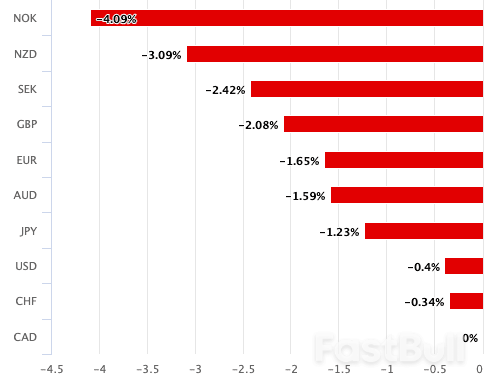
          When Canada is considered in isolation, the case for a June rate cut is strong: underlying disinflation has continued to progress, growth has been sluggish, and productivity remains relatively poor.
          This week saw the Canadian Dollar slump after Statistics Canada said the country's inflation rate fell to 2.7% year-on-year in April, down from 2.9% in March and undershooting estimates for 2.8%. The details of the print were also supportive of a rate cut as the Bank of Canada's favoured measures of core inflation all undershot expectations.
          "It's high time for the Bank of Canada to give the economy some oxygen, because by maintaining such a restrictive monetary policy, it risks inflicting unnecessary damage on the economy," says Matthieu Arseneau, an economist at National Bank of Canada.
          HSBC says a June rate cut is still a close call, but fears of falling out of kilter with the Federal Reserve will prompt the Bank of Canada to delay.
          Canadian Dollar: Fed-watching Bank of Canada Will Delay Rate Cut Until July_1

          Above: CAD has lost value against all its G10 rivals during the course of the past month.

          Wang explains the Canadian and U.S. economies are closely interrelated through trade and investment, and excessive divergence between the paths of Fed and BoC can have bigger implications for the Canadian economy than elsewhere.
          This sentiment has been echoed by BoC Governor Tiff Macklem in recent speeches. It also explains why the CAD had tracked the USD's fortunes for much of 2023 and early 2024.
          "There has been a shift in Fed expectations recently. With little movement in the annual core PCE inflation rate over the past four months, Federal Reserve Chair Jerome Powell noted at the May FOMC press conference that confidence on US inflation has not improved. For the Fed we now expect a first cut in September," says Wang.
          "Consequently, given the shift in expectations, our previous forecast of a first cut in June, and 200bp total by end-2025 now stands out against the outlook for the Fed. Given the domestic progress on inflation, we still see reason for Bank of Canada rate cuts to start before the Fed, and to proceed at a slightly faster pace. We now see a first cut of 25bp in July, an additional 25bp rate cut in Q4 2024, and 75bp of cumulative rate cuts in 2025," he adds.
          The CAD can potentially arrest its ongoing decline and stage a recovery if the market senses the Bank of Canada is set to delay.

          Source: Poundsterlinglive

          To stay updated on all economic events of today, please check out our Economic calendar
          Risk Warnings and Disclaimers
          You understand and acknowledge that there is a high degree of risk involved in trading. Following any strategies or investment methods may lead to potential losses. The content on the site is provided by our contributors and analysts for information purposes only. You are solely responsible for determining whether any trading assets, securities, strategy, or any other product is suitable for investing based on your own investment objectives and financial situation.
          Add to Favorites
          Share

          China Considers Increasing Tariffs On Imported Cars From US, EU

          Alex

          Economic

          Political

          “We have received information from internal sources from mainland China that China may consider raising temporary tariff rates on imported vehicles with large internal combustion engines,” the Chinese Chamber of Commerce in the EU said in a statement on May 21 (local time), according to Hong Kong’s South China Morning Post (SCMP) and other sources.
          Liu Bin, an official of the China Automotive Strategic Policy Research Center, told the Global Times run by the Chinese government that
          China’s import tariffs on large internal combustion vehicles may rise to 25 percent from the current 15 percent.China’s move is seen as a response to anti-China pressure from the United States and the EU. The United States announced last week that it would significantly increase import tariffs on key Chinese goods including Chinese electric vehicles (25 to 100 percent) and semiconductors (25 to 50 percent). The EU is also expected to raise import duties to 25 percent from the current 10 percent in July at the latest after completing an anti-subsidy investigation into Chinese electric vehicles.
          China launched an anti-dumping investigation into Taiwanese, U.S., EU, and Japanese polyoxymethylene (POM) over the weekend, following an investigation of imported brandy at the beginning of this year. If the Chinese government raises tariffs on imported cars, it will reflect an escalation of retaliatory measures by the Chinese government.
          On the same day, China announced sanctions on 12 U.S. defense contractors, including Lockheed Martin, and their executives for arms sales to Taiwan. The previous day, China had added Boeing and others to its sanctions list and imposed fines on them.
          Against this backdrop, the United States wants to strengthen its cooperation with Europe in order to hold China in check. “China’s industrial policy may seem remote as we sit here in this room, but if we do not respond strategically and in a united way, the viability of businesses in both our countries and around the world could be at risk,” said U.S. Treasury Secretary Janet Yellen who was visiting Germany. Yellen is also likely to bring up trade with China as a key issue at this week’s meeting of Group of Seven (G7) finance ministers in Italy.
          The EU is in a complicated situation. It fears a flood of cheap Chinese goods into Europe after China fails to export them to the United States, but it also fears Chinese retaliation if the EU actively sides with the United States. “I don’t think that the EU and China are in a trade war,” said EU Commissioner Ursula von der Leyen who said that the EU sympathizes with U.S. concerns about Chinese overproduction. “We have a different approach and a much more customized approach.”

          Source:bussiness korea

          To stay updated on all economic events of today, please check out our Economic calendar
          Risk Warnings and Disclaimers
          You understand and acknowledge that there is a high degree of risk involved in trading. Following any strategies or investment methods may lead to potential losses. The content on the site is provided by our contributors and analysts for information purposes only. You are solely responsible for determining whether any trading assets, securities, strategy, or any other product is suitable for investing based on your own investment objectives and financial situation.
          Add to Favorites
          Share

          [ECB] A Rate Cut in June Confirmed but Only Two Cuts Expected for the Year

          FastBull Featured

          Remarks of Officials

          On May 23, local time, François Villeroy de Galhau, the Governor of the Bank of France, stated:
          "Wage growth in Europe rose from 4.5% in the last quarter of 2023 to 4.7% in the first quarter of 2024, according to the ECB wage tracker. However, the increase was driven by a 'German exception' due to one-offs. We should not over-interpret, we keep confident in the disinflationary process. As we have increased confidence on the inflation front, we are very probably, barring a surprise, going to have a first rate cut in our next Governing Council meeting."
          On the same day, Isabel Schnabel, a member of the Executive Board of the European Central Bank, also stated:
          "If inflation projections and new data confirm our current outlook, an interest-rate cut in June is likely. We're currently seeing a slight revival of the economy in the euro area. At the same time, inflation continues to retreat. Therefore, there's reason for hope that we'll succeed in returning to price stability without experiencing a recession.'"
          Reviewing the statements made by ECB officials in May, including ECB President Christine Lagarde, Vice Presidents Luis de Guindos, members of the Governing Council Pierre Wunsch, Pablo Hernández de Cos, Gediminas Šimkus, and Boris Vujčić, each official has made it clear that a rate cut in June is highly likely.
          In other words, the market has likely already priced in expectations for this rate cut. The Eurozone PMI data released yesterday reinforced the possibility of economic recovery in the Eurozone, with private sector business activity growing for three consecutive months, reaching its highest level in nearly a year.
          Given this, futures markets have also reduced bets on the extent of the ECB's interest rate cuts, expecting a decrease of around 60 basis points over the year, equivalent to two 25-basis-point cuts. However, just last week, the market was almost fully pricing in the ECB to cut rates three times within the year.
          Risk Warnings and Disclaimers
          You understand and acknowledge that there is a high degree of risk involved in trading. Following any strategies or investment methods may lead to potential losses. The content on the site is provided by our contributors and analysts for information purposes only. You are solely responsible for determining whether any trading assets, securities, strategy, or any other product is suitable for investing based on your own investment objectives and financial situation.
          Add to Favorites
          Share

          "U.S. core inflation is at 2%" When Parred with Europe - ING's Smith

          Warren Takunda

          Economic

          That might sound like a parallel universe. Certainly, it goes against everything we’ve heard about US inflation so far this year.
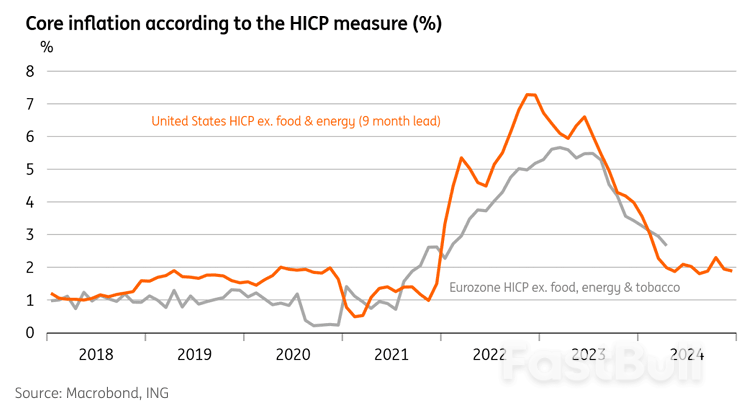
          But here’s the thing, official data published in the U.S. shows that if you calculate inflation in the same way we do here in Europe, then that is exactly what is happening.
          "U.S. core inflation is at 2%" When Parred with Europe - ING's Smith_1
          Before getting too carried away, I should say that this is not the price gauge the Fed is watching. And markets can’t be blamed for not doing so either.
          It’s a reminder, though, that the way we measure inflation matters – a lot. The U.S. famously puts a much greater weight on housing than we do in Europe. And that helps to explain why the more mainstream CPI data puts core inflation up at 3.6%.
          Even then, the numbers don’t always add up. James Knightley reckons next week’s PCE deflator – the Fed's preferred inflation gauge – should look a little less worrisome than those CPI figures a couple of weeks back. Much of the discrepancy can be traced back to car insurance, which you’d think shouldn't be keeping policymakers up at night.
          Anyway, if U.S. inflation really is more benign than we’ve come to believe, then that can only be good news for Europe. Take the stat we mentioned right at the start. That “harmonised” measure of U.S. core inflation has been a decent predictor of the eurozone data a few months down the road. Have a look at our chart of the week below.
          It’s a relationship that holds when you look at individual categories, too. Things like food and consumer goods are still contributing more to inflation in Europe than in the U.S. – particularly here in the UK - and America’s experience suggests that’s unlikely to be the case for long.
          So when central banks here in Europe tell us there is nothing to fear from the recent resurgence in the U.S. data, maybe they’ve got a point. Still, life’s rarely that straightforward. Services inflation is not helping the case for rate cuts here in Britain.
          And as Bert Colijn (Senior Economist at ING) explains, a surprise pick-up in eurozone negotiated wage growth is a headache for the ECB, too. We’ll get fresh inflation data for the eurozone next week.
          The lesson for markets is two-fold. If US inflation really is less worrisome, then the Fed has nothing to fear from rate cuts. Remember, James Knightley (ING's Chief International Economist in New York) is betting on three rate cuts this year from September.
          That’s more than markets currently expect. And if eurozone inflation really is that similar to the U.S., then it’s hard to see the ECB going its own way on rate cuts for long. Just like the U.S., our team expects three cuts in the eurozone over the course of 2024.

          Source: Poundsterlinglive

          To stay updated on all economic events of today, please check out our Economic calendar
          Risk Warnings and Disclaimers
          You understand and acknowledge that there is a high degree of risk involved in trading. Following any strategies or investment methods may lead to potential losses. The content on the site is provided by our contributors and analysts for information purposes only. You are solely responsible for determining whether any trading assets, securities, strategy, or any other product is suitable for investing based on your own investment objectives and financial situation.
          Add to Favorites
          Share

          New Home Sales in the U.S. Fall Sharply in April Amid Rising Mortgage Rates and Prices

          Samantha Luan

          Economic

          According to data from the U.S. Commerce Department, new home sales decreased by 4.7% to a seasonally adjusted annual rate of 634,000 units, a significant drop from March's revised rate of 665,000 units.
          Economists had forecasted new home sales to decline to a rate of 679,000 units. However, the actual figures were even lower, reflecting the challenges faced by the housing market in the second quarter. The downturn in new home sales is attributed to a resurgence in mortgage rates and the increasing cost of homes, which together have eroded the affordability for many potential buyers.
          The decline in new home sales was not uniform across the United States. The Northeast experienced the most significant drop, with sales plunging 20.9%. The West saw a 7.3% decrease, and the densely populated South reported a 4.8% decline. Interestingly, the Midwest was the only region to see an increase, with sales rising by 10%.
          New home sales are a critical indicator of the housing market's health, as they are recorded at the signing of a contract, making them a leading indicator. However, these figures can be volatile on a month-to-month basis. On a year-over-year basis, sales fell by 7.7% in April.
          The average rate on a 30-year fixed-rate mortgage climbed back above 7% in April, according to data from mortgage finance agency Freddie Mac. This increase in borrowing costs has sapped momentum from the housing market. The National Association of Realtors reported a drop in existing home sales in April, and government data showed declines in single-family housing starts and building permits.
          Builders have attempted to mitigate the impact of higher mortgage rates by constructing smaller homes and offering incentives to buyers. Despite these efforts, the median price of a new home rose by 3.9% from a year ago, reaching $433,500 in April. Most of the new homes sold were in the $300,000 to $499,999 price range, indicating that the market remains skewed towards higher-priced homes.
          At the end of April, there were 480,000 new homes on the market, up from 470,000 in March. At the current sales pace, it would take 9.1 months to clear this inventory, up from 8.5 months in March. This increase in supply indicates that builders are still active, but the higher prices and mortgage rates are limiting the pool of potential buyers.
          The rise in new home prices and mortgage rates has also impacted affordability. In the first quarter of 2024, 38% of a median household income was required to make the mortgage payment on a median-priced new single-family home, according to a new index from the National Association of Home Builders (NAHB) and Wells Fargo. For low-income families, this figure jumps to 77% of their earnings.
          The higher costs for land, labor, and materials mean that builders are constrained in their ability to lower prices. Larger builders like DR Horton and Toll Brothers have managed to report strong earnings by leveraging their scale to buy down mortgage rates and maintain demand, but the overall market remains below the five-year average for new home sales.
          Robert Dietz, NAHB's chief economist, emphasized the need for policy changes to address the housing shortage. "With a nationwide shortage of roughly 1.5 million homes, the lack of housing units is the primary cause of growing housing affordability challenges," Dietz said. He called for faster permit approvals, resources for skilled labor training, and improvements in building material supply chains to help alleviate the housing crisis.

          Source:Business Times

          To stay updated on all economic events of today, please check out our Economic calendar
          Risk Warnings and Disclaimers
          You understand and acknowledge that there is a high degree of risk involved in trading. Following any strategies or investment methods may lead to potential losses. The content on the site is provided by our contributors and analysts for information purposes only. You are solely responsible for determining whether any trading assets, securities, strategy, or any other product is suitable for investing based on your own investment objectives and financial situation.
          Add to Favorites
          Share
          FastBull
          Copyright © 2025 FastBull Ltd

          728 RM B 7/F GEE LOK IND BLDG NO 34 HUNG TO RD KWUN TONG KLN HONG KONG

          TelegramInstagramTwitterfacebooklinkedin
          App Store Google Play Google Play
          Products
          Charts

          Chats

          Q&A with Experts
          Screeners
          Economic Calendar
          Data
          Tools
          Membership
          Features
          Function
          Markets
          Copy Trading
          Latest Signals
          Contests
          News
          Analysis
          24/7
          Columns
          Education
          Company
          Careers
          About Us
          Contact Us
          Advertising
          Help Center
          Feedback
          User Agreement
          Privacy Policy
          Business

          White Label

          Data API

          Web Plug-ins

          Poster Maker

          Affiliate Program

          Risk Disclosure

          The risk of loss in trading financial instruments such as stocks, FX, commodities, futures, bonds, ETFs and crypto can be substantial. You may sustain a total loss of the funds that you deposit with your broker. Therefore, you should carefully consider whether such trading is suitable for you in light of your circumstances and financial resources.

          No decision to invest should be made without thoroughly conducting due diligence by yourself or consulting with your financial advisors. Our web content might not suit you since we don't know your financial conditions and investment needs. Our financial information might have latency or contain inaccuracy, so you should be fully responsible for any of your trading and investment decisions. The company will not be responsible for your capital loss.

          Without getting permission from the website, you are not allowed to copy the website's graphics, texts, or trademarks. Intellectual property rights in the content or data incorporated into this website belong to its providers and exchange merchants.

          Not Logged In

          Log in to access more features

          FastBull Membership

          Not yet

          Purchase

          Become a signal provider
          Help Center
          Customer Service
          Dark Mode
          Price Up/Down Colors

          Log In

          Sign Up

          Position
          Layout
          Fullscreen
          Default to Chart
          The chart page opens by default when you visit fastbull.com